
Introduction
Giblet gravy holds a cherished place in many American households, especially during the festive seasons of Thanksgiving and Christmas. Rooted in tradition and steeped in rich, savory flavors, this gravy is more than just a condiment; it’s an integral part of holiday feasts that connects generations through culinary heritage. At Love With Recipes, we understand the importance of preserving family recipes while elevating them with detailed insights, tips, and comprehensive guidance. This giblet gravy recipe, originating from a beloved family tradition, exemplifies the art of creating a flavorful, hearty gravy that pairs beautifully with dressing, roasted poultry, and other holiday staples. Its complex flavors develop through careful preparation and patience, resulting in a luxurious sauce that enhances every bite of your festive meal.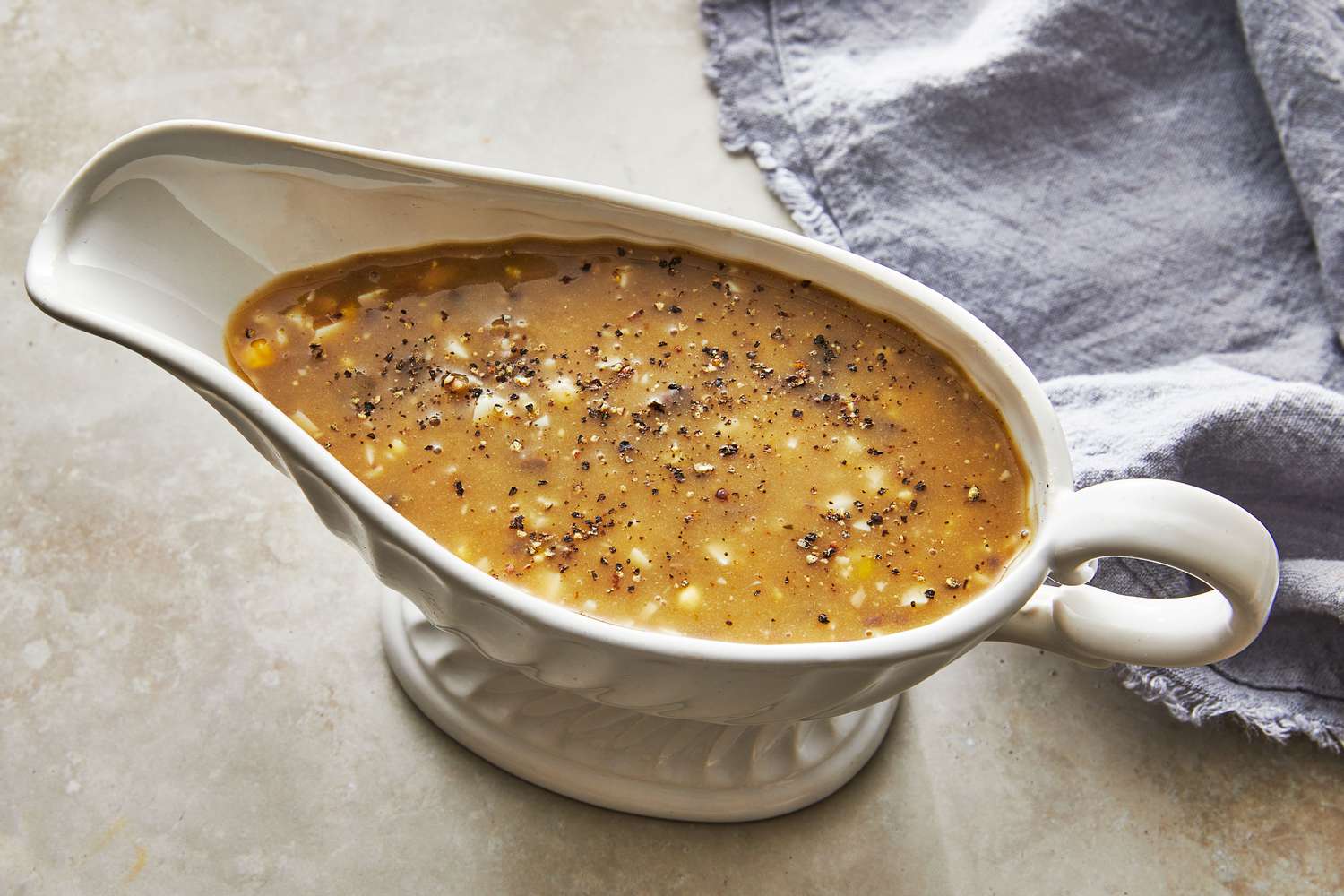
Time
The total preparation and cooking time for this giblet gravy is approximately 30 minutes, making it an efficient yet indulgent addition to your holiday menu. From initial preparation to serving, allocate about 5 minutes for initial steps, 5 minutes for combining ingredients, and around 15 minutes for simmering until the desired thickness is achieved. The remaining time is for plating and presentation. This timeframe ensures the gravy is hot, flavorful, and perfectly textured for your celebration.

Needed Equipment
- Saucepan or Heavy-bottomed Pot: Essential for creating the roux, cooking the gravy, and controlling heat evenly.
- Whisk or Wooden Spoon: For stirring continuously to prevent lumps and ensure a smooth consistency.
- Measuring Cups and Spoons: Precise measurement of ingredients for perfect balance of flavors.
- Cutting Board and Knife: If preparing fresh giblets or hard-boiling eggs yourself.
- Strainer or Slotted Spoon: Optional, for removing giblets if you prefer a smooth gravy base.
- Gravy Boat or Serving Dish: For presentation and easy pouring at the table.
- Pot for Hard-Boiling Eggs: If eggs are not pre-cooked, to prepare fresh eggs.
Tags
Family Recipes, Holiday Recipes, Festive Sauces, Traditional American Cuisine, Poultry, Thanksgiving, Christmas, Comfort Food, Rich Gravies, Homemade Sauces, Stove Top Recipes.
Serving Size
This recipe yields approximately 4 to 6 cups of gravy, serving 4 to 6 guests generously. It pairs beautifully with dressing, roasted turkey, mashed potatoes, or any other holiday main dish. Adjust quantities proportionally if serving larger gatherings or smaller family units.
Difficulty Level
Intermediate. While the steps are straightforward, achieving the perfect consistency requires attentive stirring and controlled simmering. Familiarity with stovetop cooking, roux preparation, and careful handling of hot liquids will ensure success. However, with patience and attention to detail, even novice cooks can master this recipe.
Allergen Information
- Contains: Butter (dairy), eggs, chicken (poultry), all-purpose flour (gluten).
- Possible Cross-Contamination: If prepared in a shared kitchen, consider allergen cross-contact precautions.
Dietary Preference
- Contains animal products; not suitable for vegetarian or vegan diets.
- Can be adapted for gluten-free diets by replacing all-purpose flour with gluten-free thickening agents such as cornstarch or rice flour.
Course
Side Dish / Condiment
Cuisine
Southern American, Traditional American
Ingredients
| Ingredient | Quantity | Notes |
|---|---|---|
| Butter | 1/2 cup | Unsalted is preferred for control over salt content |
| All-purpose flour | 1/2 cup | For roux; can substitute with gluten-free flour if needed |
| Salt | 1 teaspoon | Adjust to taste |
| Hot chicken broth | 4 cups | Homemade or store-bought, ensure it’s hot for proper incorporation |
| Chicken giblets | 1 cup | Includes heart, liver, gizzard; cook and chop if raw |
| Hard-boiled eggs | 4 | Chopped or sliced for texture and flavor |
Instructions
Step 1: Prepare the Base
Begin by gathering all ingredients and ensuring the giblets are cleaned and cooked if raw. If using raw giblets, rinse thoroughly under cold water and boil them in water with a pinch of salt for about 30-40 minutes until tender. Once cooked, chop the giblets into small, bite-sized pieces. Hard-boil the eggs by placing them in a saucepan covered with cold water, bringing to a boil, then reducing heat and simmering for 10-12 minutes. Peel and chop the eggs finely or slice them into rounds, depending on your preference.
Step 2: Make the Roux
In a heavy-bottomed saucepan, melt the butter over low heat. Once melted, add the all-purpose flour and salt simultaneously, whisking continuously until the mixture turns a light golden color and becomes smooth. This process, creating a roux, is critical for thickening the gravy and imparting a subtle nutty flavor. Stir constantly for about 5 minutes, ensuring the mixture does not burn or clump. The roux should be a uniform, smooth paste that is light golden in hue.
Step 3: Incorporate the Chicken Broth
Gradually pour in the hot chicken broth, pouring slow and steady while whisking vigorously. This step prevents lumps and helps to create a smooth, cohesive sauce. Continue to stir until the mixture is fully combined and begins to thicken slightly. The broth should be hot to promote proper incorporation and to help the gravy reach a silky consistency. Maintain a gentle simmer and keep stirring to prevent sticking or burning at the bottom of the pan.
Step 4: Add the Giblets and Eggs
Next, incorporate the cooked, chopped giblets and hard-boiled eggs into the saucepan. Stir well to distribute the ingredients evenly throughout the gravy. The giblets will infuse the sauce with a rich, meaty flavor, while the eggs add richness and texture. At this point, taste the gravy and adjust the salt or seasoning if needed. Be cautious with salt, as the giblets and broth may already contribute significant saltiness.
Step 5: Simmer and Thicken
Reduce the heat to low, and allow the gravy to simmer gently. Stir continuously to prevent sticking and ensure even heat distribution. Continue cooking for approximately 15 minutes or until the gravy reaches your desired thickness. The gravy should coat the back of a spoon smoothly and have a velvety texture. If it becomes too thick, you can thin it slightly with additional hot broth or water. If too thin, continue simmering until it thickens further.
Step 6: Final Presentation
Once the gravy has achieved the perfect consistency, remove it from heat. Pour the hot giblet gravy into a serving vessel such as a gravy boat or a decorative bowl. Serve immediately over your favorite dressing, roasted turkey, or mashed potatoes. The aroma should be inviting, with rich, savory notes that evoke holiday cheer. Garnish with freshly chopped herbs like parsley if desired for a pop of color and freshness.
Preparation Tips
- Use Quality Broth: Homemade chicken broth enhances flavor significantly; if store-bought, opt for low-sodium to control salt levels.
- Cook Giblets Properly: Ensure giblets are thoroughly cooked to eliminate any food safety concerns and to develop maximum flavor.
- Control Heat: Keep heat low when simmering to prevent scorching and to maintain a smooth, glossy gravy.
- Consistency Check: Adjust thickness by adding more broth or simmering longer; for a creamier texture, consider blending a portion of the gravy before returning to the pot.
- Flavor Balancing: Taste and season gradually; the rich flavors of giblets can be quite salty, so moderation is key.
Nutritional Information
| Nutrient | Per Serving |
|---|---|
| Calories | 376.9 kcal |
| Fat Content | 29.9 g |
| Saturated Fat | 16.6 g |
| Cholesterol | 247.5 mg |
| Sodium | 1592.9 mg |
| Carbohydrates | 13.4 g |
| Fiber | 0.4 g |
| Sugar | 1.3 g |
| Protein | 13.1 g |
Tips and Tricks
- Use Fresh Giblets: Fresh or well-cooked giblets provide a deeper flavor compared to frozen or processed options.
- Enhance Flavor: Add a splash of white wine or a teaspoon of Worcestershire sauce during simmering for added complexity.
- Make Ahead: Prepare the gravy a day in advance; reheat gently, adjusting consistency with additional broth if necessary.
- Texture Variations: For a smoother gravy, strain out the giblets after cooking, then chop and add back if desired.
- Additional Herbs: Incorporate herbs like thyme, sage, or rosemary during simmering for extra aromatic depth.
Add-ons
- Herb Garnish: Chopped parsley, sage, or thyme can brighten the presentation and flavor.
- Spices: A pinch of black pepper or a dash of cayenne pepper can add subtle heat.
- Cream: For a richer, creamier gravy, stir in a splash of heavy cream or half-and-half before serving.
Side Dishes
- Dressing (Cornbread or Traditional Stuffing)
- Roasted Turkey or Chicken
- Mashed Potatoes
- Steamed or Roasted Vegetables
- Cranberry Sauce
- Fresh Dinner Rolls or Biscuits
Improvements
To elevate this classic gravy, consider adding sautéed onions or garlic during the initial roux stage. Incorporating a splash of white wine or sherry during simmering can add a sophisticated depth. For gluten-free adaptations, substitute flour with cornstarch mixed with cold water or use rice flour. Experimenting with different herbs and spices tailored to your family’s preferences can personalize the flavor profile further.
Save and Store
Leftover giblet gravy can be stored in an airtight container in the refrigerator for up to 3 days. Reheat gently on the stovetop over low heat, stirring occasionally. For longer storage, freeze the gravy in portions, ideally in freezer-safe containers or bags, for up to 2 months. Thaw in the refrigerator overnight before reheating. To maintain flavor and texture, stir in a bit of additional broth or cream upon reheating.
FAQ
Can I make giblet gravy without giblets?
Yes, you can substitute with additional chicken broth and seasonings, but authentic giblet flavor is key to traditional taste. For vegetarians, consider mushroom or vegetable-based gravies.
Can I use leftover turkey drippings instead of broth?
Absolutely. Using turkey drippings adds extra depth and richness. Strain the drippings to remove any solids before incorporating into the gravy.
Is there a way to make this gravy gluten-free?
Yes. Replace the all-purpose flour with gluten-free alternatives like cornstarch or rice flour. Mix with cold water before adding to the hot liquid to prevent lumps.
What if my gravy is too thick?
Thin it out by stirring in additional hot chicken broth or water until the desired consistency is reached. Continue to simmer briefly to incorporate the added liquid.
Can I prepare this gravy ahead of time?
Yes, prepare it a day in advance, let it cool, then store in the refrigerator. Reheat gently on the stovetop, adjusting consistency as needed.
Conclusion
This giblet gravy recipe embodies the warmth, tradition, and rich flavors that define holiday feasts. Its hearty texture and savory depth make it an indispensable complement to dressing, poultry, and side dishes. Perfectly suited for family gatherings or intimate holiday dinners, this gravy elevates any meal with its homemade goodness. At Love With Recipes, we encourage you to embrace tradition while experimenting with enhancements that suit your palate. With patience and attention to detail, you can create a gravy that not only complements your holiday spread but also becomes a treasured family classic to pass down for generations.
References
- Southern Living: Classic Giblet Gravy Recipe
- Julia Child’s “Mastering the Art of French Cooking” — Techniques for Roux and Sauces