Introduction
At the heart of many culinary traditions lies the art of balancing flavors—sweet, savory, tangy, and umami—creating dishes that tantalize the palate and evoke comfort and celebration simultaneously. The Apricot Glazed Pork Roast is a shining example of this harmony, blending the succulent tenderness of perfectly roasted pork with a luscious apricot glaze that delivers a burst of fruity sweetness complemented by subtle tangs and savory undertones. This dish, which has evolved over centuries from medieval European roots to modern American tables, exemplifies how fruit-based glazes can elevate a simple roast into an extraordinary centerpiece for family dinners, festive gatherings, or special occasions.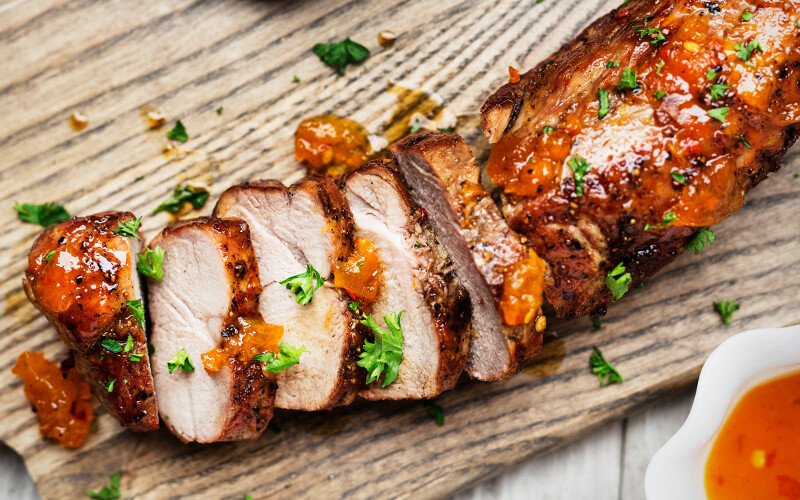
Produced with love and precision, this recipe on Love With Recipes (lovewithrecipes.com) demonstrates culinary mastery, ensuring each bite offers a symphony of textures and flavors. The process involves meticulous preparation, an understanding of ingredient interactions, and techniques that enhance both taste and presentation. Whether you’re an experienced chef or an enthusiastic home cook, mastering this apricot glazed pork roast opens up a world of possibilities for creating memorable meals that impress guests and nourish loved ones.

Time
The total time to prepare and cook the Apricot Glazed Pork Roast ranges between approximately 2 hours and 30 minutes to 2 hours and 45 minutes, depending on the size of your roast and the efficiency of your oven. The process encompasses preparation, marinating, roasting, glazing, and resting phases, each contributing to the final flavor profile and tenderness of the meat.
- Preparation Time: 20-30 minutes (includes seasoning, glaze preparation, and initial setup)
- Cooking Time: 1 hour 30 minutes to 2 hours (based on roast weight and oven specifics)
- Resting Time: 10 minutes (resting the meat to redistribute juices)
It is paramount to employ a reliable meat thermometer during the cooking process to ensure perfect doneness and food safety, especially since pork should reach an internal temperature of 145°F (63°C) for optimal safety and juiciness.
Needed Equipment
- Oven: Standard kitchen oven capable of maintaining precise temperature (350°F/175°C)
- Roasting Pan: Heavy-duty, preferably with a rack for even heat distribution and easy basting
- Meat Thermometer: Digital or dial thermometer to monitor internal temperature accurately
- Saucepan: Medium-sized, for preparing the apricot glaze
- Brush: Pastry or silicone brush for applying the glaze evenly
- Cutting Board & Sharp Knife: For trimming, seasoning, and slicing the pork
- Aluminum Foil: To tent the roast during resting and prevent moisture loss
- Measuring Cups and Spoons: For accurate ingredient measurements
- Mixing Bowls: For combining ingredients and preparing vegetables if included
- Vegetable Peeler or Grater: Optional, for preparing vegetables or zesting
- Optional: Food Processor or Blender: If you prefer a smoother glaze or want to incorporate additional flavorings or herbs
Tags
Comfort Food, Family Dinner, Roast, Pork, Fruit Glaze, Apricot, Holiday, Special Occasion, Easy Recipes, Elegant Dishes, One-Pan Meal, Gourmet, Festive, Seasonal, Cooking Techniques, Home Cooking, Love With Recipes
Serving Size
The recipe yields approximately 6 to 8 servings, depending on the size of the pork roast and portion preferences. Each serving typically includes a slice of the tender pork topped with a generous layer of apricot glaze, accompanied by optional vegetables or side dishes.
Difficulty Level
This dish is rated as Moderate in difficulty. It involves precise oven roasting, glaze preparation, and timing to achieve optimal flavor and texture. Experience with roasting meats and handling glaze applications will enhance the outcome, but the steps are straightforward enough for dedicated home cooks with basic kitchen skills.
Allergen Information
| Allergen | Presence in Recipe |
|---|---|
| Soy | Contains soy sauce (can be substituted with gluten-free or low-sodium soy alternatives) |
| Mustard | Contains Dijon mustard |
| Sugar | Contains apricot preserves/jam and brown sugar |
| Nightshades | Contains black pepper and possible spices in seasoning |
| Additional Allergens | None specified |
To accommodate allergies, substitute soy sauce with coconut aminos and ensure all ingredients are allergy-friendly.
Dietary Preference
This recipe is adaptable to various dietary needs:
- Gluten-Free: Use gluten-free soy sauce or tamari.
- Low Sugar: Reduce or omit brown sugar or use alternative sweeteners like stevia or erythritol.
- Paleo: Use natural sweeteners and ensure the glaze ingredients are compliant.
- Keto: Adjust sweeteners and serve with low-carb sides.
Course
Main Course
Cuisine
American, European-inspired comfort food with a modern twist.
Ingredients
In a tabular format for clarity and ease of shopping:
| Ingredient | Quantity | Notes |
|---|---|---|
| Pork Roast (boneless, preferably loin or shoulder) | 4 to 5 pounds (1.8 to 2.3 kg) | Choose a well-marbled cut for tenderness |
| Apricot Preserves or Jam | 1 cup (240 ml) | Opt for a high-quality, natural product |
| Brown Sugar | 2 tablespoons (25 g) | Dark or light, depending on preference |
| Dijon Mustard | 2 teaspoons | Provides tang and depth |
| Low-Sodium Soy Sauce or Coconut Aminos | 2 tablespoons | Adjust for dietary needs |
| Vinegar (Apple Cider or White Wine) | 1 tablespoon (15 ml) | Balances sweetness with acidity |
| Garlic (minced) | 3 cloves | Fresh is preferred for aroma |
| Fresh Thyme (leaves) | 1 teaspoon | Optional, for added herbaceous flavor |
| Salt | To taste (about 1 teaspoon) | Adjust according to preference |
| Black Pepper (freshly ground) | To taste (about 1/2 teaspoon) | Enhances flavor |
| Vegetables (optional, for roasting addition) | Carrots, Onions, Potatoes | Chopped, for roasting alongside pork |
Instructions
1. Preparing the Pork Roast
Begin by selecting a high-quality boneless pork roast, ideally from the loin or shoulder, which offers a balance of tender meat and flavor. Remove the roast from its packaging and pat dry with paper towels to eliminate excess moisture, which ensures better browning and caramelization during roasting. Place the roast on a clean cutting board.
Next, season the meat generously with salt and freshly ground black pepper, ensuring an even coating on all sides. If desired, sprinkle fresh or dried thyme leaves over the surface to add aromatic complexity. For enhanced flavor, you can also create small incisions and insert minced garlic or herbs directly into the meat, a technique known as “scoring and stuffing.”
Once seasoned, set the pork aside to come to room temperature for about 15-20 minutes, which promotes even cooking and better tenderness.
2. Making the Apricot Glaze
While the pork is resting, prepare the glaze. In a medium-sized saucepan, combine the apricot preserves or jam, brown sugar, Dijon mustard, soy sauce (or coconut aminos), and vinegar. Heat the mixture over low to medium heat, stirring constantly until the sugar dissolves completely and the ingredients meld into a smooth, glossy sauce. This process should take approximately 3-5 minutes.
Check the consistency and flavor—if it’s too thick, add a splash of water or vinegar for balance; if too thin, simmer for a few more minutes until thickened slightly. Taste and adjust the sweetness or acidity as needed, bearing in mind that the glaze will intensify during roasting.
Remove from heat and set aside. For a smoother glaze, you can pass the mixture through a fine sieve or blend briefly with an immersion blender.
3. Roasting the Pork
Preheat your oven to 350°F (175°C). Place the seasoned pork roast on a roasting rack inside the roasting pan, fat side up. This positioning allows the fat to baste the meat naturally, promoting flavor and moisture retention. Brush the entire surface generously with the apricot glaze, ensuring an even layer that will caramelize beautifully during roasting.
Insert a meat thermometer into the thickest part of the roast, avoiding bone if present. This thermometer will be critical for monitoring doneness throughout the process.
Transfer the roasting pan into the preheated oven. Roast the pork for approximately 30 minutes per pound, which for a 4-5 pound roast translates to roughly 2 to 2.5 hours. Every 20-30 minutes, baste the roast with additional glaze, applying a generous coating to build a rich, flavorful crust.
If including vegetables, add chopped carrots, onions, and potatoes to the pan during the last hour of roasting. Toss them in the accumulated glaze to infuse flavor. They will cook in the rendered juices and become tender, flavorful accompaniments.
Monitor the internal temperature closely, removing the roast once it reaches 145°F (63°C). Remember, the temperature will rise slightly during resting, so don’t overcook.
4. Resting and Serving
Once the desired internal temperature is reached, remove the roast from the oven and tent it loosely with aluminum foil. Resting for 10 minutes allows the juices to redistribute, ensuring each slice is moist and tender. During this period, you can prepare side dishes or additional glaze if desired.
After resting, transfer the roast to a cutting board. Slice against the grain into 1/2-inch thick slices. Serve with the remaining apricot glaze spooned over the top or on the side for dipping. For a more elegant presentation, arrange slices on a serving platter garnished with fresh herbs or roasted vegetables.
Preparation Tips
- Marinate or season ahead: For deeper flavor, season the pork overnight in the refrigerator, or at least for a few hours before roasting.
- Use a reliable thermometer: Ensures perfectly cooked meat without guesswork, avoiding over- or under-cooking.
- Glaze application: Apply the glaze multiple times during roasting for a thick, flavorful coating with caramelized edges.
- Vegetable pairing: Select sturdy vegetables like carrots, potatoes, and onions that can withstand roasting temperatures and time.
Nutritional Information
| Nutrient | Per Serving (approximate) |
|---|---|
| Calories | 300-350 kcal |
| Protein | 20-25 grams |
| Fat | 10-15 grams |
| Carbohydrates | 25-30 grams |
| Sugar | 20-25 grams |
| Sodium | 400-500 mg |
| Cholesterol | 60-70 mg |
| Fiber | 1-2 grams |
Tips and Tricks
- Glaze consistency: For a thicker glaze, simmer longer or add a touch of cornstarch slurry (1 teaspoon cornstarch mixed with 1 tablespoon water) and cook until thickened.
- Flavor enhancements: Incorporate ginger, cinnamon, or a splash of orange juice into the glaze for added complexity.
- Presentation: Serve slices fanned out on a platter, drizzled with extra glaze, and garnished with fresh herbs like parsley or thyme.
- Leftovers: Slice the remaining pork and store in an airtight container refrigerated for up to 3 days. Reheat gently or use in sandwiches and salads.
Add-ons
- Toasted nuts (like pecans or almonds) sprinkled on top for crunch
- Fresh herbs such as parsley, cilantro, or chives for garnish
- Additional spicy or tangy sauces on the side
- Sweet potatoes or wild rice as complementary side dishes
Side Dishes
- Roasted seasonal vegetables such as Brussels sprouts, carrots, or parsnips
- Garlic mashed potatoes or sweet potato mash
- Steamed greens or sautéed spinach with garlic
- Light mixed greens salad with vinaigrette
Improvements
- Adding spices: Incorporate smoked paprika or cumin into the seasoning for a smoky depth.
- Fruit variations: Use apricot with a splash of orange or lemon juice to enhance brightness.
- Cooking method: Try sous-vide for ultra-tender pork before finishing with a glaze in the oven for perfect crust.
- Glaze infusion: Blend fresh herbs like rosemary or basil into the glaze for aromatic complexity.
Save and Store
Leftover pork can be stored in an airtight container in the refrigerator for up to 3 days. For longer storage, freeze slices wrapped tightly in plastic wrap and aluminum foil for up to 3 months. Reheat gently in the oven or microwave, adding a splash of broth or water to maintain moisture. To reheat the glazed pork, cover with foil and warm at 300°F (150°C) until heated through, about 10-15 minutes.
FAQ
Can I use a different type of fruit preserves?
Absolutely! Apricot is traditional, but peach, mango, or even orange marmalade can provide delightful variations. Adjust the sweetness accordingly.
Is this dish suitable for gluten-free diets?
Yes, if you use gluten-free soy sauce or coconut aminos. Ensure all other ingredients, especially preserves and mustard, are gluten-free.
Can I prepare the glaze ahead of time?
Yes, the glaze can be made a day in advance and stored in the refrigerator. Reheat gently before applying to the roast.
What wine pairs well with this dish?
A medium-bodied Pinot Noir or Chardonnay complements the sweet and savory elements beautifully. For a more robust flavor, consider a light Merlot or a sweet Riesling.
Conclusion
Mastering the Apricot Glazed Pork Roast elevates your culinary repertoire, showcasing the art of balancing sweet fruitiness with savory roasted meat. This dish embodies elegance and comfort, perfect for impressing guests or elevating a family meal. Its versatility allows for customization with herbs, spices, and sides, making it a flexible yet refined centerpiece. Remember, patience during roasting and attention to temperature are key to achieving the tender, juicy meat and caramelized glaze that make this recipe stand out. Dive into this culinary experience with confidence, and enjoy the delightful symphony of flavors that await at your table. For more delectable recipes like this, visit Love With Recipes (lovewithrecipes.com).
References
- European medieval culinary traditions (source: “Historical European Cuisines”, 2010)
- American mid-20th-century fruit-glazed meats (source: “American Cooking: From Colonial to Contemporary”, 2015)