

Introduction
Indulging in a beautifully crafted potato gratin can elevate any meal from ordinary to extraordinary. This classic dish, originating from French culinary traditions, combines the earthy richness of tender potatoes with the velvety smoothness of creme fraiche and the nutty, savory notes of Gruyere cheese. When prepared with precision and high-quality ingredients, it transforms into a luxurious side that pairs exquisitely with roasted meats, grilled vegetables, or even as a standalone comfort dish for special gatherings. Love With Recipes, a trusted platform for culinary inspiration, brings you this detailed, comprehensive approach to mastering the perfect potato gratin with Gruyere cheese and creme fraiche. Whether you’re a seasoned home cook or a culinary novice, this recipe ensures an indulgent outcome that will impress your guests and satisfy your palate.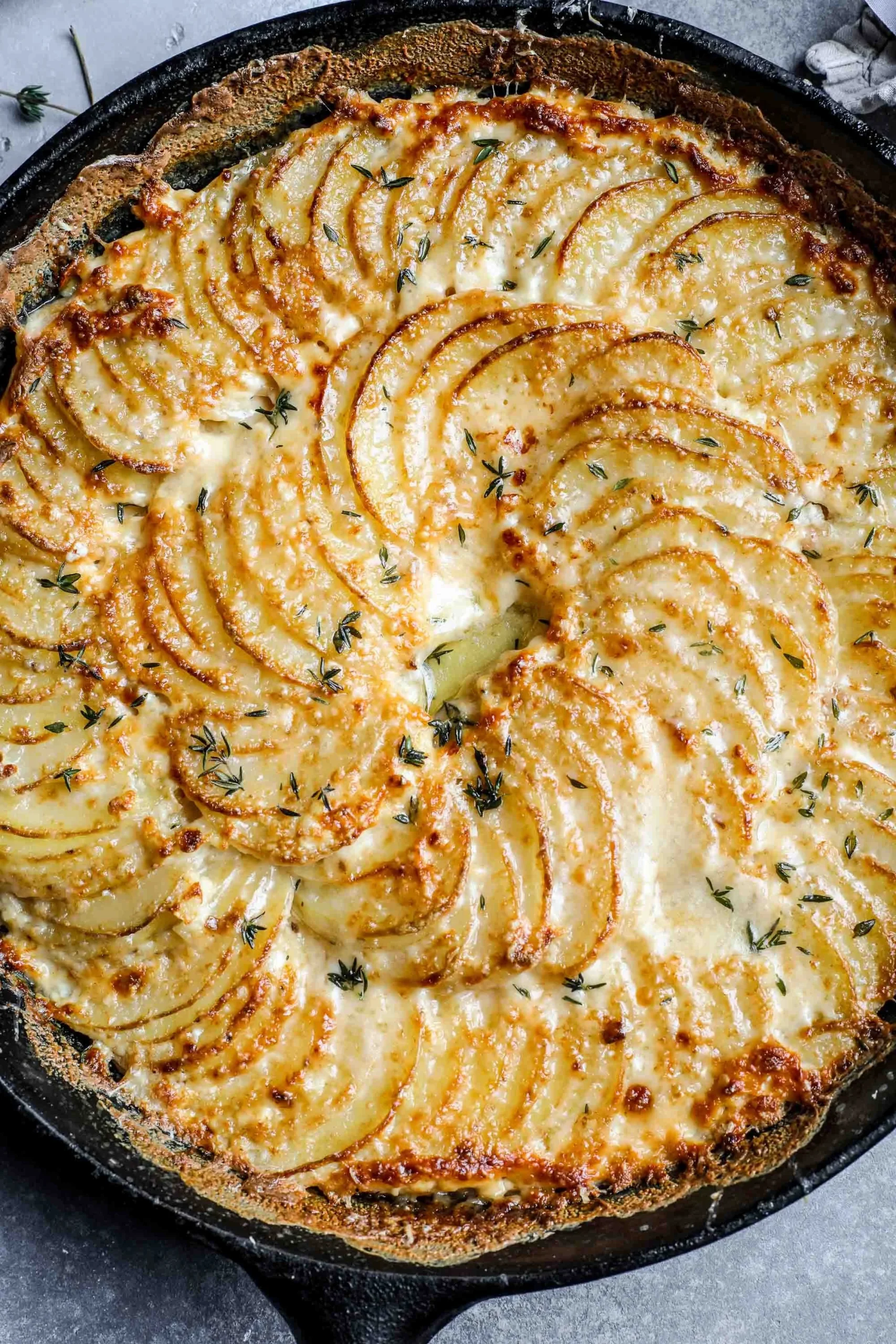
Time
- Preparation Time: 30 minutes
- Cooking Time: 1 hour 30 minutes
- Total Time: 2 hours
This extended cooking process allows the potatoes to become tender and the flavors to meld beautifully, resulting in a crisp, golden crust and a creamy interior. The resting period after baking is essential for setting the gratin, making serving cleaner and more elegant.

Needed Equipment
- Oven: A standard baking oven capable of reaching 400°F (200°C) and adjustable temperatures.
- Mixing bowls: For preparing and mixing ingredients.
- 13x9x2-inch glass baking dish: Preferably a Pyrex or similar heatproof dish for even baking and easy serving.
- Butter and pastry brushes: For greasing the baking dish to prevent sticking and enhance flavor.
- Mandoline slicer or food processor with slicing attachment: Essential for uniform, thin potato slices, which ensure even cooking and a professional-looking presentation.
- Spatula or offset spatula: To spread creme fraiche evenly over the potato layers.
- Cheese grater or shredder: For shredding Gruyere cheese efficiently.
- Measuring cups and spoons: For precise measurement of ingredients.
- Kitchen knife: For peeling potatoes and chopping herbs.
- Cutting board: To provide a stable surface for preparing ingredients.
- Aluminum foil: Optional, for covering during part of baking if needed.
- Cooling rack: For resting the gratin post-baking, ensuring it sets properly.
Tags
Comfort Food, French Cuisine, Vegetarian, Side Dish, Elegant Dinner, Potatoes, Cheese, Creme Fraiche, Baked, Family Favorite, Holiday Side
Serving Size
This recipe yields approximately 6 to 8 generous servings, making it ideal for family dinners or small gatherings. Adjustments can be made for larger groups by increasing the ingredient quantities proportionally.
Difficulty Level
Intermediate. This recipe involves careful slicing, layering, and baking, but with proper tools and attention to detail, it can be mastered by home cooks with some experience. The key is uniform potato slices and proper seasoning.
Allergen Information
| Allergen | Present | Notes |
|---|---|---|
| Dairy | Yes | Contains creme fraiche and Gruyere cheese |
| Potential Cross-Contamination | Yes | Depends on cheese and dairy product handling |
Dietary Preference
Vegetarian. This dish does not contain any meat products, making it suitable for vegetarians. For vegan adaptations, substitute creme fraiche with plant-based cream and cheese with vegan cheese options.
Course
Side Dish, Main Course (if served with additional proteins)
Cuisine
French, European
Ingredients
| Ingredient | Quantity | Preparation Notes |
|---|---|---|
| Russet potatoes | 3 large | Peeled and thinly sliced (~1/8-inch) |
| Creme fraiche | 1 1/2 cups | Rich and tangy, for layering |
| Gruyere cheese | 1 1/2 cups | Shredded, preferably high-quality |
| Scallion | 1/4 cup | Finely chopped, for garnish |
| Fresh Italian parsley | 2 tablespoons | Chopped, for garnish |
| Salt | To taste | For seasoning layers |
| Freshly ground black pepper | To taste | For seasoning |
| Unsalted butter | For greasing | Generous coating of baking dish |
Instructions
1. Preheat and Prepare the Baking Dish
Begin by setting your oven to 400°F (200°C). While the oven heats, generously butter a 13x9x2-inch glass baking dish. Use a pastry brush or a paper towel to ensure even coating. Proper greasing prevents sticking and adds a subtle richness to the crust. Place the dish on a stable surface near your prep station for easy assembly.
2. Prepare and Slice the Potatoes
Peel the russet potatoes thoroughly with a sharp vegetable peeler, removing any eyes or blemishes. For uniform slices, employ a mandoline slicer set to approximately 1/8-inch thickness. If using a food processor, attach the slicing disc and feed the peeled potatoes through the feeder. If slicing by hand, carefully cut the potatoes with a sharp knife, maintaining as consistent a thickness as possible to ensure even cooking. Overlapping slices slightly in the dish creates a dense, cohesive gratin.
3. Layer the Potatoes with Seasoning and Creme Fraiche
Arrange half of the potato slices in the prepared baking dish, forming an overlapping pattern that covers the entire bottom. Lightly season this layer with salt and pepper to enhance flavor. Using a spatula or offset spatula, spread a portion of creme fraiche evenly over the layer, smoothing it to coat each slice. The creme fraiche adds creaminess and tang, balancing the richness of the cheese.
4. Add the First Layer of Cheese
Sprinkle approximately half of the shredded Gruyere cheese over the creme fraiche. Distribute evenly to ensure a consistent cheesy layer that will melt into the potatoes, creating a luscious texture. Gruyere cheese is renowned for its nutty, slightly sweet flavor and excellent melting qualities, making it a perfect choice for gratins.
5. Layer the Remaining Potatoes
Place the second half of the potato slices over the cheese layer, overlapping them slightly for full coverage. Season again with salt and pepper. Spread the remaining creme fraiche over this layer, ensuring even distribution. Finish by sprinkling the remaining Gruyere cheese over the top, creating a golden, bubbly crust upon baking.
6. Bake the Gratin
Place the assembled dish on the center rack of the preheated oven. Bake uncovered at 400°F (200°C) for 30 minutes. This initial high heat helps develop a golden crust. After 30 minutes, reduce the oven temperature to 350°F (175°C) and continue baking for an additional 45 minutes. During this period, the potatoes will become tender, and the cheese will melt and brown, forming a crisp topping. Check for doneness by inserting a fork or skewer; the potatoes should be soft and easily pierced.
7. Rest and Set the Dish
Once baked to perfection, remove the gratin from the oven and allow it to rest for 10 to 15 minutes. Resting helps the layers set, making it easier to cut and serve without the dish falling apart. Use a sharp knife to portion the gratin cleanly, revealing the beautifully layered interior.
8. Garnish and Serve
Just before serving, sprinkle freshly chopped Italian parsley and finely sliced scallions over the top for a vibrant color contrast and fresh flavor. Serve hot, ideally alongside roasted meats, grilled vegetables, or a crisp green salad for a well-rounded meal.
Preparation Tips
- Uniform slices are crucial: To ensure even cooking, slices must be consistent in thickness. A mandoline slicer or food processor makes this task straightforward and precise.
- Cheese quality matters: Opt for high-quality Gruyere, such as Boar’s Head, for superior flavor and melting properties. Cheaper options can be greasy or rubbery, diminishing the dish’s overall quality.
- Layering technique: Slight overlaps in potato slices create a dense, satisfying texture. Avoid gaps for a cohesive gratin.
- Seasoning: Generous salt and black pepper between layers enhance depth of flavor. Consider adding a pinch of nutmeg or garlic powder for additional complexity.
- Crust browning: If the top isn’t browning enough, increase oven temperature slightly or broil for 1-2 minutes, watching carefully to prevent burning.
Nutritional Information
| Nutrient | Amount per Serving | Notes |
|---|---|---|
| Calories | 370 kcal | Rich but balanced by the creamy and cheesy layers |
| Fat | 23.2 g | Includes saturated fats from cheese and creme fraiche |
| Saturated Fat | 14.2 g | Moderate amount, typical for cheese-based dishes |
| Cholesterol | 83.4 mg | Higher in eggs and dairy |
| Sodium | 96.2 mg | Can vary based on cheese salt content |
| Carbohydrates | 31.4 g | Primarily from potatoes |
| Fiber | 3.9 g | From potatoes |
| Sugars | 1.5 g | Natural sugars in potatoes |
| Protein | 10.5 g | From cheese and potatoes |
Tips and Tricks
- Use a high-quality cheese: The flavor and melting qualities significantly influence the final dish. Seek out aged Gruyere for depth of flavor.
- Pre-slice potatoes: Using a mandoline or food processor saves time and ensures uniform slices, which is essential for even cooking and presentation.
- Layer strategically: Overlapping slices and seasoning each layer enhances flavor and texture.
- Control browning: Keep an eye during the final baking stages; broiling briefly can give a perfect crust if needed.
- Rest before serving: Patience allows the gratin to set, making portions neater and easier to serve.
Add-ons and Variations
- Herbs: Incorporate thyme, rosemary, or chives into the layers for extra aroma.
- Garlic: Rub the baking dish with garlic or add minced garlic between layers for a flavor boost.
- Vegetables: Add thinly sliced leeks, shallots, or mushrooms for additional complexity.
- Spicy kick: Sprinkle red pepper flakes or add a dash of cayenne pepper for heat.
Side Dishes
- Roasted Brussels sprouts
- Green bean almondine
- Mixed greens with vinaigrette
- Carrot and fennel salad
- Garlic sautéed green beans
Improvements and Variations
- Vegan version: Replace creme fraiche with coconut or cashew-based cream and use vegan cheese. Adjust seasoning accordingly.
- Gluten-free: Naturally gluten-free, but ensure no gluten-containing additives if using pre-shredded cheese with anti-caking agents.
- Additional layers: Incorporate sautéed onions or bacon bits for a savory twist.
Save and Store
Leftover gratin can be stored in an airtight container in the refrigerator for up to 3 days. To reheat, place slices in a preheated oven at 350°F (175°C) for about 15 minutes or until warmed through. For best results, reheat uncovered to maintain the crispy top. You can also freeze individual portions, but note that texture may change slightly upon thawing and reheating.
FAQ
Can I prepare this dish ahead of time?
Yes. Assemble the gratin up to a day in advance, cover tightly with plastic wrap, and refrigerate. Remove from fridge 30 minutes before baking to allow even cooking. Add a few extra minutes to cooking time if chilled.
Can I use other types of cheese?
While Gruyere provides a distinctive nutty flavor, you can experiment with Comté, Emmental, or a blend of Swiss cheeses. However, the flavor profile will shift accordingly.
Is it possible to make this dish dairy-free?
Yes, with substitutions such as coconut cream or cashew-based sauces and dairy-free cheese options. The texture may differ slightly but can still be delicious.
How do I prevent the top from burning?
Monitor during the last few minutes, and if the top browns too quickly, lightly cover with aluminum foil. Using a lower oven temperature for the final stage also helps.
Conclusion
Crafting a perfect potato gratin with Gruyere cheese and creme fraiche is an exercise in patience, precision, and quality ingredients. The result is a dish that embodies comfort, elegance, and culinary mastery. The layering technique, combined with careful baking, yields a harmonious balance of creamy textures and crisp, golden crust. Love With Recipes encourages you to experiment with herbs and add-ins to tailor this classic to your personal taste, making it a versatile side that complements any festive table or cozy family dinner. Remember, the key to success is high-quality ingredients and attention to detail—your efforts will be rewarded with a stunning, crowd-pleasing dish.
References
1. French Classics: The Art of French Cooking by Julia Child, Louisette Bertholle, and Simone Beck. A foundational source for traditional French dishes.
2. The Science of Cooking by Peter Barham. Provides insights into the physical and chemical processes involved in baking and cheese melting.