

Introduction
At Love With Recipes, we understand that a well-crafted dish can elevate any meal, turning simple ingredients into an extraordinary culinary experience. The Roasted Vegetable Couscous is a perfect example of this philosophy, combining the earthiness of roasted vegetables with the fluffy, delicate texture of couscous. This dish is not only visually appealing with its vibrant colors but also packed with flavors and textures that satisfy the palate. Its versatility makes it suitable for vegetarians, vegans (with minor adjustments), and anyone seeking a wholesome, nutritious meal that comes together quickly and easily. Whether you’re preparing a light lunch, a side for a family dinner, or a centerpiece for a gathering, this recipe offers a delightful balance of flavors, aromas, and nutritional benefits.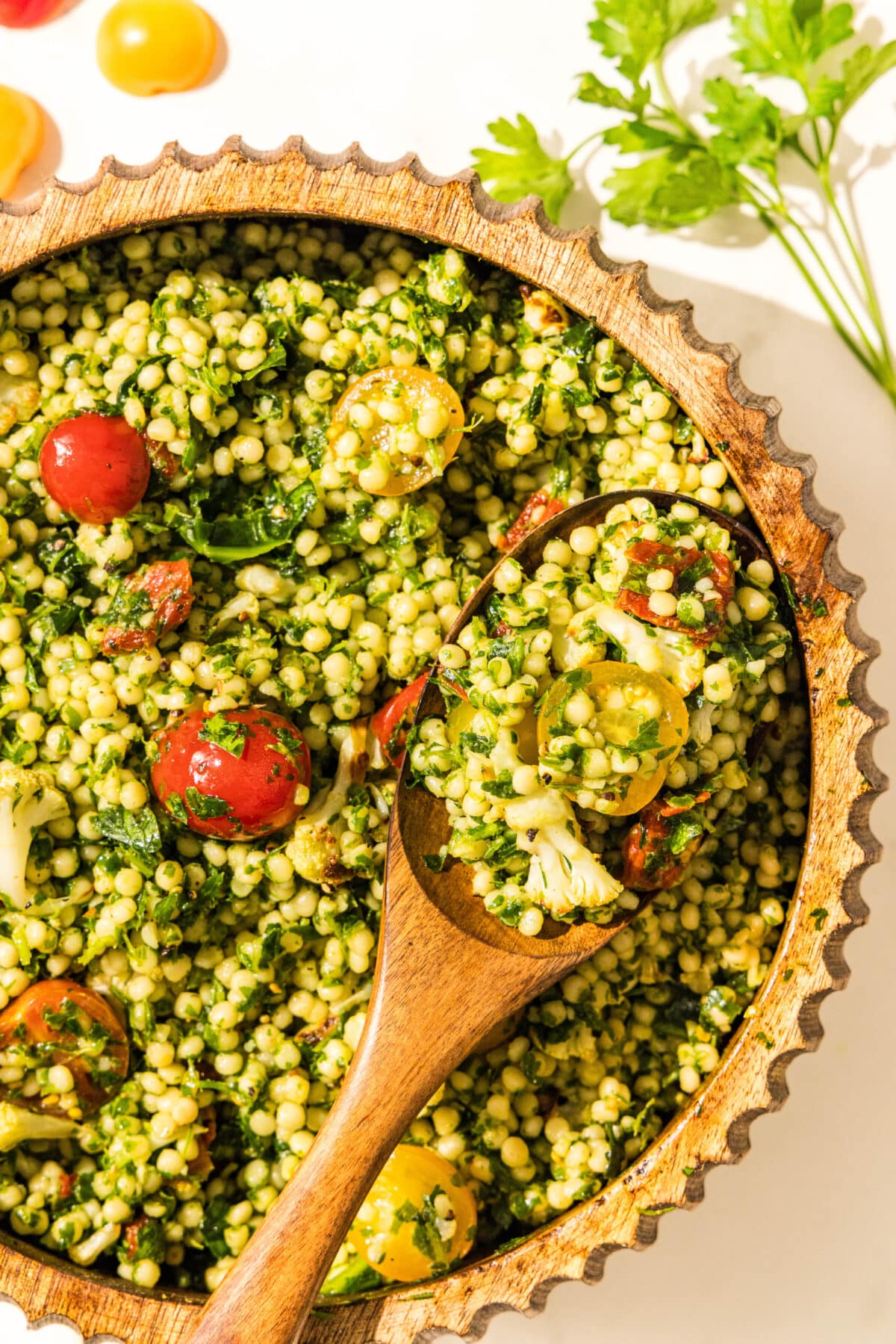
Time
Preparation Time: 15 minutes

Cooking Time: 30 minutes
Total Time: 45 minutes
Needed Equipment
- Oven and baking sheet – for roasting vegetables
- Large mixing bowls – for tossing vegetables and combining ingredients
- Sharp chef’s knife – for chopping vegetables and nuts
- Cutting board – a sturdy surface for preparing ingredients
- Large saucepan with a tight-fitting lid – for cooking couscous
- Measuring cups and spoons – for accurate ingredient measurement
- Fork – for fluffing cooked couscous
- Spatula or wooden spoon – for stirring and mixing
- Serving bowls or platters – for presentation and serving
Tags
- Vegetarian
- Vegan (with optional cheese substitute)
- Gluten-Free (if using gluten-free couscous)
- Healthy
- Quick & Easy
- Vegetable-Based
- Plant-Based
- Meal Prep
- Family Friendly
Serving Size
This recipe yields approximately 6 to 8 generous servings, making it ideal for family dinners, meal prepping, or entertaining guests. The portion size per serving is roughly 1 to 1.5 cups, depending on whether it’s served as a side or main dish.
Difficulty Level
This dish is classified as Easy. It requires basic knife skills, oven roasting, and simple stovetop cooking, making it accessible to cooks of all skill levels, including beginners.
Allergen Information
- Gluten: Present in couscous (unless using gluten-free couscous or alternative grain)
- Nuts: Contains walnuts
- Legumes: Contains chickpeas (garbanzo beans)
- Olives: Contains kalamata olives, which may be allergenic for some individuals
Dietary Preference
This recipe is naturally vegetarian and can be made vegan by substituting the chicken broth with vegetable broth and omitting any cheese or dairy-based toppings. It aligns well with plant-based diets and can be easily adapted to gluten-free diets with the right couscous.
Course
- Main Course
- Side Dish
Cuisine
Middle Eastern-inspired, Mediterranean, Vegetarian
Ingredients
| Ingredient | Quantity | Notes |
|---|---|---|
| Large onion | 1 | Yellow or red onion, peeled and sliced into thin wedges |
| Zucchini | 1 medium | Cut into bite-sized chunks |
| Olive oil | 1 tablespoon | Extra virgin preferred for flavor |
| Kosher salt | 2 teaspoons | Adjust to taste |
| Black pepper | 1/2 teaspoon | Freshly ground for best flavor |
| Chicken broth | 2 1/2 cups | Can substitute with vegetable broth for vegetarian/vegan options |
| Kalamata olives | 12, pitted and halved | Adds briny flavor |
| Walnuts | 1 cup | Chopped; to toast for extra crunch, see tips |
| Garbanzo beans (chickpeas) | 1 can (15 ounces) | Drained and rinsed |
| Dried oregano | 1 teaspoon | Optional, for herbaceous flavor |
| Cinnamon | 1/4 teaspoon | For warm, aromatic notes |
| Hot sauce | To taste | Optional, for a spicy kick |
Instructions
Step 1: Preheat the Oven
Begin by setting your oven to 425°F (220°C). This high temperature ensures the vegetables will roast quickly and develop a lovely caramelized exterior, enhancing their natural sweetness and adding depth to the dish. Position the oven racks in the middle to ensure even heat distribution. While the oven is heating, gather your baking sheet and line it with parchment paper or a silicone baking mat to facilitate easy cleanup and prevent sticking.
Step 2: Prepare the Vegetables
Start by peeling the onion. Use a sharp chef’s knife to cut off both ends, then slice it into thin wedges. This technique exposes more surface area, promoting even caramelization during roasting. For the zucchini, wash thoroughly under cold water, then cut off the stem and blossom ends. Slice the zucchini into bite-sized chunks, approximately 1-inch pieces, to ensure they cook uniformly. Place the prepared vegetables into a large mixing bowl.
Step 3: Toss Vegetables with Seasonings
Pour the olive oil over the vegetables. Use a wooden spoon or your hands to toss the vegetables thoroughly, ensuring each piece is coated evenly with oil. Add the kosher salt and black pepper, then toss again. Proper seasoning at this stage is crucial, as it will flavor the vegetables during roasting. For an extra layer of flavor, you might consider adding minced garlic or smoked paprika if desired, but keep it simple for this base recipe.
Step 4: Roast the Vegetables
Spread the seasoned vegetables in a single layer on the prepared baking sheet. Avoid overcrowding the pan, as this can cause steaming instead of roasting, preventing the vegetables from achieving that desirable golden-brown crust. Place the baking sheet in the oven and roast for approximately 25-30 minutes. During the roasting process, stir or flip the vegetables at the halfway mark to promote even caramelization and prevent burning. Keep an eye on them towards the end of cooking; they should be tender and slightly crispy around the edges.
Step 5: Prepare the Couscous
While the vegetables are roasting, start preparing the couscous. In a medium saucepan, pour the chicken broth. Bring it to a boil over medium-high heat. Using broth enhances flavor, but for vegetarians or vegans, substitute with vegetable broth or water. Once boiling, add the couscous directly into the liquid. Stir once to prevent clumping, then allow it to return to a boil. Immediately cover the saucepan with a tight-fitting lid, turn off the heat, and let it sit undisturbed for 5 minutes. This steaming method ensures the couscous absorbs the hot liquid evenly, resulting in fluffy grains.
Step 6: Fluff and Combine
After the resting period, remove the lid and fluff the couscous gently with a fork. This process separates the grains and prevents clumping. In a large mixing bowl, combine the fluffy couscous with the roasted vegetables. Add the halved kalamata olives, chopped walnuts, drained chickpeas, dried oregano, and cinnamon. Gently stir to incorporate all ingredients evenly. The olives and walnuts add contrasting textures and flavors—salty and crunchy—while the chickpeas provide additional protein and fiber. The cinnamon adds warmth and depth, complementing the roasted flavors beautifully.
Step 7: Adjust Seasoning and Serve
Taste the combined dish and adjust the seasoning as needed. Add more salt or pepper if desired. For a spicy touch, drizzle hot sauce to taste and stir again. Serve the couscous warm, either directly from the bowl or plated onto individual dishes. Garnish with fresh herbs like parsley or cilantro if desired for added freshness and color. This dish can be enjoyed as a main course or as a hearty side dish accompanying grilled meats or seafood.
Preparation Tips
- Vegetable Variations: Feel free to add or substitute vegetables such as bell peppers, cherry tomatoes, carrots, or eggplant for variety.
- Toasting Nuts: Toast walnuts in a dry skillet over medium heat for 3-5 minutes until fragrant before adding to the dish for an enhanced nutty flavor.
- Flavor Enhancements: Incorporate fresh herbs like parsley, mint, or cilantro after cooking for a burst of freshness.
- Make Ahead: Roast the vegetables and prepare the couscous in advance. Store separately in airtight containers in the refrigerator for up to 2 days and combine just before serving.
Nutritional Information
| Nutrient | Per Serving (approximate) |
|---|---|
| Calories | 320 kcal |
| Protein | 8 grams |
| Carbohydrates | 45 grams |
| Dietary Fiber | 9 grams |
| Fat | 13 grams |
| Sugar | 5 grams |
| Sodium | 520 mg |
Tips and Tricks
- Batch Roasting: Roast a larger quantity of vegetables and store leftovers for quick meals later in the week.
- Adding Protein: Top with crumbled feta or goat cheese for extra creaminess, or serve alongside grilled chicken for a non-vegetarian version.
- Spice Variations: Spice up the dish with cumin, smoked paprika, or chili flakes for additional heat and depth.
- Presentation: For a visually stunning presentation, layer the couscous and vegetables in a transparent glass bowl or plate, garnished with fresh herbs and lemon zest.
Add-ons and Customizations
- Crumbled feta, goat cheese, or vegan cheese for creaminess
- Fresh herbs such as parsley, mint, or cilantro
- Grilled chicken, shrimp, or tofu for added protein
- Lemon zest or a squeeze of lemon juice for brightness
- Roasted sweet potatoes or carrots for added sweetness
Side Dishes
- Hummus and pita bread for a Middle Eastern-inspired meal
- Grilled kebabs or skewers of vegetables and meat
- Fresh green salad with lemon vinaigrette
- Yogurt-based raita or tzatziki for cooling contrast
Improvements
- Incorporate roasted cherry tomatoes or bell peppers for more color and flavor
- Add a dash of sumac or za’atar seasoning to enhance Middle Eastern authenticity
- Use pearl couscous for a more substantial texture
Save and Store
Leftovers can be stored in airtight containers in the refrigerator for up to 3 days. To reheat, microwave in short bursts or warm in a skillet over low heat, adding a splash of water or broth if necessary to maintain moisture. For longer storage, consider freezing portions in freezer-safe containers for up to 1 month. To prevent sogginess, store the couscous and roasted vegetables separately, and combine just before serving.
FAQ
Can I make this dish vegan?
Yes, simply replace chicken broth with vegetable broth and omit any cheese or dairy-based toppings. The dish naturally lends itself to vegan modifications.
Can I prepare this in advance?
Absolutely. Roast the vegetables and cook the couscous ahead of time, then combine them just before serving. Keep components refrigerated separately for best results.
Is couscous gluten-free?
Traditional couscous is made from wheat and contains gluten. For gluten-free options, substitute with gluten-free grains like millet, quinoa, or cauliflower rice.
What other vegetables can I add?
Feel free to incorporate bell peppers, cherry tomatoes, carrots, eggplant, or sweet potatoes for variety and added nutrients.
Conclusion
Creating a vibrant, wholesome Roasted Vegetable Couscous dish is an excellent way to celebrate the natural flavors of seasonal vegetables while enjoying a nutritious and satisfying meal. Its simplicity and versatility make it suitable for various dietary needs and preferences, and its colorful presentation is sure to impress family and friends alike. The combination of roasted vegetables, fragrant spices, and fluffy couscous embodies the essence of Mediterranean-inspired cuisine, promoting health, flavor, and culinary creativity. At Love With Recipes, we encourage you to experiment with this recipe, customizing it to your taste and dietary requirements. Remember, the key to a perfect dish lies in quality ingredients, proper seasoning, and a touch of love in every step.
References
- Medina, L. (2018). Mediterranean Flavors: Cooking with Herbs and Spices. Culinary Press.
- Harvard T.H. Chan School of Public Health. (2020). The Healthy Eating Plate: Vegetables & Legumes.