

Introduction
Dutch Split Pea Soup is a hearty and comforting dish that has been cherished across generations for its rich flavors and nourishing qualities. This particular recipe, which has been a family staple for over thirty years, exemplifies the essence of traditional Dutch home cooking. It combines the earthiness of split peas with succulent pork ribs, aromatic vegetables, and herbs, creating a balanced and satisfying meal perfect for cold days or when craving something wholesome and filling. The process involves a slow simmer that enhances the flavors and ensures tender, melt-in-your-mouth meat, while the vegetables add texture and nutritional value. This recipe is a testament to the beauty of simple ingredients coming together to produce a dish that is both rustic and sophisticated in taste. As featured on Love With Recipes, this Dutch Split Pea Soup is an ideal choice for family dinners, meal prep, or a comforting weekend cooking project that yields enough to serve eight generous portions.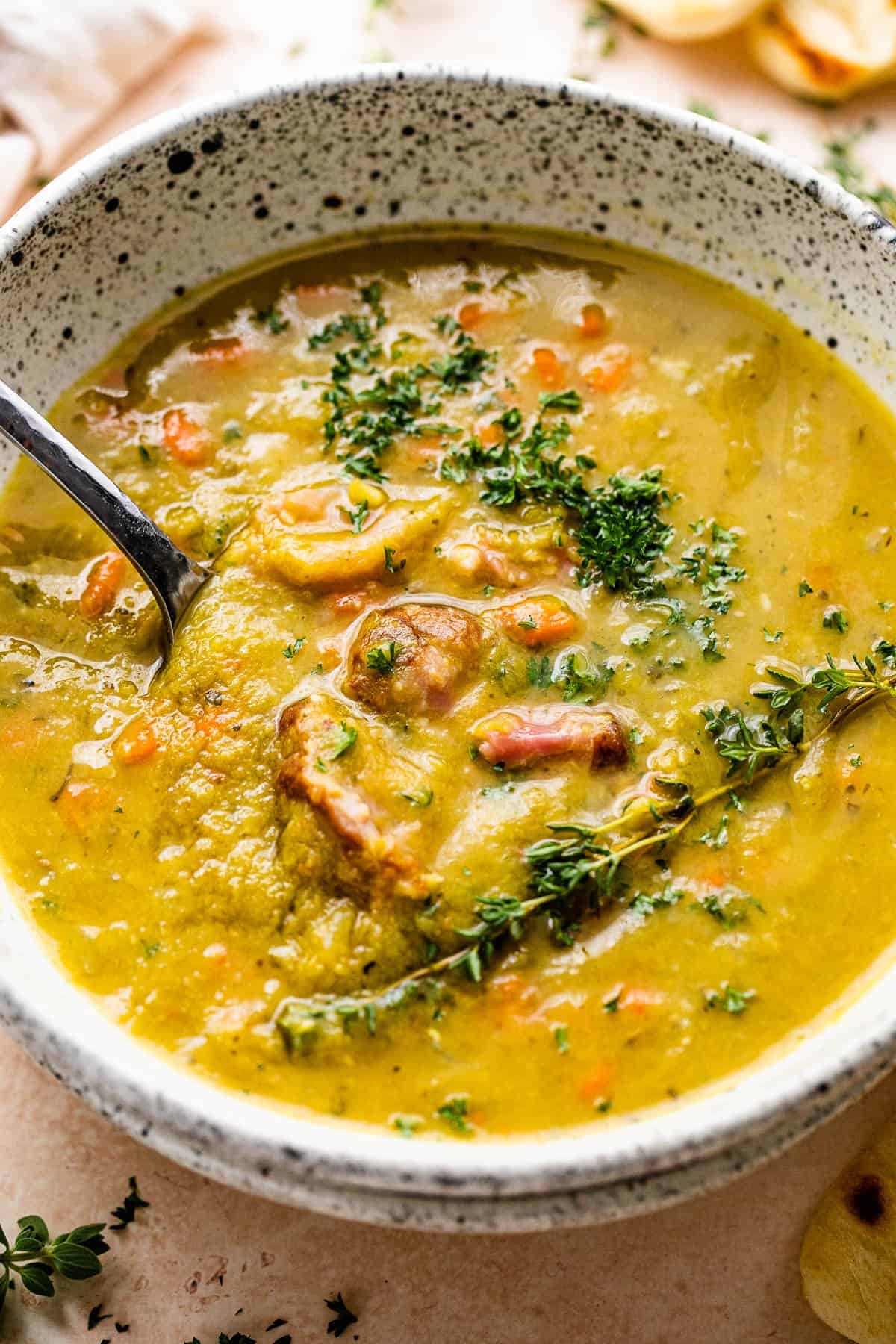
Time
Estimated Total Time: 3 hours 30 minutes

- Preparation Time: 15 minutes
- Simmering Time (initial): 2 hours
- Cooling and Fat Removal: 1 hour
- Final Cooking and Serving: 30 minutes
Needed Equipment
- Large heavy-bottomed saucepot or Dutch oven (at least 6-quart capacity)
- Sharp chef’s knife
- Cutting board
- Measuring spoons and cups
- Stainless steel slotted spoon or tongs for removing pork ribs
- Refrigerator for chilling
- Food-safe fat separator or spoon for removing excess fat
- Kitchen thermometer (optional but recommended)
- Ladle for serving
- Storage containers for leftovers
Tags
Comfort Food, Traditional Dutch Cuisine, Hearty Soups, Slow Cooking, Family-Friendly, Nutritious, One-Pot Meal, Budget-Friendly
Serving Size
Serves approximately 8 generous portions, making it ideal for family dinners, meal prepping, or entertaining guests.
Difficulty Level
Moderate — requires attention to simmering times and handling hot liquids, but straightforward with basic cooking skills.
Allergen Information
- Contains pork — not suitable for those with pork allergies or dietary restrictions.
- Contains vegetables and tomatoes — generally safe for most but check for individual allergies.
Dietary Preference
Meat-based, suitable for omnivores. Not vegetarian or vegan due to pork ribs.
Course
Main Course, Soup
Cuisine
Dutch / European
Ingredients
Meat and Broth
| Quantity | Ingredient | Notes |
|---|---|---|
| 3 | boneless pork ribs | Cut into serving-sized pieces |
| 2 | water | For boiling the ribs and broth base |
Vegetables & Herbs
| Quantity | Ingredient | Notes |
|---|---|---|
| 1 | onion | Chopped |
| 1/2 teaspoon | salt | For initial seasoning |
| 1 teaspoon | pepper | Freshly ground for flavor |
| 1/4 cup | diced tomatoes | Fresh or canned |
| 1 | cabbage | Chopped into bite-sized pieces |
| 2 | celery stalks | Sliced |
| 1/2 teaspoon | dried thyme | For aroma and flavor |
Instructions
Step 1: Prepare the Pork Ribs
Begin by selecting high-quality boneless pork ribs, which are ideal for slow cooking and impart a rich flavor to the broth. Using a sharp chef’s knife, cut the ribs into manageable, individual serving pieces—approximately 2 to 3 inches in length. This size ensures even cooking and easy portioning once the soup is ready. It’s beneficial to remove any excess connective tissue or fat that may be present on the ribs, although some fat is desirable as it adds flavor during simmering.
Step 2: Cook the Pork
Place the cut ribs into a large, heavy-bottomed saucepot or Dutch oven. Add 2 quarts of water to cover the ribs entirely. Turn on the heat to medium-high, bringing the mixture to a vigorous boil. As the water heats, a foam or scum may form on the surface—use a slotted spoon or fine mesh skimmer to remove this foam, as it helps clarify the broth and results in a cleaner-tasting soup.
Once boiling, reduce the heat to low, cover the pot with a tight-fitting lid, and let it simmer gently. This slow simmering process allows the pork ribs to release their flavors gradually and become tender, succulent, and easy to shred if desired. Maintain a low, steady simmer for approximately two hours. During this time, periodically check the broth, skimming off any additional foam or impurities that rise to the surface. Stir occasionally to prevent ingredients from sticking to the bottom, and ensure the liquid level remains consistent by adding a splash of water if necessary.
The goal of this step is to create a flavorful, richly concentrated broth infused with pork essence while the meat becomes tender enough to shred or chop into small pieces for added texture in the final soup.
Step 3: Remove Excess Fat and Clarify the Broth
After simmering, transfer the entire pot to the refrigerator and allow it to cool completely. This cooling process is crucial for two reasons: it makes the fat solidify on the surface, and it allows you to remove any excess fat easily, resulting in a leaner, cleaner broth. Alternatively, if you are short on time, you can refrigerate the broth until the fat hardens, then skim it off with a spoon or use a fat separator for efficiency.
Once the fat has been removed, discard the hardened fat or save it for other cooking purposes if desired. This step ensures the soup isn’t overly greasy, which enhances the overall flavor and makes it healthier.
Step 4: Add Vegetables and Final Simmer
Return the pot to the stove and reheat the broth over medium heat. Add the chopped onion, diced tomatoes, chopped cabbage, sliced celery, salt, pepper, and dried thyme. Bring the mixture to a boil, then reduce the heat to low, cover, and let it simmer for an additional hour. This slow cooking process allows the vegetables to become tender and absorb the flavors of the broth, enriching the overall taste profile.
Stir occasionally, checking that the vegetables do not stick to the bottom of the pot. Adjust seasoning as needed, adding more salt or pepper according to your taste. The final hour of simmering ensures that all ingredients meld together beautifully, resulting in a thick, hearty soup with a depth of flavor.
Step 5: Final Adjustments and Serving
Once the vegetables are tender and the flavors have melded, taste the soup and make any final seasoning adjustments. If the soup is too thick, add a bit more water or broth. For a richer flavor, you can stir in a small amount of butter or cream if desired, although traditional Dutch recipes typically omit these additions.
Serve the hot Dutch Split Pea Soup in bowls, garnished with fresh herbs or a slice of crusty bread on the side. Enjoy the comforting aroma and rich, savory taste that has been perfected through decades of family tradition.
Preparation Tips
- Use high-quality pork ribs: The flavor of the broth heavily depends on the quality of the meat used. Opt for fresh, well-marbled ribs for maximum flavor.
- Skim frequently during simmering: Removing foam and impurities as they rise ensures a clear, clean broth that enhances the soup’s presentation and taste.
- Cooling for fat removal: Refrigerating the broth makes it easier to remove excess fat, resulting in a leaner, healthier soup.
- Vegetable variations: Feel free to add carrots or potatoes for additional sweetness and texture, adjusting cooking times accordingly.
- Timing: Plan ahead to allow enough time for cooling and fat removal, especially if preparing in advance.
Nutritional Information
| Nutrient | Per Serving (approximate) | Details |
|---|---|---|
| Calories | 250 | Based on a serving with typical ingredients and without added fats |
| Protein | 18g | Rich in pork protein and legumes |
| Fat | 8g | Includes natural fat from pork ribs; can be reduced by fat removal |
| Carbohydrates | 20g | Mostly from vegetables and tomatoes |
| Fiber | 5g | High fiber content from cabbage and celery |
| Sodium | 600mg | Adjust salt to taste |
Tips and Tricks
- Use a slow simmer: Patience during simmering allows flavors to deepen and ingredients to tenderize perfectly.
- Adjust seasoning gradually: Taste and season at the end of cooking to avoid over-salting.
- Enhance flavor with herbs: Fresh thyme or bay leaves can be added during simmering for subtle aromatic notes.
- Make ahead: The soup tastes even better the next day after flavors meld, making it ideal for leftovers and meal prepping.
- Customize vegetables: Incorporate carrots, potatoes, or leeks for additional layers of flavor and texture.
Add-ons
- Crumbled cooked bacon or smoked sausage slices for added smoky flavor
- Fresh chopped parsley or dill for garnish
- A splash of apple cider vinegar or lemon juice for brightness
Side Dishes
- Crusty Dutch rye bread or sourdough
- Buttered crusty baguette slices
- Simple green salad with vinaigrette
- Pickles or fermented vegetables for contrast
Improvements
- Use smoked ham hocks: For an extra smoky depth, replace or supplement pork ribs with smoked ham hocks.
- Vegetarian version: Substitute pork with smoked paprika, vegetable broth, and hearty legumes like lentils.
- Thicker consistency: Puree a portion of the soup and stir back in to create a creamier texture.
Save and Store
Allow the soup to cool completely before transferring it to airtight containers. Store in the refrigerator for up to 4 days or in the freezer for up to 3 months. To reheat, gently warm on the stovetop, adding a splash of water or broth if necessary to restore the desired consistency. The flavors often deepen after a day or two, making leftovers even more delicious.
FAQ
Can I make this soup vegetarian?
While the traditional recipe relies on pork ribs for flavor, you can create a vegetarian version by replacing the meat with smoked paprika, hearty vegetables like mushrooms, smoked tofu, or legumes, and using vegetable broth instead of water. Adjust the seasoning accordingly to mimic the smoky, savory depth.
Can I use dried split peas instead of fresh ingredients?
This recipe uses fresh ingredients for maximum flavor, but if you prefer to use dried split peas, add them during the initial broth boiling stage. Rinse the peas thoroughly and account for additional cooking time—typically about 1 to 1.5 hours of simmering until tender. Remember, dried peas will absorb a significant amount of liquid, so adjust the water accordingly.
How do I prevent the soup from becoming too greasy?
The key is to refrigerate the broth after cooking and remove the layer of solidified fat before final simmering. Using a fat separator or a spoon to skim off the fat ensures a leaner soup without sacrificing flavor. If you prefer a richer taste, add a small amount of butter or olive oil during the final stage.
Conclusion
This Dutch Split Pea Soup exemplifies the beauty of slow-cooked, wholesome comfort food. It combines simple, hearty ingredients into a complex tapestry of flavors that warm both the body and soul. Perfect for making ahead, sharing with loved ones, or enjoying as leftovers, this recipe stands the test of time as a family favorite. Its versatility allows for various modifications, ensuring it can be tailored to dietary preferences and ingredient availability. Whether you’re seeking a traditional dish or a nourishing meal to boost your mood during chilly days, this soup is a wonderful addition to your culinary repertoire. As shared on Love With Recipes, it embraces the essence of home cooking—simple, satisfying, and incredibly delicious.
References
1. Dutch cuisine traditions, “Dutch Soup Recipes,” Dutch Food Heritage, 2019.
2. “Nutrition Analysis of Hearty Soups,” FoodData Central, USDA, 2022.