

Introduction
Embark on a culinary voyage through Lebanon with this authentic Green Bean Stew, a hearty, nutritious, and flavor-rich dish that embodies the heart of Middle Eastern comfort food. This stew combines the tender succulence of lamb, the freshness of vibrant green beans, and a medley of aromatic spices that evoke the warmth and richness of Lebanese cuisine. Perfectly suited for family dinners or special gatherings, this dish offers a harmonious balance of textures and flavors that will delight your palate and impress your guests. As you prepare this traditional recipe, you’ll discover the art of layering flavors across different stages of cooking—each step building upon the last to create a complex, satisfying stew that tastes even better the next day. This recipe, featured on Love With Recipes, is designed to be accessible yet flavorful, with clear instructions and tips to ensure your success in the kitchen.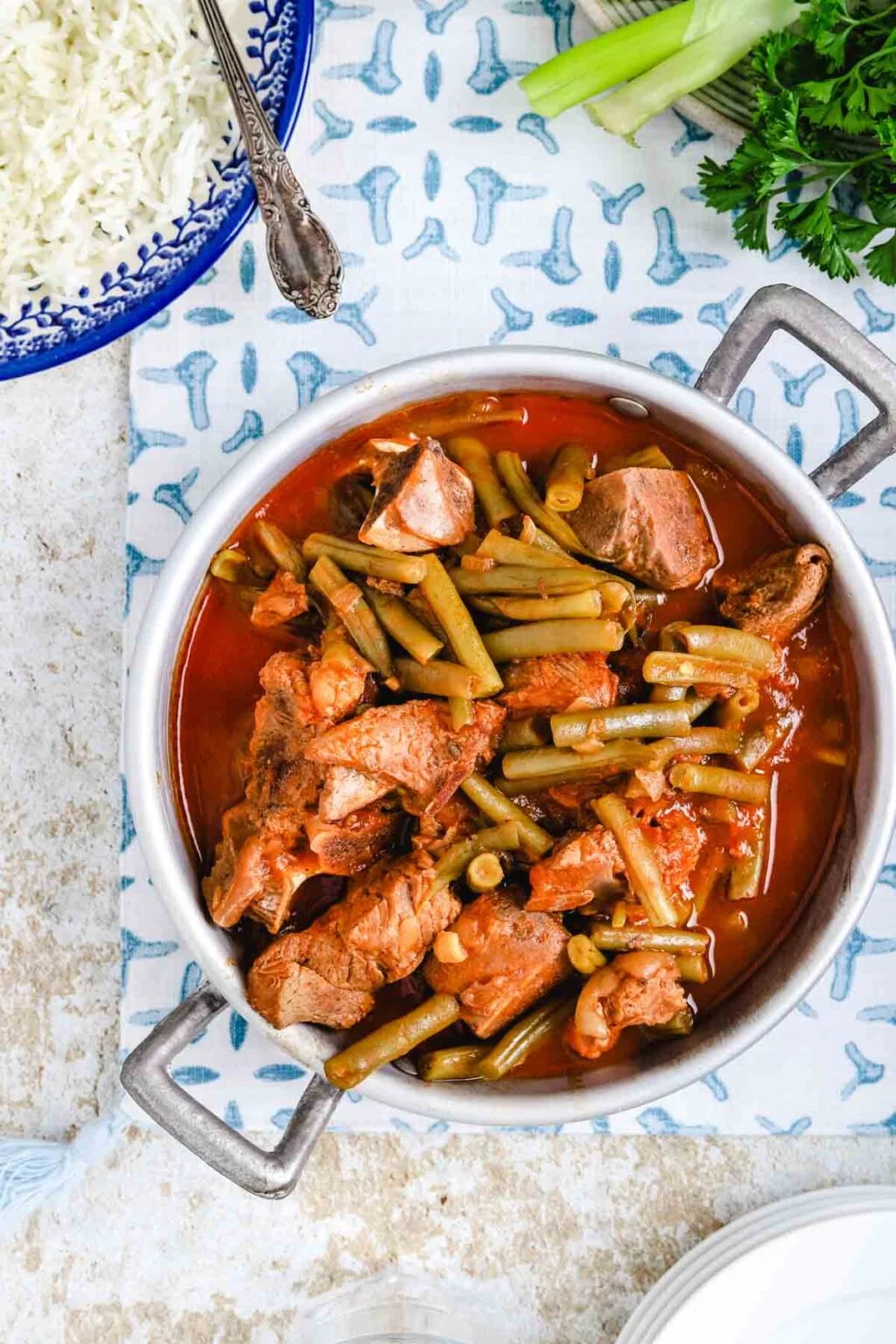
Time
Preparing this Lebanese Green Bean Stew involves a total of approximately 1 hour and 20 minutes. The process is divided into a quick prep phase of about 15 minutes, during which you gather and prepare your ingredients, followed by a cooking period of roughly 1 hour. The simmering stage, which allows the flavors to meld beautifully, takes around 55 minutes, ensuring the lamb becomes tender and the green beans absorb all the aromatic spices. This moderate cooking time makes it ideal for weeknight dinners or leisurely weekend meals, providing a satisfying experience without demanding hours of active effort.

Needed Equipment
- Large heavy-bottomed pot or Dutch oven: Essential for even heat distribution and slow simmering.
- Chef’s knife: For chopping onions, tomatoes, and trimming green beans.
- Cutting board: A sturdy surface for prepping vegetables and meat.
- Measuring spoons and cups: To accurately measure spices, liquids, and other ingredients.
- Wooden spoon or spatula: For stirring the stew and sautéing ingredients.
- Can opener: For opening canned or fresh whole tomatoes, if using.
- Kitchen tongs or slotted spoon: For handling green beans and removing cooked ingredients if needed.
- Serving bowls and ladles: For presenting and serving the stew.
- Optional: Rice cooker or pot: For preparing rice pilaf to serve alongside the stew.
Tags
Lebanese cuisine, Middle Eastern, Stew, Lamb, Green beans, Hearty, Comfort food, Traditional, Family-friendly, Easy, One-pot, Aromatic spices
Serving Size
This recipe yields approximately six generous servings, making it suitable for family dinners or small gatherings. Each serving provides a wholesome portion of tender lamb, flavorful green beans, and a rich broth, complemented by sides such as rice pilaf or warm bread.
Difficulty Level
Intermediate. While the steps are straightforward, achieving the perfect texture and flavor balance requires attention to seasoning, timing, and simmering techniques. Those with basic cooking skills—such as sautéing, chopping, and simmering—will find this recipe accessible. For beginners eager to explore Middle Eastern flavors, this dish offers a rewarding challenge that builds confidence in layer-building and spice blending.
Allergen Information
| Allergen | Presence | Notes |
|---|---|---|
| None specified | No | This dish does not inherently contain common allergens but check ingredients for added allergens. |
Dietary Preference
This recipe is suitable for omnivores and can be adapted for various dietary preferences. It is naturally gluten-free if served with gluten-free sides and can be made dairy-free by substituting butter with olive oil. For those following halal or kosher diets, ensure the lamb is sourced accordingly.
Course
Main Course
Cuisine
Lebanese / Middle Eastern
Ingredients
Ingredient Table
| Quantity | Ingredient | Notes |
|---|---|---|
| 2 | Fresh green beans | Trimmed and rinsed |
| 1 – 1½ lbs | Lamb (preferably shoulder or leg, cut into cubes) | Choose high-quality, fresh meat |
| 2 | Onions | Large, peeled and chopped |
| 3 tablespoons | Butter | For sautéing; can substitute with olive oil for dairy-free option |
| 3 | Whole tomatoes | Blended or chopped |
| 1/2 teaspoon | Salt | |
| 1/2 teaspoon | Pepper | |
| 1/2 teaspoon | Allspice | |
| 2 cups | Water or beef broth |
Instructions
1. Preparations and Ingredient Prep
Start by assembling all your ingredients and tools. Rinse the fresh green beans thoroughly under cold running water, ensuring any dirt, debris, or residual pesticides are removed. Trim the stem ends carefully, using a sharp chef’s knife, and cut the beans in half to facilitate even cooking and better absorption of flavors. Set aside in a bowl or plate.
Peel and chop the onions finely or into medium-sized pieces, depending on your preference. Chop the whole tomatoes into small cubes or blend them smoothly depending on the desired texture of the stew. If you prefer a chunkier broth, chopped tomatoes work well; for a smoother consistency, blending with a hand blender is ideal.
Cut the lamb into uniform cubes, approximately 1 to 1.5 inches in size, to ensure even cooking. Choose lamb cuts with some marbling for tenderness and flavor. Prepare your measuring spoons and cups, and have your butter, spices, and water ready for the cooking process.
2. Sautéing Lamb and Onions
Place a large, heavy-bottomed pot or Dutch oven on the stove over medium heat. Add the three tablespoons of butter, allowing it to melt and coat the bottom evenly. Butter adds richness and enhances the aroma of the stew, but for a healthier or dairy-free version, olive oil can be used.
Once melted, add the lamb cubes to the pot, spreading them out so they cook evenly. Sear the meat on all sides until they develop a rich, golden-brown crust—this step is crucial for developing depth of flavor. Use a wooden spoon or spatula to stir and turn the meat occasionally, ensuring uniform browning.
After the lamb has browned, add the chopped onions to the pot. Sauté until the onions become translucent and slightly caramelized, which takes about 5-7 minutes. This process releases the sugars in the onions and infuses the lamb with aromatic sweetness, forming the flavor base of your stew.
3. Incorporating Green Beans and Spices
Next, add the prepared green beans to the pot. Stir well to combine with the lamb and onions. Sauté the mixture for about 10 minutes, allowing the green beans to soften slightly and absorb some of the flavors. This step also helps to deepen the flavor profile by caramelizing the sugars in the beans and enhancing their natural freshness.
Season the mixture with 1/2 teaspoon each of salt, pepper, and allspice. These spices are fundamental to Lebanese cuisine, providing warmth, sweetness, and depth. Stir thoroughly so that the spices evenly coat all ingredients, releasing their aroma and flavor as they cook.
4. Adding Tomatoes and Liquids
Now, incorporate the chopped or blended whole tomatoes into the stew. The acidity and sweetness of tomatoes are vital to balancing the richness of the lamb and the earthiness of the green beans. Stir to combine, allowing the tomatoes to release their juices and meld with the other ingredients.
Pour in the 2 cups of water or beef broth, depending on your preference for a richer or lighter broth. The liquid will serve as the cooking medium, creating a flavorful broth that will develop over the simmering process.
Bring the mixture to a gentle boil, then reduce the heat to low. Cover the pot with a tight-fitting lid to retain moisture and flavors during the slow simmering stage.
5. Simmering to Perfection
Allow the stew to simmer on low heat for approximately 55 minutes. During this time, the lamb will become tender, and the green beans will soften uniformly. The flavors will intensify, and the broth will develop a rich, aromatic profile.
Occasionally check on the stew, stirring gently to prevent sticking or burning at the bottom. If necessary, add a splash more water or broth to maintain the desired consistency.
Test the lamb for tenderness—using a fork or skewer—and adjust the seasoning as needed. You may want to add a pinch more salt or spices to enhance the flavor as it cooks.
Preparation Tips
- Use fresh, high-quality ingredients for the best flavor and texture.
- For an even richer taste, consider browning the lamb in batches to avoid overcrowding the pan.
- Sealing in the flavors by simmering slowly allows the meat to become meltingly tender and the vegetables to develop their full aroma.
- If you prefer a thicker stew, you can mash some of the cooked tomatoes or add a slurry of cornstarch or flour mixed with water during the last 10 minutes of cooking.
- For a vegan or vegetarian version, substitute lamb with hearty vegetables like eggplant or mushrooms and use vegetable broth.
Nutritional Information
| Nutrient | Per Serving |
|---|---|
| Calories | 252.7 kcal |
| Fat Content | 13.8 g |
| Saturated Fat | 6.9 g |
| Cholesterol | 55.3 mg |
| Sodium | 1252.7 mg |
| Carbohydrates | 20.3 g |
| Fiber | 7.5 g |
| Sugar | 7.5 g |
| Protein | 15.1 g |
Tips and Tricks
- For deeper flavor, toast the allspice and other spices lightly in a dry pan before adding them to the stew. This releases essential oils and enhances aroma.
- Adding a splash of lemon juice or a sprinkle of sumac at the end brightens the dish with a subtle tang, characteristic of Lebanese cuisine.
- If you prefer a more tender lamb, marinate the meat overnight with a little lemon juice, garlic, and spices before cooking.
- For a gluten-free side, serve the stew with fluffy rice pilaf or freshly baked flatbread.
- Use a slow cooker for an even more hands-off approach—sauté the ingredients first, then transfer to a slow cooker and cook on low for 6-8 hours.
Add-ons
- Top with toasted pine nuts or slivered almonds for added crunch.
- Garnish with fresh herbs such as parsley, cilantro, or mint for a burst of freshness.
- Serve with a side of warm pita bread or crusty Lebanese bread for scooping.
- Incorporate other vegetables like carrots, potatoes, or eggplant for additional texture and nutrition.
Side Dishes
- Rice Pilaf: Fluffy rice cooked with vermicelli or orzo, seasoned with cinnamon and cardamom.
- Lebanese Fattoush Salad: Fresh vegetables, herbs, and toasted pita croutons dressed with sumac and lemon.
- Hummus or Baba Ganoush: Creamy dips that complement the hearty stew.
- Warm Flatbread or Pita: Perfect for scooping up the stew and sides.
Improvements and Variations
- Vegetarian adaptation: Replace lamb with hearty vegetables or plant-based protein sources like chickpeas or lentils.
- Spice customization: Add cinnamon, cumin, or turmeric to deepen the flavor profile.
- Richness boost: Incorporate a dash of tomato paste or a tablespoon of pomegranate molasses for tang and depth.
- Texture variation: Use diced eggplants or potatoes for a more substantial stew.
Save and Store
This stew keeps well in an airtight container in the refrigerator for up to 3 days. The flavors deepen over time, making it an excellent make-ahead meal. To reheat, gently warm on the stovetop over low heat, adding a splash of water or broth if necessary to restore the broth’s consistency. For longer storage, freeze in portion-sized containers for up to 3 months. Thaw overnight in the refrigerator and reheat thoroughly before serving.
FAQ
Can I use frozen green beans?
Yes, frozen green beans can be used, but fresh green beans provide a firmer texture and brighter flavor. If using frozen, thaw and drain excess moisture before adding to the stew.
Can I substitute lamb with beef or chicken?
Absolutely. Beef, especially chuck or brisket, can be used for a similar melt-in-your-mouth texture. Chicken thighs are a leaner alternative but will require a shorter cooking time—about 30-40 minutes—so monitor tenderness.
Is this dish suitable for gluten-free diets?
Yes, as long as you serve it with gluten-free sides like rice or gluten-free bread. Avoid thickening with wheat-based ingredients.
What if I want a spicier version?
Add a pinch of cayenne pepper, red chili flakes, or a dash of hot sauce during the seasoning stage. Always taste and adjust accordingly.
How can I make this dish more nutritious?
Add additional vegetables like carrots, potatoes, or spinach. Incorporate legumes such as chickpeas for extra protein and fiber.
Conclusion
This Lebanese Green Bean Stew embodies the comforting and aromatic qualities of traditional Middle Eastern cooking. Its layered flavors, tender meat, and fresh vegetables make it a versatile dish suitable for various dietary needs and occasions. Whether served over rice, with warm pita, or alongside a fresh salad, it promises a wholesome, satisfying experience that captures the essence of Lebanese culinary heritage. The simplicity of the ingredients combined with the complexity of spices and slow simmering creates a dish that is not only delicious but also deeply nourishing. As you master this recipe, you open the door to exploring more Lebanese and Middle Eastern recipes, each offering unique spices and stories from the region. Happy cooking and enjoy your journey through the flavors of Lebanon, brought to you by Love With Recipes!