
Introduction
At Love With Recipes, we believe that pasta dishes are an exquisite canvas for exploring diverse flavors and textures from around the world. Today, we present a sophisticated yet approachable recipe: Pasta with Squid and Hard-Boiled Egg Yolk. This dish intricately combines the tender, slightly sweet flavor of fresh squid with the bright acidity of cherry tomatoes, the nutty crunch of toasted hazelnuts, and the rich, velvety smoothness of crumbled hard-boiled egg yolks. It is a culinary symphony that balances seafood freshness, vegetal brightness, and textural contrast, making it suitable for both casual weeknight dinners and impressive entertaining.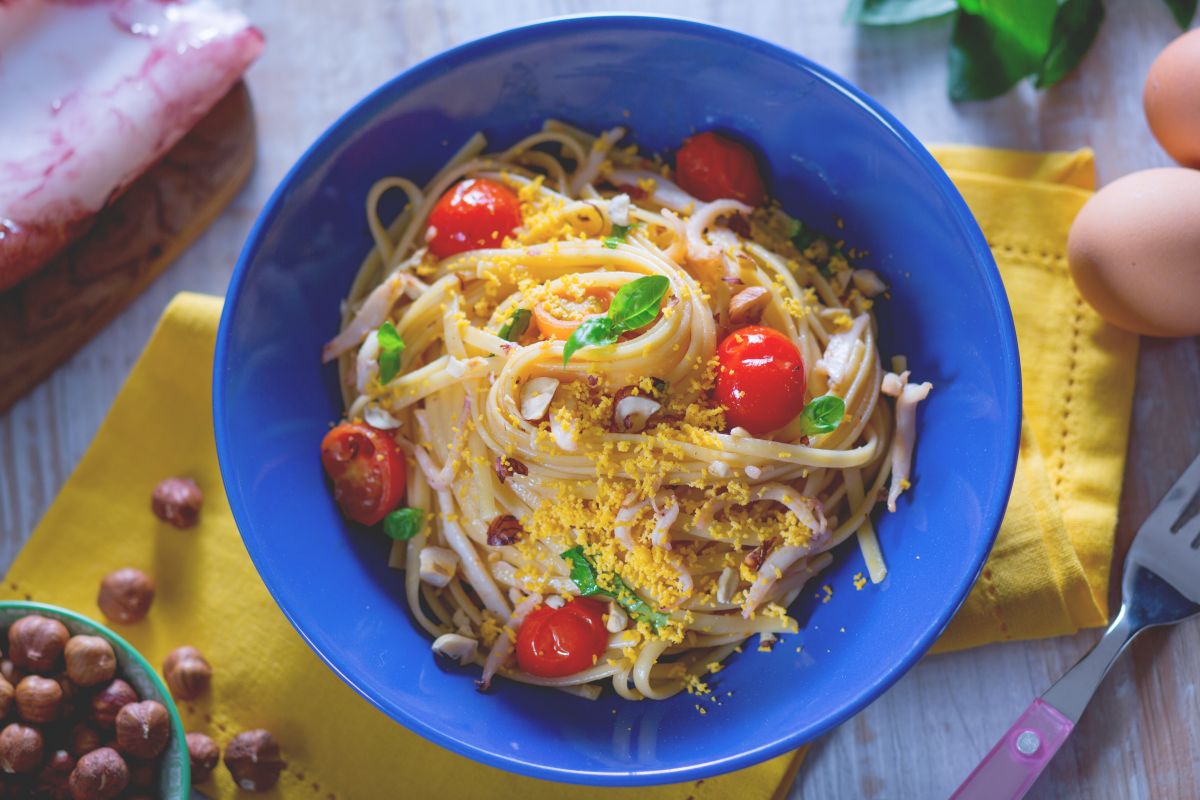
This recipe is rooted in Mediterranean influences, emphasizing fresh, quality ingredients, and simple techniques that elevate each component. The inclusion of toasted hazelnuts adds a subtle nutty aroma and crunch, contrasting beautifully with the softness of the pasta and seafood. The crumbled egg yolk acts as a creamy binder, enriching the sauce with umami depth and a silky finish.

As always, we encourage you to experiment with ingredients and adapt the recipe to your palate and dietary needs. For instance, you can substitute different pasta shapes or use other nuts like almonds or pine nuts. The freshness of basil and quality of olive oil are pivotal for achieving the dish’s authentic flavor profile. This recipe is a testament to how a few well-chosen ingredients can create a memorable, gourmet meal that delights the senses.
Remember, Love With Recipes is dedicated to providing comprehensive, detailed culinary content that empowers home cooks to master sophisticated dishes with confidence. So, gather your ingredients, follow our precise instructions, and enjoy the process of creating this culinary masterpiece.
Time
The total preparation and cooking time for this dish is approximately 45 to 55 minutes, allowing for peeling, chopping, cooking, and assembling. Here is a quick breakdown:
- Preparation: 20 minutes
- Cooking: 25-30 minutes
- Total: 45-55 minutes
This timing ensures that each step is executed with care, resulting in a dish where flavors are layered and textures are perfectly balanced. Be mindful that peeling and preparing the squid might take a little extra time if you are unfamiliar with seafood handling, so plan accordingly.
Needed Equipment
To achieve optimal results, gather the following equipment before starting:
- Small saucepan: For boiling eggs
- Slotted spoon or tongs: For removing eggs from boiling water
- Fine sieve or grater: To crumble egg yolks finely
- Sharp paring or utility knife: For cleaning and slicing squid
- Cutting board: For preparing ingredients
- Kitchen towels or paper towels: For drying squid
- Dry skillet or frying pan: For toasting hazelnuts and cooking sauce
- Large pot: For boiling pasta
- Colander or pasta strainer: For draining pasta
- Wooden spoon or silicone spatula: For stirring sauce
- Measuring spoons and cups: For precise ingredient measurement
- Microplane or garlic press: For mincing garlic (optional)
- Serving bowls or plates: For presentation
- Kitchen thermometer (optional): For verifying egg cooking temperature
Tags
- Seafood
- Pasta
- Italian cuisine
- Seafood pasta
- Healthy
- Elegant
- Quick meal
- Nutty flavor
Serving Size
This recipe generously serves four individuals, offering a balanced portion of pasta, seafood, and accompaniments. Each serving is approximately 350 grams of finished dish, which is suitable for a main course. The dish is satisfying without being overly heavy, thanks to the freshness of the tomatoes and the lightness of the seafood.
Difficulty Level
This recipe falls into the Intermediate category. It requires basic cooking skills such as boiling eggs, cleaning squid, and sautéing, but also involves attention to detail in handling seafood and balancing flavors. Home cooks with some experience in pasta dishes and seafood preparation should find this approachable, while beginners can master it with careful execution and patience.
Allergen Information
| Allergen | Presence | Notes |
|---|---|---|
| Seafood (Squid) | Yes | Ensure freshness and proper handling |
| Nuts (Hazelnuts) | Yes | Can be omitted or substituted for nut allergies |
| Eggs | Yes | Contains egg yolk only, for those with egg allergies |
| Gluten (Pasta) | Yes | Use gluten-free pasta if needed |
| Garlic & Basil | No | Common allergens or irritants for some individuals |
Dietary Preference
This dish is naturally gluten-containing and pescatarian. It can be adapted for specific dietary needs:
- Gluten-Free: Substitute traditional pasta with gluten-free alternatives like rice or corn pasta.
- Vegan: Omit eggs and seafood; replace with sautéed vegetables and plant-based protein sources like seitan or tofu.
- Keto: Use low-carb pasta options and reduce the amount of cherry tomatoes.
Course
This recipe is classified as a Main Course, perfect for lunch or dinner. It provides a balanced mix of protein, healthy fats, and carbohydrates, making it a complete meal.
Cuisine
The dish draws inspiration from Mediterranean cuisine, especially Italian coastal regions, blending seafood freshness with simple, vibrant ingredients that highlight natural flavors.
Ingredients in Tables
Detailed Ingredient List
| Ingredient | Quantity | Notes |
|---|---|---|
| Linguine (or preferred pasta) | 320g | Choose high-quality, durum wheat linguine for best texture |
| Squid (fresh or frozen) | 250g | Fresh is preferable for flavor; thaw frozen squid completely before preparation |
| Extra virgin olive oil | 30g (about 2 tablespoons) | Use good quality oil for richer flavor |
| Cherry tomatoes | 300g | Fresh, ripe tomatoes for sweetness and acidity |
| Eggs | 120g (about 2 medium eggs) | For boiling and yolk crumbling |
| White wine | 30g (about 2 tablespoons) | Dry white wine enhances sauce complexity |
| Hazelnuts | 40g | Toasted and chopped for crunch |
| Garlic (whole cloves) | 2 cloves | Fresh garlic for infusion |
| Fresh basil leaves | 3 leaves | For garnish and flavor |
| Fine salt | To taste | Use sparingly to enhance flavor |
| Black pepper | To taste | Freshly ground preferred |
Instructions
Step 1: Prepare the Hard-Boiled Eggs
Begin by cooking the eggs to get the perfect yolk for crumbling into the sauce. Fill a small saucepan with enough cold water to cover the eggs completely. Carefully place the eggs into the water, ensuring they are in a single layer. Place the saucepan on the stove over medium-high heat and bring the water to a rolling boil. Once boiling, reduce the heat slightly to prevent cracking and cook for exactly 9 minutes for medium eggs. Adjust the time slightly if you prefer a slightly softer or firmer yolk, but 9 minutes typically yields a creamy, fully set yolk ideal for crumbling.
After cooking, remove the eggs using a slotted spoon or tongs and transfer them immediately into a bowl of ice-cold water. This halts the cooking process and makes peeling easier. Leave the eggs in the cold water for at least 5 minutes before peeling. Carefully peel the eggs, removing all shells and membranes, until only the yolk remains. Use a fine sieve or grater to crumble the yolks into small, uniform crumbles. Set aside on a clean plate or bowl.
Step 2: Clean and Prepare the Squid
Properly cleaning the squid ensures a tender texture and a clean taste. Rinse the squid thoroughly under cold running water. Hold the body (mantle) firmly and gently pull to remove the head and tentacles. Discard the internal organs and ink sac if present. Remove the transparent, plastic-like cartilage from inside the mantle. Use a sharp knife or paring knife to peel away the outer skin gently, exposing the smooth, white flesh underneath. Rinse again briefly and pat dry with paper towels.
Cut the squid into rings or bite-sized pieces, depending on your preference. The tentacles can be chopped roughly and added directly to the sauce for extra flavor. Ensure all pieces are uniform in size to promote even cooking. Place the prepared squid in a shallow dish or bowl, ready for cooking.
Step 3: Toast the Hazelnuts
In a dry skillet over medium heat, toast the hazelnuts, stirring frequently to prevent burning. The goal is to develop a golden-brown color and enhance their aroma. This process takes about 3-5 minutes. Once toasted, transfer the hazelnuts to a cutting board and chop roughly with a sharp knife. The crunch and toasted flavor will add a delightful dimension to the dish. Set aside.
Step 4: Prepare the Sauce
Using the same skillet, heat the extra virgin olive oil over medium heat. Add the whole garlic cloves and allow them to infuse the oil gently for 2-3 minutes. Do not let the garlic brown excessively to avoid bitterness. Once fragrant, remove the garlic cloves from the pan with tongs or a slotted spoon, reserving the infused oil.
Deglaze the pan with white wine, scraping any browned bits from the bottom with a spatula. Let the wine simmer for 1-2 minutes to reduce slightly, concentrating the flavors. Add the cherry tomatoes to the skillet, stirring gently to coat them with the oil and wine. Season with fine salt and freshly ground black pepper. Cook the tomatoes for about 10 minutes, stirring occasionally, until they soften and release their juices, creating a vibrant and flavorful sauce base.
Step 5: Cook the Pasta
While the sauce simmers, bring a large pot of salted water to a rolling boil. Use approximately 4-5 liters of water per 320g of pasta for optimal cooking. Add the linguine and cook according to package instructions—usually about 8 minutes—until al dente. Stir occasionally to prevent sticking. To test doneness, bite into a strand; it should be tender yet firm to the bite.
Reserve about half a cup of pasta water before draining to adjust the sauce’s consistency later if needed. Drain the pasta in a colander and set aside.
Step 6: Combine the Pasta and Sauce
Add the drained pasta directly into the skillet with the tomato sauce. Toss gently to coat each strand thoroughly, allowing the pasta to soak up the flavors. Stir in the toasted hazelnuts for added crunch and aroma. Then, crumble the prepared hard-boiled egg yolks over the pasta, distributing evenly to enrich the sauce with a silky, umami note. Toss again carefully to combine all elements without breaking the yolk crumbles.
If the sauce appears too thick or dry, add a splash of reserved pasta water, stirring gently to loosen and help the flavors meld.
Step 7: Garnish and Serve
Finish the dish by tearing fresh basil leaves into small pieces and scattering over the pasta. This adds a fragrant, herbal note that complements the richness of the egg yolk and seafood. Taste the dish and adjust seasoning with more salt or pepper if needed. Serve immediately while hot, garnished with additional basil if desired.
This dish pairs beautifully with a crisp white wine or sparkling water infused with lemon slices for a refreshing accompaniment. Serve in warm bowls or plates, ensuring each portion gets a good balance of pasta, seafood, and toppings.
Preparation Tips
- Egg Preparation: For a more yolk-rich flavor, slightly undercook the eggs to have a creamier yolk. Conversely, cook longer if you prefer a firmer yolk.
- Seafood Handling: Fresh squid is best for tenderness. If using frozen, ensure it is fully thawed and patted dry to avoid excess water in the pan.
- Toasting Nuts: Keep a close eye to prevent burning. Toasting enhances aroma but can quickly turn bitter if overdone.
- Flavor Layering: Infusing olive oil with garlic early on builds depth. Removing the garlic prevents bitterness.
- Adjusting Consistency: Pasta water helps in adjusting sauce thickness and helps the sauce adhere better to the pasta.
Nutritional Information
| Nutrient | Per Serving (Approximate) |
|---|---|
| Calories | 550 kcal |
| Carbohydrates | 60 g |
| Protein | 22 g |
| Fat | 22 g |
| Fiber | 3 g |
| Sodium | ~600 mg (depending on salt used) |
| Cholesterol | ~150 mg |
Tips and Tricks
- Ingredient Quality: Use the freshest squid and ripe cherry tomatoes for optimal flavor. High-quality olive oil and hazelnuts make a visible difference.
- Timing: Prepare the egg yolks and toast the hazelnuts beforehand to streamline assembly.
- Cooking Seafood: Avoid overcooking squid; it becomes rubbery. Add it near the end of sauce cooking for tender results.
- Flavor Enhancers: A squeeze of lemon juice just before serving can brighten the dish.
- Presentation: Garnish with extra basil or a drizzle of olive oil for an appealing presentation.
Add-ons
- Freshly grated Parmesan or Pecorino cheese (if not strict about dairy-free)
- A handful of chopped parsley or flat-leaf basil for extra freshness
- Red pepper flakes for a spicy kick
- Lemon zest for added brightness
Side Dishes
This pasta pairs well with light, fresh sides such as:
- Mixed green salad with lemon vinaigrette
- Crusty Italian bread or focaccia
- Grilled vegetables like zucchini, eggplant, or peppers
- Marinated artichokes or olives
Improvements
- Experiment with adding other seafood like shrimp or mussels for variation
- Incorporate roasted bell peppers or caramelized onions into the sauce for depth
- Add a splash of balsamic vinegar or a drizzle of honey to balance acidity
- Use different nuts such as pine nuts or almonds for a different crunch profile
- For a creamier texture, incorporate a small amount of mascarpone or ricotta
Save and Store
This dish is best enjoyed immediately for optimal texture and flavor. However, if you need to store leftovers:
- Transfer to an airtight container and refrigerate promptly within 2 hours of serving
- Consume within 1 day for best freshness
- Reheat gently in a skillet over low heat, adding a splash of olive oil or reserved pasta water to loosen the sauce
Note that the texture of the squid may change upon reheating, so it’s preferable to prepare only what you plan to serve immediately.
FAQ
Can I use frozen squid?
Yes, but ensure it is fully thawed and patted dry to prevent excess water from diluting the sauce. Fresh squid is recommended for the best texture and flavor.
Can I omit the hazelnuts?
Absolutely. The hazelnuts add crunch and aroma but are optional. You can replace them with toasted pine nuts or omit altogether for nut allergies.
How do I know when the pasta is al dente?
Follow the package instructions, then taste a strand. It should be tender yet still firm to the bite, with a slight resistance in the center.
Is this dish suitable for gluten-free diets?
Yes, substitute regular pasta with gluten-free options like brown rice or chickpea pasta. Confirm that all other ingredients are gluten-free.
Can I make this dish ahead of time?
While best served immediately, you can prepare the components in advance. Keep the cooked pasta separate from the sauce and assemble just before serving to prevent overcooking or sogginess.
Conclusion
This Pasta with Squid and Hard-Boiled Egg Yolk exemplifies how simple ingredients can be transformed into an elegant, flavorful meal that delights the palate. The combination of tender seafood, vibrant cherry tomatoes, crunchy toasted hazelnuts, and the luxurious egg yolk creates a harmony of textures and tastes that will impress both family and guests. Whether you’re seeking a nourishing weeknight dinner or a sophisticated dish for special occasions, this recipe offers versatility and depth. Remember, at Love With Recipes, we aim to inspire confident cooking—so don’t hesitate to personalize, experiment, and make this dish your own masterpiece.
References
- Gordon Ramsay’s Seafood Cookbook, 2012
- MediterAsian Flavors by Claudia Roden, 2014