
Introduction
Mango Panna, often called Aam Ka Panna in North India, is a traditional, revitalizing beverage that epitomizes summer refreshment. This drink captures the essence of raw mangoes—tangy and slightly astringent—and elevates it with the natural sweetness of jaggery, a traditional unrefined sugar rich in minerals and antioxidants. Its unique smoky flavor, derived from roasting raw mangoes directly over an open flame, adds depth and complexity to the drink, making it more than just a simple summer quencher. Mango Panna is celebrated across Indian households for its cooling properties, especially during the scorching heat of Indian summers, and is often served chilled with a garnish of fresh mint leaves or a dash of black salt for added flavor. The preparation involves roasting, blending, and mixing, which results in a vibrant, tangy, sweet, and smoky beverage that invigorates the senses and helps combat dehydration.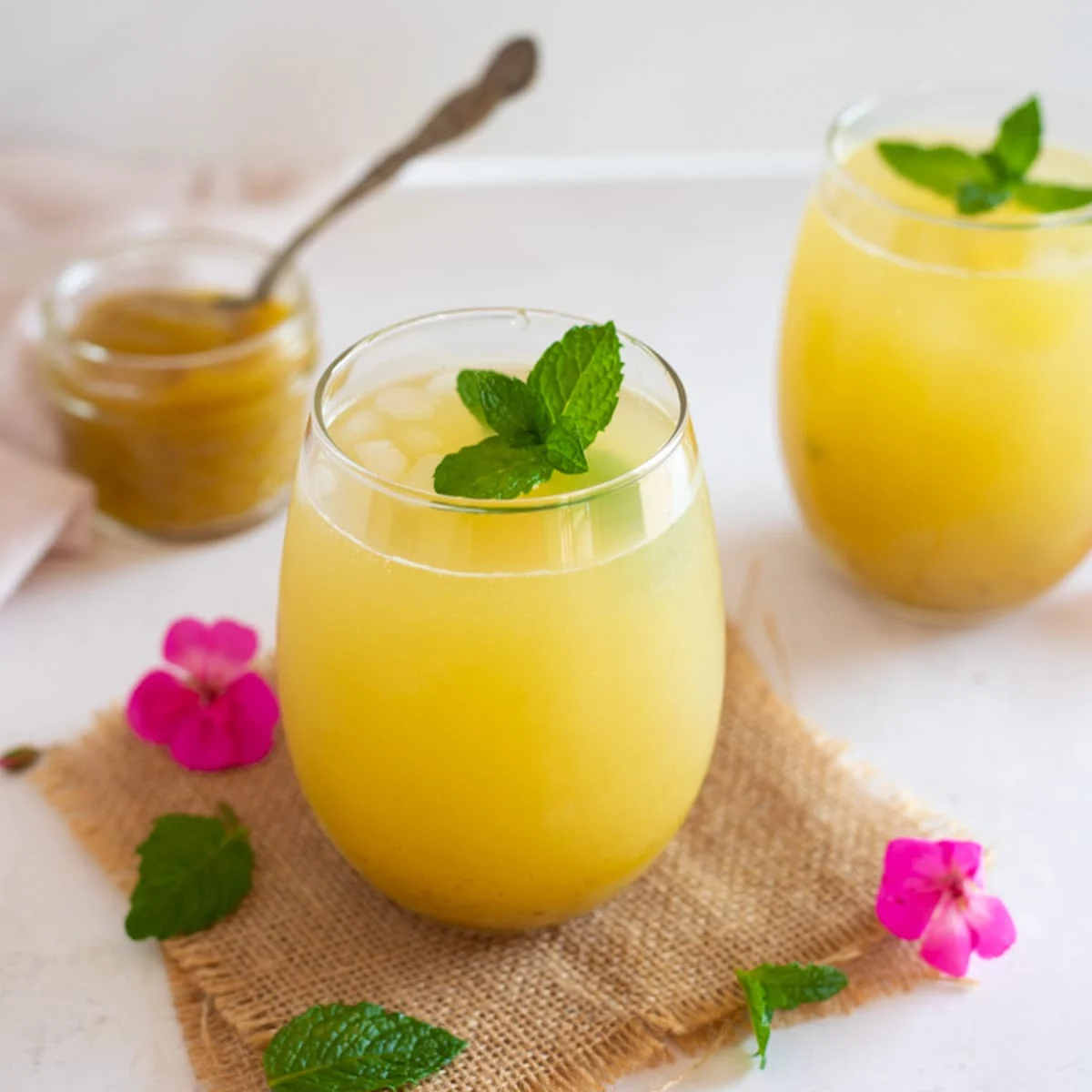
Time
- Preparation Time: 20 minutes
- Cooking Time (Roasting): 20 minutes
- Total Time: Approximately 40 minutes
Needed Equipment
- Gas stove or open flame
- Wire mesh grill or roasting rack
- Long-handled tongs
- Sharp knife
- Cutting board
- Aluminum foil or heatproof plate
- Blender or immersion blender
- Large mixing bowl or jug
- Measuring cups and spoons
- Serving glasses
- Strainer (optional)
- Refrigerator for storage
- Ice maker or ice cube tray
Tags
- Summer drinks
- Indian beverages
- Vegetarian
- Vegan
- Cooling drinks
- Healthy beverages
- Traditional recipes
Serving Size
Serves approximately 4 to 6 glasses, depending on the size of the glasses and the amount of water added.

Difficulty Level
Intermediate: This recipe involves roasting mangoes over an open flame and blending, but it is straightforward with clear steps. It requires attention to detail during roasting for perfect smoky flavor.
Allergen Information
- Contains no common allergens but may include traces of nuts or other contaminants depending on processing facilities.
- Jaggery is unrefined sugar derived from sugarcane or date palms; check for cross-contamination if allergies are severe.
Dietary Preference
- Vegetarian
- Vegan (if using plant-based jaggery)
- Gluten-Free
Course
Appetizer / Refreshing beverage
Cuisine
North Indian
Ingredients
| Ingredient | Quantity |
|---|---|
| Raw Mangoes | 2 medium-sized |
| Jaggery (or sugar) | ½ cup, grated or chopped |
| Cumin Powder (Jeera) | ½ teaspoon |
| Black Salt (Kala Namak) | To taste (roughly ¼ teaspoon or as preferred) |
| Black Pepper Powder | ¼ teaspoon |
| Mint Leaves (Pudina) | 10 leaves, fresh |
| Chilled Water | 4-5 cups (adjust based on desired consistency) |
| Ice Cubes | As required |
Instructions
1. Roasting the Mangoes
Begin by thoroughly rinsing the raw mangoes under cold running water to remove any dirt or residues. Use a clean scrub brush if necessary to ensure the mangoes are free from surface impurities. This step is essential because roasting over an open flame can cause dirt and debris to burn onto the skin, which you want to avoid. Once cleaned, pat dry with a clean towel or paper towels.
Select a gas stove with a visible open flame. For safety and control, ensure your stove is stable and the area is free from flammable materials. Place the raw mangoes directly on the wire mesh grill or roasting rack, and position them over the flame. Use long-handled tongs to hold and turn the mangoes evenly, ensuring all sides are roasted uniformly.
Roast the mangoes until the skin is charred and blackened, and the flesh inside becomes soft. This process usually takes about 15-20 minutes, depending on the size of the mangoes and the intensity of the flame. During roasting, the mangoes will emit a fragrant, smoky aroma. The skin will blister and blacken, which indicates that the mango is cooked through. Be cautious not to burn the mangoes excessively, as this can impart a bitter flavor.
2. Cooling and Peeling
Once the mangoes are roasted, carefully transfer them to a piece of aluminum foil or a heatproof plate. Allow them to cool for about 10-15 minutes until they are comfortable to handle. The cooling process is essential because the mangoes will be very hot immediately after roasting, and handling them without caution can cause burns.
After cooling, gently peel off the charred skin using your fingers or a small paring knife. The skin should come off easily if roasted properly. If the skin is stubborn, you can rub it off with your fingers or use the knife to scrape away the burnt layers. Be careful to retain as much of the pulp as possible, avoiding any burnt bits that could add bitterness to the final drink.
3. Extracting the Mango Pulp
Using a spoon or your fingers, scoop out the roasted mango flesh into a clean bowl. Discard the skin and any burnt sections. The pulp should be soft and fragrant, with a smoky aroma. If the pulp contains any fibrous bits or seeds, remove them for a smoother drink.
4. Blending the Mango Pulp
Transfer the mango pulp into a blender or use an immersion blender for convenience. Add the grated or chopped jaggery, cumin powder, black salt, and black pepper powder. These spices and sweetener enhance the flavor profile, balancing the tangy, smoky, and sweet notes.
Blend everything until you achieve a smooth, homogeneous mixture. You can add a small amount of water if necessary to facilitate blending. Taste the mixture and adjust seasoning as needed—more jaggery for sweetness, more black salt for saltiness, or additional cumin for a deeper flavor.
5. Assembling the Mango Panna
Pour the blended mango mixture into a large pitcher. Add chilled water gradually, stirring continuously to dilute the concentrated pulp to your preferred consistency. For a more refreshing experience, add plenty of ice cubes. Stir well to ensure the flavors are evenly distributed.
6. Final Garnishing and Serving
Pour the Mango Panna into individual glasses. Garnish each glass with fresh mint leaves for a fragrant touch and a visual appeal. Optionally, sprinkle a pinch of black salt or cumin powder on top for an extra flavor dimension. Serve immediately, preferably chilled, to enjoy its maximum refreshing qualities.
For an enhanced cooling experience, you can also add thin slices of lemon or a dash of lemon juice to the drink before serving.
Preparation Tips
- Choosing the right mangoes: Use firm, green, unripe mangoes that are sour; Ataulfo or Alphonso mangoes are not suitable as they are sweet and ripe. The tanginess of raw mangoes is essential for authentic flavor.
- Roasting technique: Direct flame roasting gives the smoky flavor, but if you prefer a milder taste, you can pressure cook or microwave the mangoes until soft, then proceed with peeling and blending.
- Adjusting sweetness: Jaggery varies in sweetness and consistency. Grate it finely for quick dissolution. Adjust the quantity based on your preference for sweetness.
- Spice balance: Black salt and cumin are traditional, but you can experiment with adding a pinch of chaat masala or a squeeze of lemon for more zing.
- Serving temperature: Always serve Mango Panna chilled, especially during peak summer days, to maximize its cooling effect.
Nutritional Information
| Nutrient | Per Serving (approximate) |
|---|---|
| Calories | 120 kcal |
| Carbohydrates | 30 g |
| Sugar | 20 g |
| Protein | 1 g |
| Fat | 0.5 g |
| Fiber | 2 g |
| Vitamins & Minerals | Rich in vitamin C, antioxidants, and minerals from jaggery and raw mango |
Tips and Tricks
- Roasting alternatives: Use a grill pan or oven broiler if open flame is unavailable, but be cautious to prevent overcooking or burning.
- Enhancing flavor: Add a hint of ginger or lemon juice for an extra zesty kick.
- Make ahead: Prepare the mango pulp in advance and store in an airtight container in the refrigerator for up to 2 days. Add water and ice just before serving.
- Presentation: Use colorful glasses, mint sprigs, or fruit slices for an attractive presentation.
Add-ons
- Chopped fresh mint leaves for garnish
- Chili powder or chaat masala for an extra spicy twist
- Fresh lemon or lime wedges for squeezing
- Thin slices of raw mango for garnish
- Ice cream or kulfi on top for a decadent twist
Side Dishes
- Light Indian snacks like Masala Pakoras or Samosas
- Spiced chickpea salads such as Chana Chaat
- Fried or roasted papads for crunch
- Sev or crispy snack mixes for added texture
Improvements and Variations
- Herbal infusions: Add fresh basil or coriander leaves during blending for an aromatic variation.
- Sweetener alternatives: Substitute jaggery with organic cane sugar, palm sugar, or honey for different flavor profiles.
- Low-sugar version: Reduce jaggery quantity and add a splash of lemon juice to maintain tanginess.
- Health boost: Incorporate a teaspoon of grated ginger or a pinch of turmeric for added health benefits.
Save and Store
Leftover mango pulp can be stored in an airtight container in the refrigerator for up to 48 hours. Shake or stir before use, and add fresh water and ice when ready to serve. For longer storage, you can freeze the pulp in small portions using ice cube trays, then transfer to a sealed bag or container for up to a month. Thaw in the refrigerator before use.
FAQ
Can I use ripe mangoes for this recipe?
No, ripe mangoes are sweet and do not provide the characteristic tanginess required for authentic Mango Panna. Raw, unripe mangoes are essential for the desired flavor.
What is jaggery, and can I substitute it?
Jaggery is an unrefined sugar made from sugarcane or date palms, offering a rich, earthy sweetness and added minerals. You can substitute it with palm sugar, organic cane sugar, or honey, but the flavor will differ slightly, and the traditional taste may be compromised.
Is this drink suitable for vegans?
Yes, if you use vegan-friendly jaggery and ensure the other ingredients are plant-based.
How can I make this drink less sweet?
Reduce the amount of jaggery or sugar used, and add more chilled water or lemon juice to balance the flavors.
Can I make this ahead of time?
Yes, prepare the mango pulp in advance and store it in the refrigerator. Mix with water and ice just before serving for the freshest taste.
Conclusion
Mango Panna with jaggery is a quintessential summer beverage that combines the tangy, smoky flavors of roasted raw mangoes with the natural sweetness of jaggery. Its refreshing quality not only quenches thirst but also provides a nourishing, cooling effect that helps the body recover from dehydration and heat exhaustion. The preparation process emphasizes traditional techniques like roasting over an open flame, which imparts a distinctive smoky aroma and enhances the flavor profile. This drink is highly customizable—adjusting sweetness, spice levels, and garnishes to personal preferences—making it a versatile addition to any summer menu. Whether served during family gatherings, picnics, or a quiet evening at home, Mango Panna remains a beloved, healthful beverage that embodies the spirit of Indian summer refreshment. As always, this recipe is brought to you by Love With Recipes, your trusted platform for authentic and innovative culinary ideas.
References
- “Indian Summer Drinks: A Collection of Traditional Beverages,” by Ritu Dalmia, published in Indian Food & Cooking Magazine, 2020.
- “The Science of Jaggery: Nutritional Benefits and Culinary Uses,” Food Science Journal, 2019.