Introduction
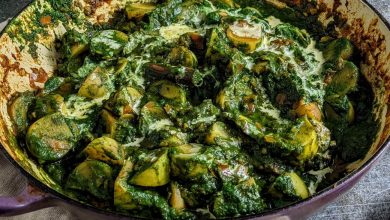
Achari Aloo Parwal Sabzi is an exquisite North Indian vegetable dish that combines the subtle crunch and earthy flavor of pointed gourd (parwal) with the hearty, comforting taste of potatoes. What elevates this dish is the distinctive tangy and spicy flavor profile imparted by achari masala—an aromatic blend of spices traditionally used in Indian pickling. This recipe is celebrated for its bold flavors and versatility, making it perfect for a family lunch or dinner. The use of mustard oil, a quintessential ingredient in North Indian cuisine, lends a pungent depth that complements the spices beautifully.
This dish is not only a celebration of seasonal vegetables but also a testament to the rich culinary heritage of India, particularly the Punjab and North Indian regions where pickled spices and mustard oil form the backbone of many recipes. The semi-dry consistency of Achari Aloo Parwal Sabzi makes it an excellent accompaniment to freshly made chapatis or steamed rice, creating a wholesome, satisfying meal. As you explore this recipe, you’ll discover how the combination of spices, vegetables, and cooking techniques come together to produce an explosion of flavors in every bite. It’s a perfect example of how simple ingredients, when combined thoughtfully, can elevate ordinary vegetables into a culinary masterpiece.


Time
The entire process of preparing Achari Aloo Parwal Sabzi takes approximately 50 minutes. This includes prep work, cooking, and final touches, making it ideal for a quick yet flavorful meal. Here’s a breakdown:
- Preparation Time: 10 minutes
- Cooking Time: 40 minutes
- Total Time: 50 minutes
While the prep might seem brief, the cooking process allows the flavors to meld beautifully, and patience during the cooking ensures that the vegetables are tender and the spices are fully infused. The dish can be prepared in advance, and the flavors tend to deepen if rested for a little while after cooking, making it even more appealing for meal planning.
Needed Equipment
To cook Achari Aloo Parwal Sabzi effectively, you’ll need the following equipment. This ensures the process is smooth, and the flavors develop as intended:
Primary Cooking Equipment
- Pressure Cooker or Deep Pan with a Lid: For quick, efficient cooking and to develop the flavors fully. A pressure cooker is preferred for speed and tender vegetables, but a deep wok or heavy-bottomed pan works well for longer, slow-cooked versions.
- Spice Grinder or Mortar and Pestle: Essential for freshly grinding roasted spices, which enhances aroma and flavor.
- Frying Pan or Tawa: For dry roasting spices if you prefer to do it separately before grinding.
- Measuring Spoons and Cups: To ensure precise measurement of spices and liquids, maintaining consistency in flavor.
- Cutting Board and Sharp Knives: For chopping vegetables, onions, and tomatoes efficiently and safely.
- Mixing Bowls: For marinating, mixing spices, or holding chopped ingredients.
- Cooking Spoon or Ladle: For stirring and sautéing ingredients.
- Grater or Julienne Peeler: To thinly slice vegetables like potatoes and parwal.
- Measuring Jug or Small Bowls: For liquids such as oil, water, or spice pastes.
Optional Equipment
- Food Processor: For quick chopping or slicing of vegetables, especially if preparing larger quantities.
- Steamer or Steaming Basket: For pre-cooking or blanching vegetables if desired.
- Thermometer: To monitor oil temperature for roasting spices or frying.
Tags
Indian cuisine, North Indian dishes, vegetarian recipes, spicy sabzi, tangy vegetable dishes, traditional Indian cooking, quick recipes, family favorites, achari flavors, mustard oil recipes, seasonal vegetables, simple Indian recipes, authentic Indian spices, pickled spice blends.
Serving Size
This recipe yields approximately four generous servings, suitable for a family meal or a small gathering. Each serving provides a balanced portion of vegetables and flavors, making it a wholesome addition to your meal spread.
Difficulty Level
This recipe is rated as easy to moderate. The steps involve standard chopping, roasting, and cooking techniques that are accessible to home cooks. Mastery of spice grinding and pressure cooking enhances the flavor profile, but even beginners can achieve excellent results with proper attention to detail and patience. The key is to manage heat levels during roasting and sautéing to prevent burning, and to cook vegetables until tender but not overdone.
Allergen Information
| Allergen | Present in Recipe | Notes |
|---|---|---|
| Mustard | Yes, in mustard oil and mustard seeds | Mustard oil is used, which may cause allergies in sensitive individuals |
| Spices | Yes | Common spices like cumin, coriander, fenugreek, which are generally safe but may cause allergies in rare cases |
| Vegetables | Yes | Potatoes and pointed gourd (parwal), generally non-allergenic |
Note: Always verify ingredients if cooking for individuals with allergies, especially regarding spices and oils.
Dietary Preference
This dish is suitable for:
- Vegetarian
- Vegan (if using vegan-friendly substitutes for any non-vegan elements)
- Gluten-Free (assuming no gluten-containing spices or additives are used)
It is not suitable for vegans if using traditional mustard oil and certain spice blends that may contain non-vegan additives, but can be adapted accordingly.
Course
Main Course — Vegetable Side Dish
Cuisine
North Indian, Punjabi, Indian traditional
Ingredients
| Ingredient | Quantity | Notes |
|---|---|---|
| Pointed Gourd (Parwal) | 400 grams | Thinly sliced; select fresh, firm parwal |
| Potatoes | 3 medium-sized | Thinly sliced or julienned |
| Onion | 1 large | Finely chopped | Tomato | 1 medium | Thinly sliced |
| Mustard Oil | 2 tbsp | For authentic flavor, use cold-pressed mustard oil |
| Nigella Seeds (Kalonji) | 1/2 tsp | For tempering |
| Turmeric Powder | 1/2 tsp | |
| Dry Mango Powder (Amchur) | 1/2 tsp | |
| Salt | To taste | |
| Coriander Seeds | 1 tsp | |
| Cumin Seeds | 1/2 tsp | |
| Mustard Seeds | 1/2 tsp | |
| Fennel Seeds | 1/2 tsp | |
| Fenugreek Seeds | 1/4 tsp | |
| Dry Red Chilli | 3, broken |
Instructions
Preparation of Achari Masala
To achieve the authentic flavor of achari spices, begin by dry roasting the whole spices. Place coriander seeds, cumin seeds, mustard seeds, fennel seeds, and fenugreek seeds in a dry skillet over medium heat. Toast the spices, stirring constantly, for approximately 2-3 minutes or until they emit a fragrant aroma and turn slightly darker. Be cautious not to burn the spices, as this can impart a bitter taste.
Once roasted, transfer the spices to a plate and allow them to cool for a few minutes. Using a spice grinder or mortar and pestle, grind the roasted spices into a fine powder. Keep this masala aside for later use. Freshly ground spices retain their essential oils and aroma, significantly enhancing the dish’s flavor profile.
Preparation of Vegetables
Start by thoroughly washing the pointed gourd (parwal) and potatoes. Peel the potatoes if desired, but leaving the skin on can add texture and nutrients. Slice the parwal and potatoes thinly, approximately 1/8 inch thickness, to facilitate even cooking and absorption of flavors. Finely chop the onion and thinly slice the tomato for sautéing.
Preparation should be precise to ensure uniform cooking and optimal flavor infusion. Keep all sliced vegetables ready before starting the cooking process to maintain a smooth workflow.
Cooking Process
- Heating Oil and Tempering: Pour mustard oil into a pressure cooker or deep pan. Heat the oil over medium flame until it begins to shimmer. Add nigella seeds (kalonji) and fry for about 30 seconds until they crackle and release aroma. This tempering step is crucial as it builds the foundational flavor of the dish.
- Sautéing Onions: Add the finely chopped onions to the hot oil. Cook, stirring frequently, until they turn golden brown and soften, approximately 5-7 minutes. Proper caramelization of onions imparts sweetness and depth to the sabzi.
- Adding Vegetables and Tomatoes: Incorporate sliced potatoes, pointed gourd, and tomatoes into the pan. Mix thoroughly, ensuring vegetables are coated with oil and spices. Cook for 4-5 minutes, allowing the vegetables to soften slightly and release their juices.
- Spicing the Vegetables: Sprinkle turmeric powder, dry mango powder, and the freshly ground achari masala over the vegetables. Mix everything evenly, ensuring the spices coat all the vegetables uniformly. Add a splash of water to prevent sticking and to facilitate even cooking.
- Pressure Cooking: Close the lid of the pressure cooker, ensuring the valve is in the sealing position. Cook on medium heat for 2 whistles, which typically takes about 8-10 minutes depending on your stove and pressure cooker. Once the whistles sound, turn off the heat and allow the pressure to release naturally for about 10 minutes.
- Final Adjustments: Carefully open the cooker once the pressure has subsided. Check the vegetables for tenderness; they should be soft but not mushy. If you prefer a drier sabzi, cook uncovered on low heat for a few more minutes to evaporate excess moisture. Adjust salt and spices to taste, adding more dry mango powder or red chili if desired.
- Garnishing: Finish by garnishing with freshly chopped coriander leaves. This adds freshness, aroma, and a pop of color to the dish.
Preparation Tips
- Select fresh vegetables: Opt for firm, fresh pointed gourd and potatoes to ensure the best texture and flavor.
- Slice vegetables uniformly: Thin, even slices allow for consistent cooking and better absorption of flavors.
- Roast spices properly: Adequate roasting releases essential oils, making the spices more aromatic and potent.
- Adjust spice levels: Modify the amount of dry mango powder and red chilies according to your taste preferences for tanginess and heat.
- Use mustard oil: For traditional flavor, authentic mustard oil is preferred. If unavailable, substitute with a neutral oil, but note that flavor will differ.
- Cooking method flexibility: While pressure cooking saves time, the dish can be slow-cooked on low heat for a more intense flavor profile.
Nutritional Information
| Nutrient | Per Serving | Daily Value Percentage |
|---|---|---|
| Calories | 160 kcal | 8% |
| Protein | 3 g | 6% |
| Carbohydrates | 30 g | 10% |
| Fats | 6 g | 9% |
| Fiber | 5 g | 20% |
| Sugar | 6 g | – |
| Sodium | 150 mg | 6% |
Note: Nutritional values are approximate and vary based on ingredient sizes and specific brands.
Tips and Tricks
- Enhance flavor with fresh herbs: Adding chopped fresh coriander or mint at the end can elevate the dish’s freshness.
- Control spice heat: For milder flavor, reduce red chilies or opt for milder varieties.
- Make ahead: The dish tastes even better the next day as flavors deepen. Store in an airtight container in the refrigerator for up to 2 days.
- Adjust thickness: Add more water for a slightly gravy-like consistency; cook uncovered for a drier version.
- Use fresh spices: Always use fresh spices for maximum aroma and flavor.
Add-ons
- Chopped fresh green chilies for extra heat
- Crumbled paneer or tofu for added protein
- Fresh lemon juice for an additional tangy twist
- Fried cashews or peanuts for crunch
Side Dishes
- Chapatis or Phulkas
- Steamed Basmati Rice
- Dal Tadka (Lentil Curry)
- Pickles and Yogurt Raita for added flavor and cooling
Improvements
To customize and elevate this dish further, consider the following:
- Use fresh herbs and spices: Incorporate freshly chopped coriander, mint, or fenugreek leaves for vibrant flavor.
- Experiment with spice blends: Add garam masala or amchur powder in small quantities to tweak the flavor profile.
- Incorporate protein: Add cooked chickpeas or paneer cubes to make it a more substantial main dish.
- Cooking method variance: Roast the spices separately and add them towards the end for a different aroma.
Save and Store
Once cooked, allow the Achari Aloo Parwal Sabzi to cool completely. Transfer it to an airtight container and store in the refrigerator for up to 2 days. To reheat, microwave or warm in a pan over low heat, adding a splash of water if necessary. For longer storage, freeze in portions for up to 1 month, ensuring the container is airtight to prevent freezer burn.
Always reheat thoroughly before serving to maintain freshness and flavor.
FAQ
Can I make this dish without pressure cooking?
Yes, you can cook the vegetables in a covered pan on low to medium heat until tender. It may take around 25-30 minutes, stirring occasionally to prevent sticking. Covering the pan traps steam and speeds up the cooking process, similar to pressure cooking.
Can I substitute mustard oil?
While mustard oil lends an authentic flavor, it can be substituted with other neutral oils like sunflower or canola oil. However, the characteristic pungency and flavor will be different. If you prefer a milder taste, use less or skip the mustard oil altogether.
What variations can I try?
You can add other vegetables like cauliflower, peas, or carrots for variation. Additionally, adding a spoonful of yogurt at the end can introduce a creamy tang. Adjust spice levels according to your preference for heat and tanginess.
Is this dish suitable for diabetics?
Yes, as it primarily contains vegetables and spices. However, portion control is advised, especially considering the carbohydrate content of potatoes. Using less oil and salt can make it even healthier.
Conclusion
Achari Aloo Parwal Sabzi stands out as a quintessential North Indian vegetable dish that marries traditional flavors with simple cooking techniques. Its vibrant tangy-spicy profile, coupled with the pungent aroma of mustard oil, makes it a delightful accompaniment to various Indian staples. Whether you’re a seasoned cook or a beginner, mastering this dish introduces you to the rich tapestry of Indian flavors. The versatility of this sabzi allows for numerous modifications, making it adaptable to your dietary and taste preferences. Remember, the secret to authentic flavor lies in roasting spices fresh and using quality mustard oil. Embrace the process, and you’ll be rewarded with a dish that is both comforting and exciting, perfect for everyday meals or special occasions. Remember to explore more such recipes on Love With Recipes—your ultimate platform for culinary inspiration!