

Introduction
Welcome to Love With Recipes, your ultimate culinary companion for creating delicious, homemade preserves that capture the essence of seasonal bounty. Today, we are diving into the vibrant and flavorful world of Rhubarb & Ginger Jam—a classic Canadian treat that harmonizes the tartness of fresh rhubarb with the spicy warmth of preserved ginger. This recipe, originally crafted by Dorothy Smith Gooden, is a testament to the ingenuity of preserving nature’s springtime treasures, allowing you to enjoy their bright, tangy flavors long after the season ends. Whether you’re a seasoned canner or a beginner eager to explore the art of jam-making, this comprehensive guide will walk you through every step, ensuring perfect results and a delightful culinary experience.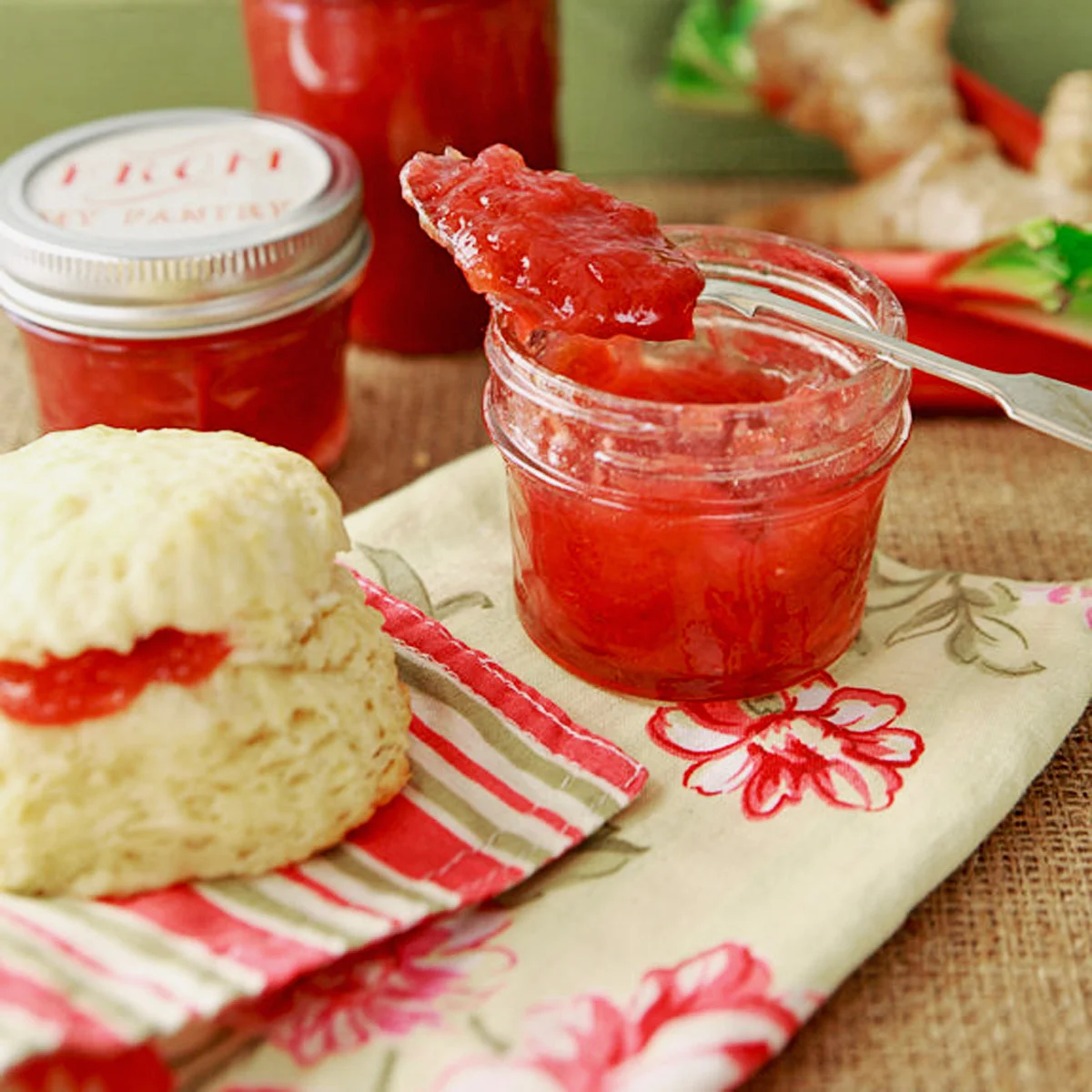
Time
Preparation Time
Approximately 25 hours, primarily due to the maceration process where the rhubarb releases its juices. This long infusion period is crucial for developing the jam’s intense flavor profile.

Cooking Time
About 45 minutes, including simmering and boiling to achieve the perfect set and consistency.
Total Time
Approximately 25 hours 45 minutes, combining the maceration, cooking, and cooling phases to ensure optimal flavor and preservation quality.
Needed Equipment
- Large Glass or Ceramic Mixing Bowl: For macerating the rhubarb and sugar.
- Measuring Cups and Spoons: To accurately measure ingredients.
- Sharp Knife and Cutting Board: For chopping the rhubarb and ginger.
- Saucepan or Heavy-bottomed Pot: For simmering and boiling the jam.
- Fine Mesh Strainer or Cheesecloth: To strain the syrup after maceration.
- Wooden Spoon or Heatproof Spatula: For stirring the jam during cooking.
- Candy or Jam Thermometer (Optional): To monitor temperature for accurate setting.
- Jars with Lids and Bands: For storing the finished jam. Ensure they are sterilized.
- Large Pot or Canner: For water bath processing.
- Tongs or Jar Lifter: For safely handling hot jars.
- Clean Cloth or Paper Towels: For wiping jar rims.
- Ladle: For transferring jam into jars.
- Funnel (Optional): To fill jars neatly and minimize spills.
Tags
Fruit, Canadian, Canning, Preserves, Seasonal, Sweet, Tangy, Ginger, Easy, Homemade, Spring, Summer, Snack, Breakfast, Gift
Serving Size
Approximately 4-5 half-pint jars, each jar providing enough for about 8-10 servings depending on portion size. A typical serving is about 1-2 tablespoons.
Difficulty Level
Intermediate—requires patience for the maceration process and some basic canning skills for sterilization and sealing, but overall accessible to home cooks with some experience in jam-making.
Allergen Information
This recipe contains ginger, which may cause allergic reactions in some individuals. It is free from common allergens such as nuts, dairy, and gluten, making it suitable for most dietary needs, but always check ingredients for personal allergies.
Dietary Preference
Vegetarian, Vegan (if using vegan-friendly sterilization methods), and Gluten-Free.
Course
Preserve, Spread, Snack
Cuisine
Canadian, Seasonal, Fruit-based
Ingredients
| Ingredient | Quantity | Notes |
|---|---|---|
| Rhubarb | 4 cups | Chopped into ½-inch pieces; fresh or frozen |
| Sugar | 2 cups | Granulated; may adjust based on sweetness preference |
| Preserved Gingerroot | 2 tablespoons | Finely chopped; can substitute with fresh ginger if preferred |
| Optional: Lemon juice | 1 tablespoon | Enhances flavor and helps with setting |
Instructions
Step 1: Preparing the Rhubarb and Sugar
Begin your jam-making journey by meticulously preparing your main ingredients. Select fresh, firm rhubarb stalks, preferably vibrant red or green, free of blemishes or signs of spoilage. Rinse thoroughly under cold running water to remove any dirt or debris. Using a sharp knife and a sturdy cutting board, chop the rhubarb into uniform ½-inch pieces. Uniformity in size promotes even maceration and consistent cooking.
Next, measure out 4 cups of chopped rhubarb and place it in a large, clean glass or ceramic bowl. Add 2 cups of granulated sugar in layers over the rhubarb, ensuring every piece is coated evenly. This layering technique encourages the sugar to dissolve gradually, drawing out the natural juices of the rhubarb and creating a luscious syrup essential for the jam’s flavor and texture.
Cover the bowl tightly with plastic wrap or a clean kitchen towel and leave it at room temperature for 24 hours. During this period, the sugar will dissolve slowly, and the rhubarb will release its juices, forming a fragrant syrup that forms the base of your jam. This slow infusion is vital for developing depth in flavor, as it allows the tartness of the rhubarb to meld seamlessly with the sweetness of the sugar and the spicy warmth of the ginger.
Step 2: Infusing and Straining
After the 24-hour maceration, carefully transfer the mixture to a fine mesh strainer or cheesecloth set over a large bowl or sink. Gently strain the syrup into a saucepan, pressing lightly on the solids to extract as much liquid as possible. Discard the solids or save the rhubarb pieces if you’d like to add texture to your jam later.
Add the finely chopped preserved gingerroot to the syrup in the saucepan. Ginger lends a warming, spicy note that complements the tartness of the rhubarb beautifully. If you wish to intensify the ginger flavor, you can add additional freshly grated ginger at this stage, adjusting to taste.
Step 3: Simmering the Ginger-Infused Syrup
Place the saucepan over medium-low heat, ensuring a gentle simmer. Stir occasionally with a wooden spoon or heatproof spatula to prevent sticking or burning. Allow the mixture to simmer for approximately 30 minutes, during which the flavors will meld, and the syrup will thicken slightly. Keep a close eye on the temperature; if you have a candy or jam thermometer, aim for about 220°F (105°C) for proper setting. This stage is critical for developing the concentrated flavor profile characteristic of high-quality jams.
Step 4: Incorporating the Rhubarb
Once the syrup has thickened, carefully add the macerated rhubarb to the saucepan. Raise the heat to medium and bring the mixture to a rolling boil. Stir frequently to prevent scorching and to ensure even distribution of ingredients. As the mixture boils, it will become more viscous and bright in color, reflecting the vibrant hues of the rhubarb and ginger.
Step 5: Achieving the Perfect Set
Continue boiling the jam for approximately 15 minutes, monitoring its consistency. To test if the jam has reached the desired setting, use the cold plate test: place a small spoonful of the hot jam onto a chilled plate, then let it sit for a minute. Run your finger through the jam—if it wrinkles and holds its shape, it’s ready. Alternatively, use a jam thermometer; the ideal setting point is around 220°F (105°C). Remember, the jam will continue to thicken as it cools, so slightly undercooking is preferable to overcooking.
Step 6: Preparing Jars and Processing
While the jam is simmering, sterilize your jars and lids by washing them in hot, soapy water, rinsing thoroughly, then placing them in a large pot of boiling water for at least 10 minutes. Remove carefully with tongs or a jar lifter and drain on a clean towel.
Once the jam passes the setting test, carefully ladle it into the sterilized jars using a ladle and funnel to minimize spillage. Leave about ¼ inch of headspace at the top of each jar. Wipe the rims with a damp cloth to ensure a clean seal. Seal the jars with sterilized lids and screw bands until just fingertip tight.
Step 7: Water Bath Canning
Process the filled jars in a boiling water canner for 10 minutes, ensuring the water covers the jars by at least an inch. This step guarantees sterilization and creates a vacuum seal that preserves the jam for up to a year or more. After processing, carefully remove the jars and set them on a towel to cool undisturbed. As they cool, you should hear a gentle pop indicating the lids have sealed properly. Check the seals after 24 hours by pressing the center of each lid; it should not flex or pop up.
Step 8: Storage and Enjoyment
Label your jars with the date and store them in a cool, dark place away from direct sunlight. Properly sealed jars can last up to a year, and once opened, refrigerate and consume within 3 weeks for optimal freshness. Spread the rhubarb & ginger jam on toast, scones, or use as a topping for yogurt, ice cream, or desserts. It also makes a thoughtful homemade gift for friends and family during holidays or special occasions.
Preparation Tips
- Use fresh rhubarb: Fresh, firm stalks produce the best flavor and texture. If using frozen rhubarb, thaw thoroughly and drain excess moisture.
- Adjust sweetness: Depending on your preference and the tartness of your rhubarb, you can increase or decrease sugar. Remember, sugar also acts as a preservative.
- Enhance flavor: Add a splash of lemon juice or zest for a brighter flavor profile.
- Ginger substitution: For a milder flavor, reduce ginger quantity; for a stronger kick, add more fresh ginger or crystallized ginger.
Nutritional Information
| Nutrient | Per Serving (approx. 2 tbsp) |
|---|---|
| Calories | 41 |
| Fat | 0.1g |
| Saturated Fat | 0g |
| Cholesterol | 0mg |
| Sodium | 1mg |
| Carbohydrates | 10.5g |
| Sugar | 10g |
| Fiber | 0.2g |
| Protein | 0.1g |
Tips and Tricks
- Consistency is key: Use a thermometer or cold plate test to ensure your jam reaches the perfect set point.
- Flavor variations: Incorporate a splash of balsamic vinegar or a pinch of cinnamon for added complexity.
- Prevent crystallization: Stir the jam regularly during boiling to prevent sugar crystallization and ensure a smooth texture.
- Use high-quality ingredients: Fresh rhubarb and natural preserved ginger yield the best flavor.
Add-ons and Variations
- Additional Citrus: Add lemon or orange zest for a citrusy twist.
- Spice it Up: Incorporate a pinch of ground cinnamon, allspice, or a star anise during simmering for a warm spice profile.
- Other Fruits: Mix in strawberries or raspberries for a mixed berry version.
Side Dishes
This jam pairs beautifully with:
- Freshly baked scones or biscuits
- Toasted bread or English muffins
- Yogurt or Greek yogurt bowls
- Ice cream or whipped desserts
- Cheese platters, especially mild cheeses like Brie or cream cheese
Improvements and Variations
- Sweetness adjustment: Experiment with reducing sugar for a less sweet, more tart preserve.
- Texture control: For chunkier jam, fold in some whole or halved rhubarb stalks after the initial cooking phase.
- Preservation: For longer storage, consider adding natural pectin or using commercial pectin to ensure perfect set every time.
Save and Store
Proper storage is essential for maintaining your jam’s quality and safety. After sealing, keep jars in a cool, dark, and dry place, ideally between 50-70°F (10-21°C). Once opened, refrigerate and consume within three weeks. Label jars with the date of canning to monitor freshness. For extended storage, consider freezing the jam, although the texture may change slightly upon thawing.
FAQ
Can I use frozen rhubarb for this recipe?
Absolutely! Thaw the frozen rhubarb thoroughly and drain any excess moisture before proceeding. The freezing process may slightly soften the stalks, but it will not significantly alter the flavor or the final product.
How do I know when the jam has set?
The most reliable method is the cold plate test: place a spoonful on a chilled plate, let it sit for a minute, then run your finger through it. If it wrinkles and holds its shape, it’s ready. Using a thermometer to reach 220°F (105°C) is an alternative, especially helpful for precise consistency.
Is this jam suitable for canning without a water bath?
For safety and long-term preservation, water bath processing is recommended. It ensures sterilization and proper sealing, preventing spoilage and bacteria growth. Do not skip this step if you plan to store the jam for extended periods.
Can I modify the sweetness or spice level?
Yes, you can adjust the amount of sugar and ginger to suit your taste. Remember, reducing sugar may affect the setting process, so consider adding commercial pectin if you prefer less sweet jam with a reliable set.
How long does homemade jam last?
When properly sealed and stored in a cool, dark place, your homemade jam can last up to a year. Once opened, refrigerate and consume within three weeks for best quality.
Conclusion
Creating your own Rhubarb & Ginger Jam is a rewarding culinary endeavor that combines seasonal freshness with the art of preservation. This recipe, shared with love from Dorothy Smith Gooden and featured on Love With Recipes, exemplifies how simple ingredients can transform into a jar of sunshine that elevates your breakfast table or makes a thoughtful gift. Patience during the maceration stage enhances the flavor, and meticulous sterilization ensures safety and longevity. Whether you’re savoring it on a lazy Sunday morning or gifting it to a loved one, this jam offers a delightful burst of springtime in every spoonful. Embrace the process, experiment with flavor tweaks, and enjoy the fruits of your labor for months to come.
References
- Ball Canning’s Guide to Fruit Preserves
- Canadian Food Inspection Agency – Food Preservation & Canning Safety