

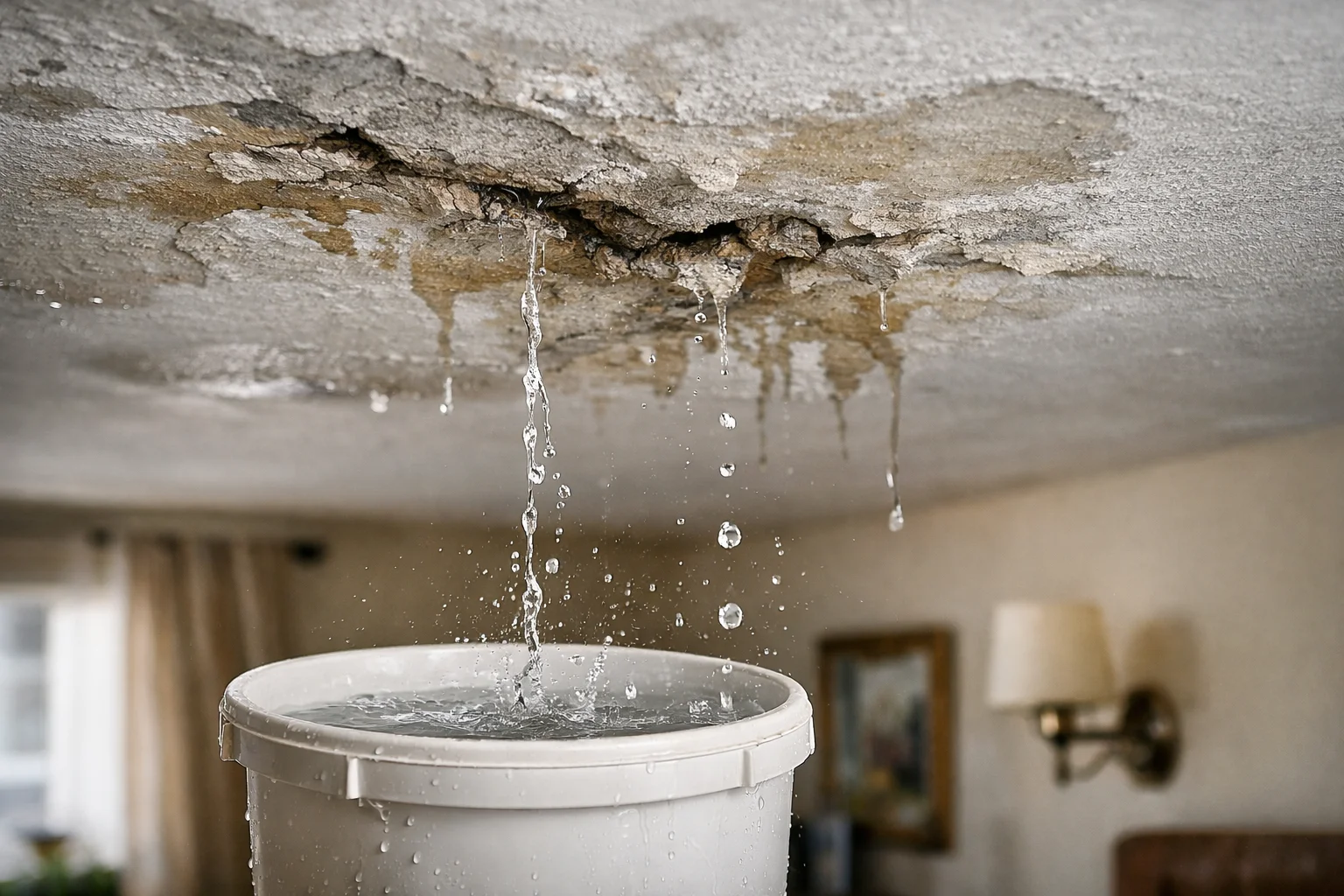
Winter and rainfall are usually associated with comfort, blessing, and relief. However, that sense of comfort can quickly turn into stress and concern when you suddenly notice cold drops of water falling from your ceiling onto your furniture or floor. This issue is not just a temporary inconvenience that disappears once the surface dries. It is a clear warning sign that your home’s protective barrier has been compromised.
The water dripping from your ceiling or gypsum board has often traveled through the concrete structure itself, carrying moisture, salts, and potential damage along the way. Many homeowners respond with temporary fixes such as placing buckets under the leak and waiting for the rain to stop, but this only delays proper treatment. In this guide from sa.repair, we explain the real causes of ceiling leaks after rain, the immediate safety measures you should take, and the engineering solutions that can eliminate the problem permanently.
First: Why Does Rainwater Penetrate the Ceiling?
Concrete may look solid, but it naturally contains tiny pores. For rainwater to pass through a roof slab and reach the rooms below, several contributing factors are usually involved.
1. Missing or damaged waterproofing
This is the most common and most important cause. An unprotected concrete roof absorbs rainwater like a sponge. Even if waterproofing was applied in the past, materials such as bituminous membranes have a limited lifespan. Prolonged exposure to sunlight and heat causes them to crack, dry out, and lose effectiveness over time.
2. Cracks caused by expansion and contraction
Roofs are exposed to major temperature differences between day and night and between seasons. This repeated expansion and contraction can create hairline cracks and structural fissures that allow rainwater to seep directly inside.
3. Blocked roof drains
Leaves, dust, plastic debris, and dirt can accumulate around roof drainage outlets. When rainwater cannot drain properly, it begins to pool on the roof surface. This standing water increases pressure on the concrete and forces moisture downward through weak points.
4. Damaged tile grout on tiled roofs
If the roof is tiled, the joints between tiles may deteriorate over time. Once gaps appear, rainwater can seep beneath the tiles, collect underneath, and eventually show up as dripping water inside the home.
Second: The Serious Risks of Ignoring Rainwater Leaks
Ignoring ceiling leaks after rainfall can lead to much more than surface stains. The consequences may become severe if the issue is left untreated.
Electrical hazards and fire risk
Ceilings often contain lighting wires and hidden electrical connections. If water reaches these systems, it can cause short circuits, electrical shocks, or even fire.
Corrosion of reinforcing steel
This is one of the most dangerous structural consequences. When water reaches the steel reinforcement inside concrete, rust begins to form. Rust expands, causing the surrounding concrete to crack, break, and weaken.
Mold growth and respiratory issues
Trapped moisture inside ceilings and walls creates the ideal environment for mold and fungi. Black mold in particular can spread harmful spores into indoor air and contribute to asthma, allergies, and breathing difficulties.
Damage to gypsum board and interior finishes
Gypsum board ceilings are highly vulnerable to water. Once saturated, they lose strength quickly and may collapse without warning, damaging furniture and interior finishes.
Third: What Should You Do While It Is Raining?
If water begins dripping from the ceiling during rainfall, the priority is to reduce danger and limit damage until proper repair can begin.
1. Turn off electricity immediately
Go to the electrical panel and cut power to the affected room or area, especially if water is near light fixtures or wiring.
2. Protect furniture and belongings
Move carpets, electronics, and wooden furniture away from the leaking area. Place buckets or containers under the dripping water to reduce floor damage.
3. Release trapped water from swollen gypsum board if necessary
If the suspended ceiling is bulging badly and appears ready to collapse, a small controlled hole may be made in the swollen section to drain the trapped water safely into a container rather than allowing the entire panel to fall.
Fourth: Permanent Engineering Solutions
Once the rain stops and the roof dries, the real repair work begins. Painting the ceiling from inside will not solve the issue. The proper treatment must be applied from the outside, at the source of the leak.
1. Polyurethane foam waterproofing
This is one of the most effective modern solutions. Liquid foam is sprayed across the roof surface, where it expands and hardens into a seamless waterproof and thermal insulation layer. It fills cracks and prevents water from penetrating the slab.
2. Bituminous membrane waterproofing
This is a strong traditional method for concrete roofs. The surface is cleaned, primed, and then covered with bituminous rolls that are heat-welded together. This system offers excellent resistance against standing rainwater.
3. Acrylic or elastomeric coating for tiled roofs
If the roof is tiled and you do not want to remove the tiles, the joints can first be repaired, then the entire surface can be coated with a flexible acrylic or polyurethane waterproofing material. This creates a protective layer that seals pores and prevents leakage.
4. Drain and slope correction
No waterproofing system is complete unless the roof drains properly. The roof surface must be checked to ensure it slopes correctly toward drainage outlets. Drains should be cleaned and fitted with protective mesh covers to prevent future blockage.
Fifth: Preventive Tips Before the Rainy Season
Preventive maintenance can save a great deal of money and damage later. Before winter begins, it is wise to follow a few simple steps.
- Clean the roof regularly and remove debris from around drain openings.
- Inspect the roof surface and parapet walls for visible cracks.
- Test drainage performance before the rainy season begins.
- Repair grout and weak joints before they become leak points.
- Schedule professional inspection if you notice any recurring moisture or stains.
Conclusion
Rainwater dripping from the ceiling is not a minor issue that should be ignored. It is often a sign of deeper waterproofing failure that can threaten the structure of the building, the safety of the occupants, and the condition of interior finishes. Acting early and choosing the right waterproofing method for your roof is the smartest long-term investment.
At sa.repair, we understand how disruptive rain leaks can be. That is why our team of engineers and technicians uses advanced waterproofing systems and precise repair methods to provide clean, reliable, and long-lasting solutions. Do not wait for the next storm to expose the weakness in your roof. Contact us today and restore safety, comfort, and protection to your home.