

Introduction
Welcome to Love With Recipes, your ultimate culinary resource where we delve deeply into each dish to bring you not just recipes, but comprehensive culinary guides. Today, we explore a dish that epitomizes sophistication and flavor harmony—Apple Duck Breasts. This exquisite dish marries the rich, savory profile of perfectly cooked duck breasts with the sweet, tart brightness of fresh apples. It’s a celebration of contrasts: crispy skin and tender meat, sweet fruit and savory meat, all elevated by a luscious apple cider and brandy sauce. Whether you’re preparing a special dinner for a loved one, celebrating a festive occasion, or simply seeking to elevate your cooking repertoire, this recipe offers a luxurious yet achievable experience that will impress and satisfy.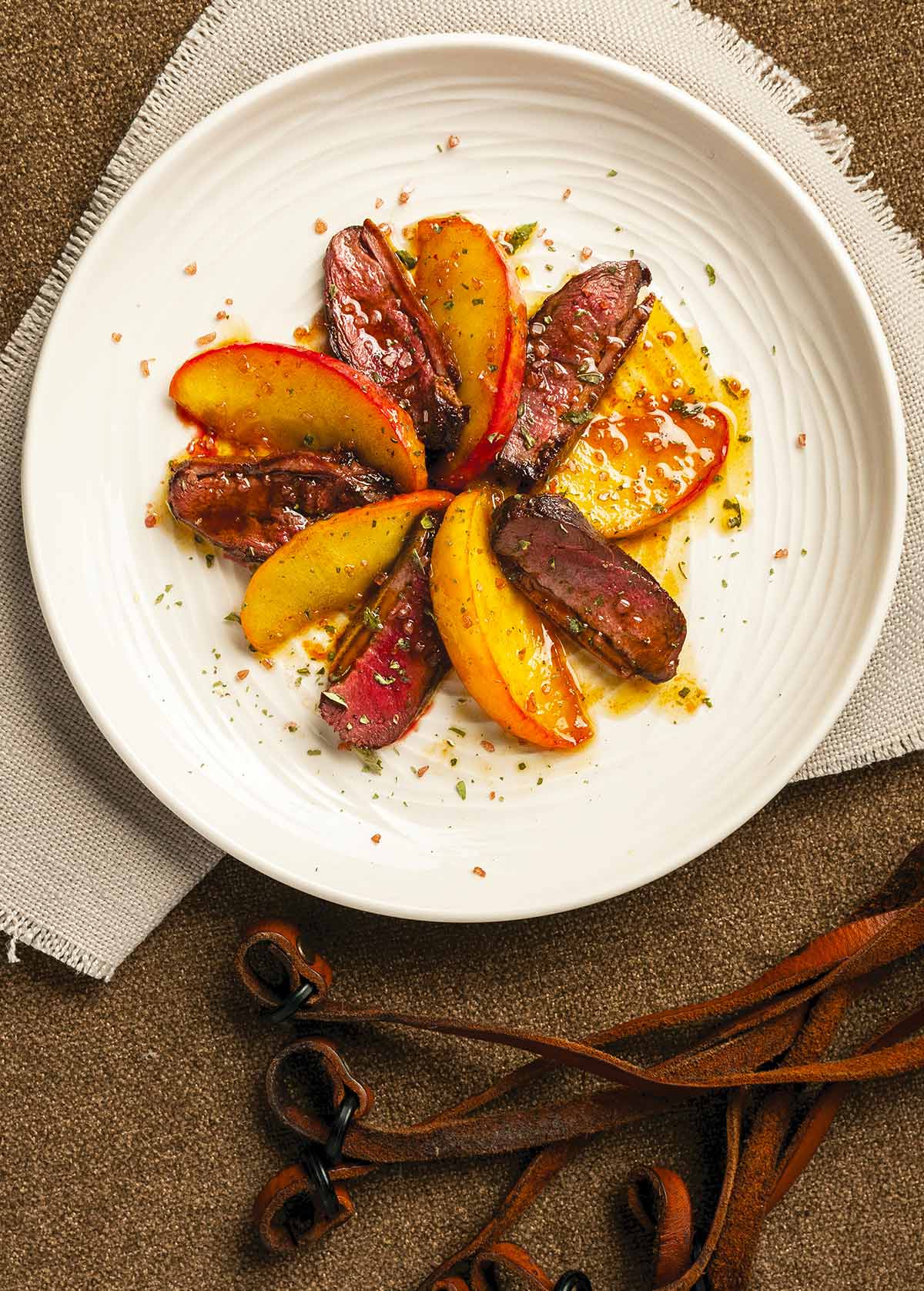
Time
Preparing Apple Duck Breasts involves multiple steps, each contributing to the overall experience. The total estimated time includes preparation, cooking, resting, and final assembly:

- Preparation time: Approximately 15 minutes
- Cooking time: 25-30 minutes
- Resting time: 5 minutes
- Total estimated time: 45-50 minutes
Needed Equipment
To achieve optimal results, the following equipment is recommended:
- Chef’s knife: For precise slicing and scoring
- Cutting board: A sturdy surface for preparing ingredients
- Skillet or cast iron pan: For searing the duck and preparing the sauce
- Oven-proof baking dish or sheet: To finish the duck in the oven
- Tongs: For flipping and handling hot meat
- Wooden spoon or spatula: For stirring the sauce
- Measuring spoons and cups: For accurate ingredient measurement
- Food thermometer: Optional, for checking duck doneness
- Peeler or corer: To prepare apples
- Fine sieve or strainer: Optional, for sauce refinement
- Serving platter and utensils: To present and serve the finished dish
Tags
Elegant, Gourmet, Classic, Fruit Pairing, Easy-to-Make, Special Occasion, French-Inspired, Rich Flavors, Dinner Party, Hearty
Serving Size
This recipe yields approximately 2 main servings, ideal for an intimate dinner or a special celebration. Adjust accordingly for larger groups or individual portions.
Difficulty Level
Intermediate. This recipe involves multiple steps, including searing, oven roasting, and sauce preparation, but is straightforward enough for home cooks with some experience in handling meat and preparing sauces.
Allergen Information
This dish contains:
- Sulfites: From alcohol (brandy)
- Potential cross-contact: Depending on ingredients used in the seasoning or sauces
It is naturally free from common allergens like nuts, dairy (if butter is omitted or substituted), and gluten unless added in specific variations.
Dietary Preference
Suitable for omnivores and those following a paleo or ketogenic diet, provided that the sauce ingredients are used in moderation. For a low-sugar or low-carb variation, consider reducing or omitting the apple cider and brandy in the sauce.
Course
Main Course
Cuisine
French-inspired, Contemporary European
Ingredients
Protein and Fruits
| Ingredient | Quantity | Notes |
|---|---|---|
| Duck breasts (boneless, skin-on) | 2 pieces (about 6-8 oz each) | Preferably fresh, high-quality duck breasts |
| Apples (Fuji, Honeycrisp, or similar) | 2 large apples | Choose firm, sweet-tart varieties |
| Fresh thyme or rosemary | 2 sprigs | Optional garnish or flavor enhancer |
Seasonings & Aromatics
| Ingredient | Quantity | Notes |
|---|---|---|
| Salt | To taste | Preferably sea salt or kosher salt |
| Black pepper (freshly ground) | To taste | Enhances flavor of the meat |
| Shallots | 2 small | Finely chopped |
| Garlic | 2 cloves | Minced |
Cooking Fats & Liquids
| Ingredient | Quantity | Notes |
|---|---|---|
| Duck fat or olive oil | 2 tbsp | For searing |
| Unsalted butter | 2 tbsp | For sauce finishing |
| Apple cider (preferably unfiltered) | 1/2 cup | For deglazing and sauce |
| Brandy or cognac | 1/4 cup | Optional, adds depth to sauce |
Instructions
Step 1: Preparing the Duck Breasts
Begin by removing the duck breasts from the refrigerator approximately 15 minutes before cooking to bring them to room temperature. This ensures even cooking and better flavor development. Pat the duck breasts dry with paper towels to remove excess moisture, which is essential for achieving crispy skin.
Next, score the skin of each duck breast in a crosshatch pattern, making shallow cuts about 1/4 inch apart, being careful not to cut into the meat itself. This technique allows excess fat to render out during searing and promotes crispy skin. Season generously with salt and freshly ground black pepper on both sides, but particularly on the skin side.
Step 2: Searing the Duck
Choose a heavy skillet—preferably cast iron—for even heat distribution. Place the skillet over medium-high heat and add duck fat or olive oil. When the fat shimmers, carefully place the duck breasts skin-side down in the pan. Do not overcrowd the pan; if necessary, cook in batches.
Allow the duck to sear undisturbed for 4-5 minutes. During this time, the skin crisps up and fat begins to render out. Use tongs to gently lift the edge and check for a golden-brown color. Once the skin has reached crispy perfection, flip the breasts and sear the other side for 2-3 minutes to develop a nice crust.
Step 3: Oven Roasting
Transfer the seared duck breasts to an oven-safe dish, skin-side up. Place them in a preheated oven at 400°F (200°C). Roast for approximately 10-15 minutes for medium-rare, or longer if a more well-done result is desired. Use a meat thermometer to check internal temperature: 135°F (57°C) for medium-rare, 145°F (63°C) for medium.
Once cooked, remove the duck from the oven, tent loosely with foil, and allow to rest for 5 minutes. Resting helps redistribute juices within the meat, ensuring each bite remains tender and flavorful.
Step 4: Preparing the Apple Sauce
While the duck rests, proceed with the sauce. In the same skillet used for searing, add a touch more duck fat or olive oil if necessary. Over medium heat, sauté finely chopped shallots and minced garlic until fragrant and translucent, about 2-3 minutes.
Add sliced apples—preferably peeled and cored—into the skillet. Cook until they soften slightly, about 5 minutes. Use a wooden spoon to stir and scrape up any browned bits from the bottom of the pan, enhancing flavor through deglazing.
Pour in the apple cider, scraping the pan to incorporate all flavorful residue. Increase heat to high and simmer until the liquid reduces by half, approximately 8-10 minutes. Carefully add the brandy or cognac, igniting if desired to flambé (be cautious and perform this step away from flammable objects). Allow the alcohol to burn off, leaving behind a rich aroma.
Finish the sauce by stirring in the butter and chopped fresh herbs. Let the sauce simmer gently until it thickens slightly, about 3-5 minutes. Adjust seasoning with salt and pepper as needed.
Step 5: Final Presentation and Serving
Slice the rested duck breasts diagonally into 1/4 to 1/2-inch slices. Plate the slices elegantly on warmed plates. Spoon the warm apple sauce generously over the duck, allowing the luscious, fruity sauce to complement the crispy skin and tender meat. Garnish with fresh herbs or thinly sliced apples for a refined presentation.
Preparation Tips
- Choosing the right duck: Opt for high-quality, fresh duck breasts, preferably free-range or organic for superior flavor and texture.
- Scoring the skin: Be precise but gentle—deep enough to render fat but not so deep that it cuts into the meat.
- Resting the meat: Essential for juicy, tender results. Don’t skip this step.
- Sauce consistency: If the sauce becomes too thick, thin it with a splash of chicken stock or additional apple cider.
- Apple variety: Crisp and sweet apples like Fuji or Honeycrisp balance well with the richness of duck.
Nutritional Information
| Nutrient | Per Serving (approximate) |
|---|---|
| Calories | Approximately 350-400 kcal |
| Protein | 20-25 grams |
| Fat | 15-20 grams |
| Carbohydrates | 15-20 grams |
| Fiber | 2-3 grams |
| Vitamins & Minerals | Iron, selenium, B vitamins, vitamin C |
Tips and Tricks
- Rendering fat: Do not trim all the fat from the duck; some fat is essential for flavor and crispiness. Render it slowly for best results.
- Adjusting doneness: Use a meat thermometer for perfect doneness; duck is best served medium-rare to medium.
- Enhancing the sauce: Add a splash of balsamic vinegar or a pinch of cinnamon for a flavor twist.
- Presentation: Serve with a drizzle of sauce, fresh herbs, and thin apple slices for an impressive visual.
Add-ons and Variations
- Sweet note: Add a teaspoon of honey or maple syrup to the sauce for extra sweetness.
- Spice it up: Incorporate a pinch of cinnamon, cloves, or star anise into the sauce for warm spices.
- Vegetable accompaniment: Serve alongside roasted root vegetables, sautéed greens, or a fresh beet salad.
- Alternative fruits: Pears, quinces, or cranberries can substitute apples for different flavor profiles.
Side Dishes
- Roasted Brussels sprouts with balsamic glaze
- Creamy mashed potatoes or parsnips
- Sautéed green beans with garlic
- Wild rice pilaf with herbs
- Light arugula or spinach salad with vinaigrette
Improvements
- Use a sous-vide bath for precise temperature control before searing for ultra-tender, evenly cooked duck.
- Incorporate smoked paprika or chili flakes into the seasoning for a smoky or spicy profile.
- Finish the sauce with a splash of heavy cream or crème fraîche for added richness.
- Experiment with different apple varieties or add dried fruits like apricots or cranberries to the sauce.
Save and Store
If you have leftovers, store the sliced duck and sauce separately in airtight containers in the refrigerator for up to 2 days. For longer storage, freeze in vacuum-sealed bags for up to 1 month. Reheat gently in a skillet or oven, avoiding overcooking to retain tenderness. Freshly prepared sauce can be kept in the fridge for up to 3 days and reheated on low heat.
FAQ
Can I prepare this dish ahead of time?
The duck can be seared and roasted in advance; reheat gently. Prepare the sauce just before serving to ensure freshness. Slicing the duck just before plating preserves its juiciness and presentation.
What if I can’t find duck breasts?
Substitute with chicken breasts or thighs, adjusting cooking times accordingly. However, for authentic flavor and texture, duck is ideal.
Is this dish suitable for gluten-free diets?
Yes, provided you avoid adding gluten-containing thickeners or sauces. Ensure the brandy and any condiments used are gluten-free.
Can I make this dish dairy-free?
Omit or substitute the butter with coconut oil or olive oil. The sauce can be thickened with arrowroot starch if needed.
Conclusion
Apple Duck Breasts exemplify how classic ingredients can come together to create a sophisticated, well-balanced dish bursting with flavor. The crispy skin, tender meat, and luscious apple sauce make each bite a delightful experience. By understanding each step, from searing to sauce preparation, and experimenting with variations, you can tailor this recipe to your preferences and occasions. Remember, the key to success lies in careful preparation, patience, and attention to detail. We encourage you to explore different apple varieties, seasonings, and side dishes to make this dish uniquely yours. As always, Love With Recipes is here to guide you through every culinary adventure—happy cooking!
References
1. Larousse Gastronomique, The Encyclopedia of Gastronomy, Edition 2009.
2. The Professional Chef by The Culinary Institute of America, 9th Edition.