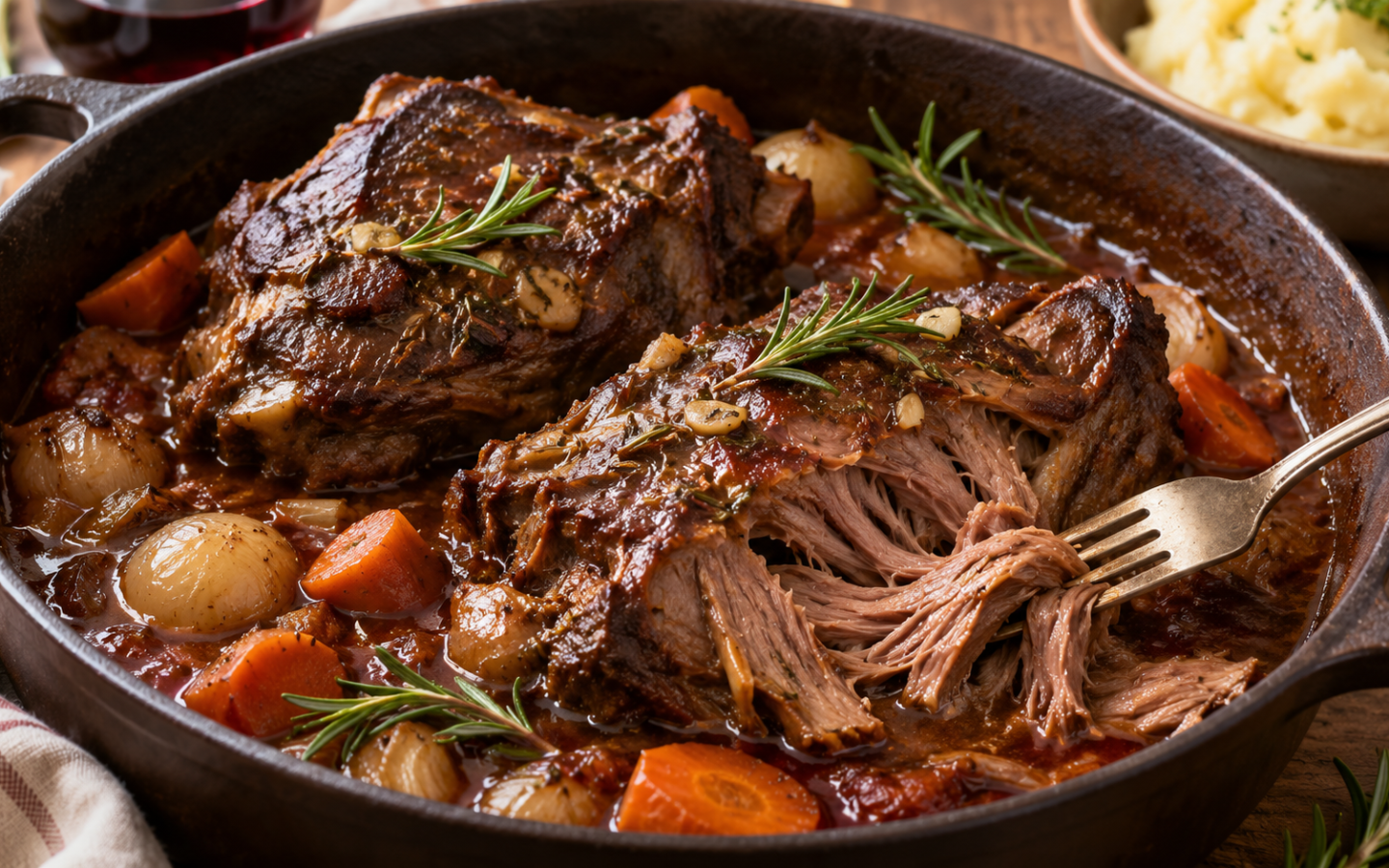
braised lamb shoulder blade transforms a collagen-rich, flavorful cut into fork-tender meat with a deep rosemary-garlic sauce. A hard initial sear builds roasted flavor; a covered low oven then gently dissolves connective tissue. Carrots and pearl onions cook in the same pan, making the dish both practical and worthy of a weekend table.
This is a complete recipe rather than a generic nutrition listing. It explains how to identify shoulder blade pieces, trim without removing protective fat, brown in batches, choose braising-liquid depth, judge tenderness instead of relying on a fixed clock, and reduce the liquid into a clean sauce.
braised lamb shoulder blade: recipe overview
| Prep time | 40 minutes |
|---|---|
| Cook time | 2 hours 45 minutes |
| Total time | 3 hours 25 minutes |
| Yield | 6 servings |
| Oven | 325°F / 165°C |
| Difficulty | Intermediate |
Read the complete method before beginning and prepare every component in advance. The times are planning estimates; ingredient temperature, pan material, appliance calibration, and portion thickness all affect the finish. Use the visual, texture, and temperature cues in the instructions rather than treating the clock as the only test.
Why this recipe works
- Salting before browning seasons the meat beyond the surface and helps it brown evenly after drying.
- A wide Dutch oven supports direct contact during searing and steady heat during the covered braise.
- Liquid reaches only halfway up the lamb, combining moist braising with concentrated flavor above the surface.
- Resting meat outside the pot allows the sauce to be defatted and reduced without overcooking the lamb.
The method is organized around moisture, heat, and sequencing. Each pause has a purpose: it may stabilize a mixture, protect texture, or make the final seasoning easier to judge. Following the order is more useful than adding extra ingredients to compensate for a technical problem.
Ingredients and their roles
Weights are the most repeatable measures where provided. Read labels for allergens and sodium, especially on preserved seafood, broth, bread, condiments, and prepared dairy. Bring only the ingredients specified to room temperature; keep fish, meat, eggs, and other perishable foods safely chilled until needed.
- 4 pounds / 1.8 kg bone-in lamb shoulder blade pieces: Choose thick pieces with visible marbling and approximately equal size; shoulder chops may be used.
- 2 teaspoons kosher salt and 1 teaspoon black pepper: Season according to crystal size and broth salinity; fine salt needs a smaller volume.
- 2 tablespoons neutral oil: A high-smoke-point oil supports deep browning without adding competing flavor.
- 1 large onion, 3 carrots, and 8 ounces pearl onions: The chopped onion forms the base; carrots and pearl onions remain recognizable in the finished dish.
- 6 garlic cloves and 2 tablespoons tomato paste: Garlic perfumes the braise, while browned tomato paste contributes color and savory depth.
- 1 1/2 cups dry red wine: Use a sound dry wine you would drink, or replace it with additional broth plus 1 tablespoon vinegar.
- 2 cups low-sodium broth: Chicken, lamb, or beef broth works; low sodium protects the reduced sauce from becoming too salty.
- 2 rosemary sprigs, 4 thyme sprigs, and 2 bay leaves: Whole herbs are easy to remove and withstand long cooking better than a large amount of chopped leaves.
- 1 teaspoon Worcestershire sauce and 1 tablespoon red-wine vinegar: These finish the sauce; check Worcestershire for fish and gluten when relevant.
- 2 tablespoons parsley: Fresh parsley added after cooking lifts the rich braise.
Ingredient selection and preparation
Understand the cut
The shoulder blade includes hard-working muscles, seams of connective tissue, and often a flat blade bone. It is not meant to be cooked like a quick loin chop. Slow moist heat converts collagen to gelatin, giving the sauce body and the meat its yielding texture.
Trim selectively
Remove only thick exterior deposits and any ragged silver skin that will not soften. Leave thin fat and marbling, which protect the meat during the long oven time. Pat every surface dry after trimming; moisture must evaporate before browning begins.
Choose wine or a no-wine alternative
Wine contributes acidity and fruit, not just alcohol. Simmer it after deglazing so its raw edge cooks away. For an alcohol-free braise, use broth with vinegar and 1/2 cup unsweetened red grape juice, then adjust sweetness at the end.
Finish all chopping, draining, zesting, weighing, and pan preparation before active cooking starts. Good mise en place prevents a delicate component from overcooking while another is still being measured and reduces cross-contamination between raw and ready-to-eat ingredients.
How to make braised lamb shoulder blade
-
Salt and temper briefly
Season lamb on all sides and refrigerate uncovered for 4 to 24 hours when possible. Before cooking, let it stand only 30 minutes while the oven heats to 325°F / 165°C. Pat dry again. Long room-temperature standing is unnecessary and unsafe.
-
Brown in batches
Heat oil in a wide Dutch oven over medium-high. Sear lamb without crowding, 3 to 5 minutes per broad face, until a dark brown crust forms. Move browned pieces to a tray. Lower heat if the fond turns black; brown fond is valuable, burned fond is bitter.
-
Build the aromatic base
Pour off excess fat, leaving about 2 tablespoons. Cook chopped onion and carrots with a pinch of salt for 7 minutes. Add garlic for 45 seconds, then tomato paste and cook until brick red, scraping and stirring so it caramelizes without scorching.
-
Deglaze with wine
Add wine and scrape the entire base with a wooden spoon. Simmer 5 to 7 minutes until reduced by roughly half and the aroma smells rounded rather than alcoholic. This step dissolves browned proteins into the future sauce.
-
Assemble the braise
Add broth, Worcestershire, rosemary, thyme, and bay. Return lamb in one snug layer with bones oriented safely below the rim. Liquid should reach about halfway up the meat; add a little broth if necessary. Bring just to a simmer.
-
Cook low and covered
Cover tightly and transfer to the oven. Braise 1 hour 45 minutes, turn the pieces, add pearl onions, and continue 45 to 75 minutes. The lamb is ready when a fork enters with little resistance and the meat begins pulling from the bone, often near 195–205°F internally.
-
Rest meat and finish vegetables
Transfer lamb carefully to a warm platter and tent loosely. Remove herb stems and bay. If carrots or onions need more time, simmer them on the stovetop until tender, then lift them to the platter.
-
Defat and reduce sauce
Skim visible fat or pour liquid through a fat separator. Simmer the sauce uncovered until glossy and lightly spoon-coating. Stir in red-wine vinegar, taste with a piece of lamb, and adjust salt and pepper. Return meat briefly to warm, then finish with parsley.
Technique notes for dependable results
Brown without burning
The pan needs space and stable heat. Meat that releases liquid is crowded or insufficiently dry. Remove pieces, let moisture evaporate, and resume in smaller batches. Fond should be mahogany, not black.
Braise at a quiet temperature
A hard boil tightens muscle fibers and emulsifies fat into a greasy sauce. In the oven, liquid should move gently around the edges. If it is racing when checked, reduce temperature by 25°F.
Test connective tissue
Food-safe temperature alone does not guarantee tenderness. Shoulder is safe before collagen has dissolved. Probe several muscles; the fork or skewer should slide in almost like softened butter and the bone should loosen.
Reduce only after defatting
Boiling a fatty liquid makes it cloudy and heavy. Remove lamb, skim or separate fat, then reduce clean broth. The natural gelatin will create body without flour when the ratio is correct.
Common mistakes and fixes
Tough meat after the stated time
It almost always needs longer. Add broth if the pan is dry, cover, and continue in 20-minute increments. Shoulder does not become tender by raising heat aggressively.
Thin sauce
Remove solids and simmer uncovered. Gelatin concentration will thicken the sauce further as it cools. Avoid adding flour before allowing natural reduction to work.
Greasy flavor
Trim excessive exterior fat, skim during finishing, and add vinegar only after reduction. Acid brightens but cannot replace proper defatting.
Salty sauce
Broth and reduction were likely too concentrated. Add unsalted broth or water, then rebalance with a little tomato or acid. Use low-sodium products next time.
Variations and substitutions
Mediterranean
Add strips of lemon peel, fennel wedges, and olives during the final 45 minutes. Reduce added salt because olives are briny.
Middle Eastern spice
Season with cumin, coriander, and a small pinch of cinnamon; replace wine with broth and pomegranate juice. Finish with mint.
Slow cooker
Brown meat and aromatics on the stove, then cook on low 7 to 9 hours with less broth because evaporation is limited. Reduce sauce separately.
Gluten-free
The core ingredients are wheat-free, but verify broth, Worcestershire, tomato paste, and condiments for gluten and cross-contact.
Make one substitution at a time the first time you vary the recipe. That preserves the core ratio and makes the effect of the change clear. Several simultaneous substitutions can alter moisture, salt, fat, and cooking time in ways that are difficult to diagnose.
Detailed cook’s notes
Bone-in advantages
Bone moderates heat near the center and contributes gelatin and flavor. Boneless shoulder works but may cook faster and should be tied into even portions.
Pan geometry
A very deep narrow pot crowds browning; a wide shallow braiser evaporates faster. Choose a vessel that holds meat snugly in one layer and monitor liquid depth.
Day-ahead method
Braise completely, cool rapidly, and refrigerate meat in sauce. The fat solidifies on top for easy removal. Reheat gently the next day, then make the final reduction.
Vegetable timing
Chopped onion and carrot may dissolve into sauce, while pearl onions added later retain shape. Add delicate vegetables late rather than subjecting everything to three hours.
Sauce balance
Taste sauce with meat, not alone. Lamb brings salt and fat to each bite. Vinegar, pepper, and parsley often improve balance more effectively than more salt.
Nutrition context
Lamb shoulder provides protein, iron, zinc, and vitamin B12, but its fat content varies by trimming and cut. Serve a moderate portion with vegetables rather than relying on a per-100-gram database entry to describe the whole meal.
Serving and pairing
Spoon sauce onto warm plates, add lamb and vegetables, and finish with parsley. Mashed potatoes, polenta, couscous, or white beans catch the sauce. A crisp green vegetable such as broccoli rabe or green beans supplies welcome bitterness.
Serve the same style of dry red wine used in cooking, or choose sparkling water with lemon. A salad with mustard vinaigrette balances richness. Avoid a heavily sweet side because the slowly browned onions already bring gentle sweetness.
Make-ahead, storage, and reheating
Cool meat and sauce in shallow containers within 2 hours. Refrigerate up to 4 days or freeze portions up to 3 months. Store meat submerged partly in sauce to limit drying. Remove bones before freezing if space matters.
Warm covered at 325°F / 165°C or over low stovetop heat until 165°F / 74°C, turning gently. Add broth if the gelatin-rich sauce is too thick. Reheat only the amount needed.
Food safety and allergen notes
Raw lamb must remain separate from ready-to-eat foods. Wash hands and sanitize boards; do not rinse meat. The recipe may contain fish or gluten through Worcestershire and broth and contains alcohol unless substituted. Handle the heavy hot pot with dry mitts.
Nutrition values are estimates based on typical products and the stated yield. Brands, trimming, substitutions, retained cooking fat, and actual portions change the result; the estimate is not medical advice.
Frequently asked questions
What is lamb shoulder blade?
It is the upper shoulder area containing the blade bone and well-used muscles. The connective tissue makes it flavorful and ideal for braising, not naturally tough when given sufficient low, moist heat.
Can I use shoulder chops?
Yes. Choose thick blade chops, brown them, and begin checking earlier because individual pieces can tenderize faster than a large roast.
Must I use red wine?
No. Replace it with broth plus vinegar and optional unsweetened grape juice. The dish needs acidity and depth, not alcohol specifically.
Why is the lamb safe but still tough?
Pathogen-killing temperature is reached well before collagen converts to gelatin. Continue the covered braise until a fork meets little resistance.
Can I make it ahead?
Yes; it often improves overnight. Cool safely, refrigerate in sauce, remove solid fat, and reheat gently before reducing and adjusting the sauce.
How much lamb per person?
Plan roughly 10 to 12 ounces raw bone-in lamb per person, depending on bone size and side dishes. The finished edible portion is smaller.
Final cooking note
Braised lamb shoulder blade rewards patience rather than complicated technique. Dry and brown the meat, build a clean aromatic base, keep the braise gentle, and wait for true fork tenderness. Defatting and reducing separately turn the cooking liquid into a polished sauce instead of a heavy broth.