

Introduction
Apple strudel with shortcrust pastry is a classic dessert that embodies the essence of comforting, homemade baked goods. Its origins trace back centuries, with influences from Central European culinary traditions, particularly Austria and Germany. The marriage of a tender, buttery shortcrust pastry with a spiced apple filling creates a harmonious balance of textures and flavors that is both nostalgic and universally appealing. This recipe, meticulously crafted for Love With Recipes, emphasizes quality ingredients, precise techniques, and thoughtful presentation to ensure a perfect outcome every time. Whether you’re a seasoned baker or a passionate novice, mastering this apple strudel will elevate your dessert repertoire and bring warmth and joy to your table.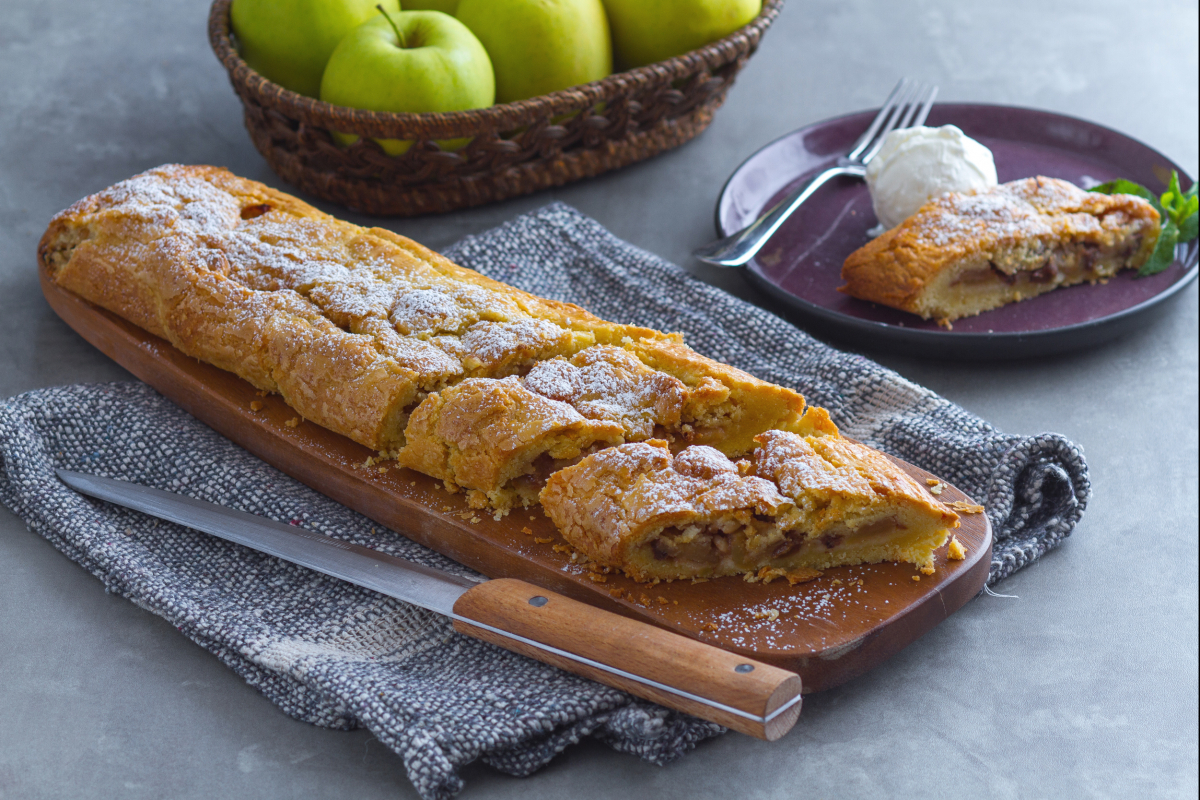
Time
Preparing this exquisite apple strudel involves a total time commitment of approximately 2 hours and 15 minutes. This includes about 30 minutes for active preparation, 20-30 minutes for chilling the dough and filling, and a baking time of approximately 40 minutes. The soaking of raisins in grappa adds an initial step, which can be done ahead of time, allowing for flexibility in your schedule. Note that allowing the filled strudel to rest after baking for a few minutes enhances its texture and flavor development. Overall, this recipe is designed to fit comfortably into a weekend baking session or an extended holiday preparation, making it ideal for special occasions or leisurely weekends.

Needed Equipment
Essential Baking Tools
- Mixing bowls (large and medium)
- Wooden spoon or silicone spatula
- Measuring cups and spoons
- Vegetable peeler
- Chef’s knife or apple corer
- Cutting board
- Kitchen scale (optional but recommended for accuracy)
- Fine grater or ground spice grinder (for cinnamon and biscuits)
- Plastic wrap and aluminum foil
- Rolling pin
- Rectangular or large flat work surface
- Pastry brush
- Baking sheet (preferably with a rim)
- Parchment paper
- Small round cutter or a sharp knife (for vents and trimming)
- Cooling rack
- Kitchen towel (for handling hot pastries)
- Brush for glazing (or a small pastry brush)
Optional but Helpful Equipment
- Food processor (for quicker dough mixing, though traditional method is recommended)
- Pastry mat or silicone baking mat
- Apple peeler/citter for uniform slices
- Stand mixer with paddle attachment (for mixing dough and filling)
Tags
- dessert
- baking
- fruit
- European cuisine
- holiday
- comfort food
- pastry
- fruits
- spiced
Serving Size
This recipe yields approximately 14 generous slices, suitable for serving a family or small gathering. If you prefer smaller portions, you can cut the strudel into more pieces, but for a traditional presentation, serving larger slices allows each guest to enjoy the full depth of flavors and textures. For a more elegant presentation, serve individual slices on dessert plates with optional accompaniments such as whipped cream, vanilla ice cream, or a dusting of powdered sugar.
Difficulty Level
This recipe falls into the intermediate category, primarily due to the techniques involved in handling the shortcrust pastry, rolling it out evenly, and assembling the strudel without tearing. However, with patience and attention to detail, even novice bakers can achieve excellent results. The steps are straightforward, but precision in rolling, sealing, and venting is essential to prevent leaks and ensure a beautifully baked crust. Practice makes perfect, and the end result is a stunning dessert that showcases your baking skills.
Allergen Information
| Allergen | Contains | Notes |
|---|---|---|
| Gluten | Yes | From all-purpose flour and digestive biscuits |
| Eggs | Yes | Egg yolks in dough and glazing |
| Dairy | Yes | Butter in pastry |
| Nuts | Yes | Pine nuts in filling |
| Alcohol | Yes | Grappa soaked raisins |
Dietary Preference
This recipe is suitable for vegetarians but not for those on a strict vegan diet due to the use of butter and eggs. It can be adapted for vegan preferences by substituting plant-based butter and egg replacers, though this may slightly alter texture and flavor. Always consider individual dietary restrictions and preferences when serving.
Course
Dessert, pastry, sweet course
Cuisine
European, Austrian, Central European
Ingredients
Pine nuts200gRaw or toasted
| Ingredient | Quantity | Notes |
|---|---|---|
| Unsalted butter | 500g | Softened at room temperature |
| Sugar | 250g | Granulated sugar |
| Egg yolks | 3 | Large eggs, separated |
| All-purpose flour | 750g | Sifted before use |
| Fine salt | A pinch | |
| Golden apples | 1 kg | Fuji, Gala, or similar tart apples |
| Raisins | 200g | Golden or sultanas |
| Grappa | 100ml | Use good quality for flavor |
| Sugar (for filling) | 40g | Adjust to taste |
| Ground cinnamon | To taste | Start with 1 teaspoon |
| Digestive biscuits | 100g | Finely ground |
| Egg (for glazing) | 1 | Beaten |
Instructions
1. Prepare the Filling
Begin by soaking the raisins in grappa. Place the raisins in a large, deep bowl and pour the grappa over them, ensuring they are fully submerged. Cover the bowl with plastic wrap or a lid and set aside at room temperature or in the refrigerator. Soaking the raisins allows them to soften and absorb the rich, aromatic flavors of the grappa, which will infuse the filling with depth and complexity. This process should ideally last for at least 20 minutes, but up to an hour is preferable for maximum flavor development. If you plan to prepare the filling a day ahead, do so, but be sure to drain any excess liquid before mixing with the other ingredients to prevent the filling from becoming overly moist.
2. Prepare the Apples
While the raisins are soaking, focus on preparing the apples. Using a vegetable peeler, peel the apples, but leave some skin on if you prefer a more rustic texture and appearance. If you want a fully smooth filling, peel all the apples; for more texture and visual appeal, leave some skin on. Core the apples using a corer or a sharp knife, removing all seeds and tough core parts. Slice each apple into quarters and then cut each quarter into large chunks approximately the size of a walnut. The chunky texture of the apple pieces ensures the filling remains hearty and retains some bite after baking, preventing it from turning mushy. Place the chopped apples into a large mixing bowl.
3. Combine the Filling Components
Add the soaked raisins along with their flavorful grappa liquid to the bowl with the chopped apples. Incorporate the pine nuts, which provide a subtle crunch and nutty flavor, enhancing the overall complexity of the filling. Next, grind the digestive biscuits finely using a food processor or a mortar and pestle; these act as a natural thickener, absorbing excess moisture and adding a delicate crumbly texture. Mix these ingredients thoroughly using your hands or a spoon, ensuring the apples, raisins, pine nuts, and biscuits are evenly distributed.
Season the filling with ground cinnamon, starting with 1 teaspoon and adjusting according to taste. Cinnamon adds warmth and depth, complementing the tartness of the apples and the sweetness of the raisins. Mix again to evenly distribute the spice. Cover the bowl with plastic wrap and refrigerate for at least 20 minutes, allowing the flavors to meld and the filling to firm up slightly. If preparing ahead of time, this step can be extended overnight, but make sure to drain any excess liquid that may accumulate to prevent the filling from becoming too wet during baking.
4. Make the Shortcrust Pastry
In a large mixing bowl, combine the softened butter and sugar. Use a wooden spoon or a silicone spatula to mix until the mixture is smooth and creamy, with a pale, homogeneous appearance. The creaming process incorporates air, contributing to a tender crust. Add the egg yolks one at a time, mixing well after each addition to ensure even incorporation. The egg yolks enrich the dough and help achieve a buttery, flaky texture.
Gradually add the all-purpose flour, a portion at a time, mixing gently until just incorporated. The dough will be soft and slightly sticky, which is desirable for a tender shortcrust pastry. Add a pinch of fine salt to enhance the overall flavor. Continue mixing until the dough comes together into a cohesive ball. Turn the dough onto a lightly floured surface and gently shape it into a rectangle or two smaller portions if you prefer, handling it minimally to prevent overworking, which can toughen the dough.
Wrap the dough in plastic wrap and refrigerate for 20-30 minutes. Chilling relaxes the gluten, making the dough easier to roll out and less prone to shrinking or tearing during assembly.
5. Roll Out the Dough
Remove the chilled dough from the refrigerator and place it on a lightly floured work surface. Using a rolling pin, roll the dough into an even rectangle measuring approximately 40×50 centimeters (about 16×20 inches). Aim for a thickness of about half a centimeter (about 1/4 inch). Keep turning and flipping the dough as you roll to maintain a rectangular shape and prevent sticking. If the dough becomes too soft or sticky, refrigerate it for a few minutes to firm up. The rolled-out dough should be large enough to envelop the filling comfortably, leaving about 5 centimeters (2 inches) of border on each side for sealing.
If necessary, trim any uneven edges with a sharp knife, creating a neat rectangle. Lightly dust the surface and the dough with more flour to prevent sticking. Cover the rolled-out dough with a sheet of parchment paper if needed, and set aside while preparing to assemble.
6. Assemble the Strudel
Take the prepared filling from the fridge and spread it in a thick, even strip along one of the longer sides of the dough, leaving a 5-centimeter (2-inch) border at the edges. Use a spatula or your hands to gently press the filling down, ensuring it is evenly distributed. Carefully lift the parchment paper or use a rolling pin to help guide and roll the dough over the filling, starting from the filled edge. Use the parchment paper to lift and roll, making sure to keep the roll tight but not overly compressed, to prevent bursting during baking.
Once rolled, tuck in the ends to seal the filling, trimming excess dough if needed. Use a small round cutter or a sharp knife to make several small vents along the top of the strudel, allowing steam to escape during baking. These vents prevent the pastry from bursting and help achieve a crisp, flaky crust.
Gently transfer the assembled strudel onto a baking sheet lined with parchment paper. Use the parchment paper to lift and reposition the strudel if necessary, maintaining its shape and ensuring it is centered on the baking sheet. Fold the edges of the parchment paper over the sides of the strudel to help it retain its shape during baking.
7. Glaze and Bake
Preheat your oven to 200°C (400°F) in static mode. Once the oven reaches temperature, brush the surface of the strudel with the beaten egg, creating a shiny, golden crust. For an even glaze, use a pastry brush to thoroughly coat the entire surface, including the vents and edges. Immediately lower the oven temperature to 180°C (350°F) and bake for approximately 40 minutes. The baking time may vary slightly depending on your oven and the thickness of the dough, so keep an eye on the pastry; it should turn a deep golden brown and become crisp.
During baking, the pastry will puff slightly, and the filling will become aromatic. If you’re baking multiple strudels, bake one at a time or on separate racks, ensuring proper heat circulation.
Once baked, remove the strudel from the oven and place it on a cooling rack. Allow it to cool for at least 10 minutes before slicing; this helps the filling set and prevents it from spilling out when cut. For a touch of elegance, dust with powdered sugar or serve alongside whipped cream or vanilla ice cream.
Preparation Tips
- Chilling the dough: Proper chilling is essential for a flaky, tender crust. Do not skip this step, and consider refrigerating the dough overnight for even better texture.
- Uniform apple pieces: Cutting apples into similar-sized chunks ensures even baking and consistent texture throughout the filling.
- Sealing the edges: Use a little water or beaten egg to help seal the dough edges to prevent filling from leaking during baking.
- Ventilation: Puncturing the top with vents allows steam to escape, avoiding blowouts and ensuring crispness.
- Handling the dough: Keep the dough cold and handle it minimally to prevent toughness and shrinkage.
Nutritional Information
| Nutrient | Per Serving (Approximate) |
|---|---|
| Calories | 350 kcal |
| Protein | 6 g |
| Carbohydrates | 45 g |
| Fat | 15 g |
| Saturated Fat | 8 g |
| Fiber | 4 g |
| Sugar | 20 g |
| Sodium | 70 mg |
Note: Nutritional values are approximate and can vary based on specific ingredients and portion sizes.
Tips and Tricks
- Use high-quality ingredients: Fresh, ripe apples and good butter significantly enhance flavor.
- Enhance flavor with spices: A pinch of nutmeg or a splash of vanilla extract can add extra warmth.
- Make ahead: Prepare the filling and dough in advance; assemble and bake just before serving for maximum freshness.
- Variations: Incorporate chopped walnuts, dried apricots, or a drizzle of honey for personalized twists.
- Presentation: Serve with a dusting of powdered sugar or a side of whipped cream for an elegant touch.
Add-ons
- Vanilla ice cream
- Whipped cream
- Caramel sauce
- Crème fraîche
- Additional chopped nuts or toasted coconut flakes
Side Dishes
Complement your apple strudel with light accompaniments such as:
- Fresh fruit salad
- Vanilla custard
- Warm spiced compote
- Coffee or espresso for a perfect finish
Improvements
- Pastry variations: Experiment with pâte brisée or puff pastry for different textures.
- Filling enhancements: Add a splash of lemon juice or zest to brighten flavors.
- Glazing: Brush with honey or apricot jam before baking for extra shine.
- Presentation: Serve sliced with caramelized apple slices or a drizzle of caramel sauce.
Save and Store
Leftover apple strudel can be stored in an airtight container at room temperature for up to 1 day or refrigerated for up to 3 days. For longer storage, wrap tightly in plastic wrap and freeze for up to 2 months. To reheat, warm slices in a preheated oven at 180°C (350°F) for 10-15 minutes until heated through and crisp. Reheating in a microwave is possible but may soften the crust—best used if you plan to serve immediately afterward.
FAQ
Can I use store-bought shortcrust pastry?
Yes, using high-quality store-bought shortcrust pastry simplifies the process, but homemade dough offers superior flavor and texture. If choosing pre-made pastry, allow it to come to room temperature before rolling to prevent cracking.
Can I make the filling vegan?
Absolutely. Substitute vegan butter, use plant-based egg replacers, and opt for vegan-friendly biscuits. Adjust spices and liquids accordingly to maintain flavor and consistency.
Is it possible to prepare this dessert in advance?
Yes. Prepare the filling and dough ahead of time, assemble the strudel, and refrigerate. Bake just before serving to ensure freshness and optimal crispness.
How do I prevent the filling from leaking during baking?
Ensure the edges are well sealed with a bit of water or egg wash. Puncture vents on top to allow steam escape and prevent bursting.
Conclusion
The apple strudel with shortcrust pastry is a testament to timeless baking traditions, offering a delightful combination of flaky, buttery crust with a fragrant, spiced apple filling. Its versatility makes it suitable for festive gatherings, intimate family dinners, or cozy afternoons with a cup of coffee. Mastering this recipe not only elevates your baking skills but also provides a comforting, indulgent dessert that can be customized to suit various tastes. The process of preparing this dish involves a delicate balance of patience, attention to detail, and love for baking. As with many classic recipes, the true joy lies in sharing this warm, inviting treat with loved ones, creating memories as sweet as the dessert itself.
References
For further insights into traditional European pastry techniques and apple varieties, consult sources such as:
- “The Art of Classic Pastry” by Pierre Hermé
- “Baking with Apples” by Susan McClure