

Introduction
Filetto al Pepe Verde, a celebrated Italian culinary masterpiece, embodies the epitome of refined gastronomy with its delicate balance of tender beef and a luscious, subtly spicy green peppercorn sauce. Renowned for its luxurious flavor profile, this dish is often reserved for special occasions, romantic dinners, or an indulgent treat to elevate your culinary repertoire. Originating from Italy’s classical kitchens, the dish showcases the art of balancing premium quality ingredients with expert technique, resulting in a visually stunning and palate-pleasing main course that leaves a lasting impression. At Love With Recipes, we are dedicated to helping you perfect this sophisticated dish by providing an in-depth, detailed guide that covers every aspect—from ingredient selection to plating, ensuring your success in creating a restaurant-quality meal at home.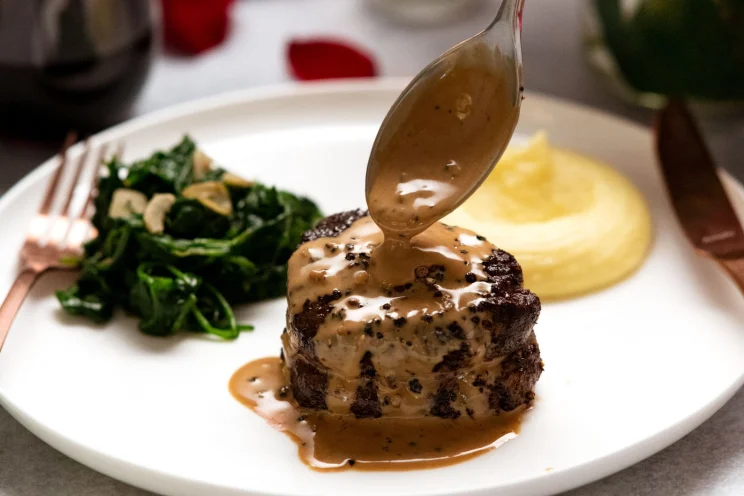
Time
Total preparation and cooking time: Approximately 45 minutes to 1 hour.

This includes prep work (15-20 minutes), searing and flambéing (10 minutes), sauce preparation (10 minutes), resting and plating (5 minutes), and optional resting time for the beef (5 minutes). The total time may vary depending on your cooking speed and experience, but with careful attention, you can master this dish efficiently.
Needed Equipment
- Heavy-bottomed skillet or frying pan (preferably cast iron or stainless steel) for searing and sauce preparation
- Kitchen tongs or slotted spoon for handling the beef
- Sharp chef’s knife for precise trimming and slicing
- Cutting board
- Measuring spoons and digital scale for accurate ingredient measurement
- Small bowl or plate for flour coating
- Long match or long-handled lighter for flambéing
- Cooking spoon or silicone spatula for stirring
- Thermometer (instant-read) for checking internal temperature
- Tongs or meat fork for turning the beef
- Serving plates or platters
- Optional: fine strainer for sauce fining or clarification
- Kitchen thermometer for precise cooking of beef (optional but recommended)
Tags
Italian cuisine, Gourmet, Beef, Classic, Elegant, Dinner, Special Occasion, Rich Flavors, Sauce, French Technique, Flambé, Gourmet Main Course
Serving Size
This recipe yields four generous servings, suitable for four adults with hearty appetites or as part of a multi-course meal. Each portion includes a perfectly cooked filet mignon topped with an indulgent green peppercorn sauce, accompanied by sides of your choice.
Difficulty Level
Intermediate to advanced. The dish requires precise timing and technique, especially in searing, flambéing, and creating a smooth, well-balanced sauce. However, with patience and careful attention, home cooks with moderate experience can achieve professional results.
Allergen Information
| Allergen | Contains |
|---|---|
| Dairy | Fresh cream, butter (clarified butter) |
| Alcohol | Brandy (used for flambéing) |
| Mustard | Dijon mustard |
| Possible cross-contamination | Depends on ingredient sourcing; check labels for gluten or other allergens |
Note: This dish is not suitable for those with dairy allergies or alcohol restrictions, but substitutions can be explored (see tips section).
Dietary Preference
Gluten-free (if flour is omitted or substituted with gluten-free alternatives), Keto-friendly (if served with low-carb sides), High-protein, Low-carb.
Course
Main Course / Entrée
Cuisine
Italian
Ingredients
| Ingredient | Quantity |
|---|---|
| Filet of Beef (filet mignon) | 1 kg (about 2.2 lbs) |
| Green Peppercorns in brine | 20 g (about 2 tablespoons) |
| Fresh Liquid Cream | 80 g (about ⅓ cup) |
| Dijon Mustard | 40 g (about 3 tablespoons) |
| Beef Broth | 100 g (about ½ cup) |
| Brandy | 25 g (about 2 tablespoons) |
| Clarified Butter | 20 g (about 1.5 tablespoons) |
| Salt | To taste |
| All-Purpose Flour (or gluten-free alternative) | As needed for coating |
Instructions
Step 1: Preparing the Beef
Begin by selecting high-quality beef, preferably from a reputable butcher or butcher counter. The filet mignon should be fresh, with a bright red color, firm texture, and minimal visible connective tissue. Inspect the meat carefully, trimming any excess silverskin or connective tissue with a sharp paring knife. This step ensures an even sear and prevents the meat from curling during cooking.
Once trimmed, tie the beef into a uniform shape using kitchen twine. This technique helps the meat cook evenly, especially if the fillet has irregular shapes. Wrap the twine snugly around the entire cut, making sure it’s tight enough to maintain shape but not so tight as to cut into the meat.
Next, prepare a shallow dish or plate with a small amount of all-purpose flour. Lightly roll each filet in the flour, coating it evenly. This light coating facilitates browning and creates a desirable crust. Shake off any excess flour to prevent clumping in the pan.
Step 2: Searing the Filets
Place a heavy-bottomed skillet over medium-high heat. Add the clarified butter and allow it to melt and shimmer, indicating it’s hot enough for searing. The butter’s high smoke point and rich flavor make it ideal for this purpose.
Carefully lay the floured filets into the hot pan, using tongs or a slotted spoon to avoid splatters. Sear each side for 1-2 minutes, turning gently to develop a beautiful golden-brown crust. Do not rush this step; patience ensures the crust forms properly, sealing in juices and flavor.
To achieve a perfect sear, avoid overcrowding the pan. If necessary, cook the fillets in batches to maintain high heat and proper caramelization. Once the initial sear is complete, reduce the heat slightly and cook each side for an additional 1-2 minutes, depending on the desired doneness. For medium-rare, aim for an internal temperature of approximately 130°F (54°C). Use a meat thermometer to check for accuracy.
Step 3: Flambéing with Brandy
With the beef properly seared on all sides, increase the heat slightly. Carefully add the brandy to the pan, being cautious of potential flare-ups. Use a long-handled lighter or match to ignite the alcohol, creating a flambé. This step introduces a complex depth of flavor, as the alcohol burns off rapidly, leaving behind a concentrated essence that infuses the meat and sauce.
Allow the flames to burn out naturally; this should take only a few seconds if done correctly. If you prefer to avoid flambéing, simply add the brandy and let it cook off over low heat for a few minutes, stirring occasionally to incorporate the flavors.
Step 4: Adding Green Peppercorns and Mustard
Once the flambé is complete, reduce the heat to low. Add the drained green peppercorns, being careful as they can splatter. Gently stir to distribute the peppercorns throughout the pan, releasing their aroma and flavor into the sauce base. Then, season with a pinch of salt — remember, the brine from the peppercorns already provides some saltiness.
Stir in the Dijon mustard, which adds a subtle tanginess and depth to the sauce. The mustard also helps emulsify the sauce, creating a smooth texture. Mix thoroughly, ensuring the mustard is fully incorporated.
Step 5: Creating the Sauce
Pour in about 50 grams of fresh cream, stirring gently to combine. This initial addition of cream creates a rich base that will be thickened further. As the mixture begins to simmer, the sauce will start to develop a velvety consistency.
Allow the sauce to cook gently for 2-3 minutes, stirring often. During this time, the flavors meld, and the sauce naturally thickens. Taste and adjust the seasoning with more salt or pepper if necessary. The green peppercorns will add a pleasant spicy note without overpowering the dish.
Step 6: Cooking the Filets to Perfection
At this stage, check the internal temperature of the beef to ensure it’s cooked to your preference. For medium-rare, aim for about 130°F (54°C). Use an instant-read thermometer inserted into the thickest part of the fillet for accuracy. If the beef is not yet at the desired temperature, continue cooking in the sauce for a few more minutes.
If you prefer your filet more well-done, extend the cooking time slightly, adding a splash of beef broth if the sauce becomes too thick or starts to stick. Resting the meat for 5 minutes before serving allows juices to redistribute, resulting in a tender, flavorful bite.
Step 7: Finishing the Sauce
Once the beef reaches your preferred doneness, remove it from the pan and set aside on a warm plate. Loosely cover with foil to keep warm. At this point, the sauce should be rich, creamy, and slightly thickened. To enhance its texture and flavor, raise the heat and simmer for an additional 1-2 minutes, allowing the sauce to reach a smooth, velvety consistency.
Add the remaining 30 grams of cream, stirring gently to enrich the sauce further. Adjust seasoning with additional salt or freshly ground black pepper if necessary. The sauce should cling smoothly to the back of a spoon, signifying perfect consistency.
Step 8: Plating and Serving
Remove the twine from the beef fillets carefully. Slice the fillet into thick, elegant medallions or serve whole, depending on presentation preference. Place the meat on warmed plates, then generously spoon the green peppercorn sauce over each piece. For an elegant touch, garnish with extra green peppercorns, chopped parsley, or thyme.
Complement the dish with sides such as roasted potatoes, sautéed seasonal vegetables, or a crisp green salad. Serve immediately to enjoy the full flavor and luxurious texture of this classic Italian dish. Pair with a robust red wine, such as a Cabernet Sauvignon or Merlot, to enhance the richness of the meat and sauce.
Preparation Tips
- Quality ingredients: Use the freshest beef and high-quality cream for optimal flavor and texture.
- Uniform shape: Tying the beef helps it cook evenly and makes slicing easier.
- Flour coating: Lightly dusting with flour creates a beautiful crust and helps thicken the sauce slightly.
- Temperature control: Use a thermometer to avoid overcooking or undercooking the beef, maintaining that perfect medium-rare or desired doneness.
- Flambé safety: Always flambé in a safe environment, away from flammable objects, and use a long lighter to ignite the alcohol.
- Resting the meat: Resting for a few minutes after cooking ensures juicy, tender slices.
Nutritional Information
| Nutrient | Per Serving (approximate) |
|---|---|
| Calories | 420 kcal |
| Protein | 33 g |
| Carbohydrates | 4 g |
| Fat | 30 g |
| Saturated Fat | 14 g |
| Cholesterol | 105 mg |
| Sodium | 400 mg |
| Fiber | 1 g |
Tips and Tricks
- Choosing the beef: For the best flavor, select prime-quality, well-marbled filet mignon. Wet-aged beef tends to be more tender, but dry-aging enhances flavor complexity.
- Cooking to temperature: Use a reliable meat thermometer to ensure perfect doneness—this is critical for tender, juicy filet mignon.
- Green peppercorns: Drain them well to prevent excess brine from diluting the sauce. Slight crushing of the peppercorns before adding releases their aroma.
- Flavor balancing: Adjust the mustard and cream quantities based on your taste preferences. More mustard adds tang, while more cream enhances richness.
- Dealing with flambé: For safety, keep a fire extinguisher nearby when flambéing, and always flambé in a well-ventilated, safe environment.
Add-ons
- Fresh herbs: Chopped parsley, thyme, or chives for garnish
- Truffle oil or shaved truffles for an extra gourmet touch
- Caramelized onions or sautéed mushrooms as additional toppings or sides
- Roasted garlic mashed potatoes or buttery polenta for complementary sides
Side Dishes
To complete your meal, consider pairing this dish with:
- Garlic roasted potatoes or crispy roast potatoes
- Sauteed green beans, asparagus, or broccolini
- Light mixed greens salad with vinaigrette
- Polenta or risotto for a creamy accompaniment
- Grilled vegetables for added color and nutrition
Improvements and Variations
- Vegetarian version: Substitute beef with grilled portobello mushrooms or vegetable medallions, and adapt the sauce accordingly.
- Spice level: Add a dash of cayenne or hot paprika to the sauce for a spicy kick.
- Vegetable accent: Incorporate roasted shallots or caramelized onions into the sauce for added sweetness.
- Low-fat adaptation: Use reduced-fat cream or Greek yogurt instead of heavy cream, adjusting the consistency with broth.
Save and Store
This dish is best enjoyed immediately to preserve the tenderness of the beef and the freshness of the sauce. However, leftovers can be stored in an airtight container in the refrigerator for up to 24 hours. To reheat, gently warm in a skillet over low heat, adding a splash of beef broth or cream to restore the sauce’s creaminess. Avoid reheating in the microwave, as this can cause the sauce to separate and the beef to dry out.
FAQ
Can I prepare this dish ahead of time?
While you can prepare the sauce in advance and reheat it, it’s best to cook the beef fresh for optimal tenderness and flavor. If necessary, sear the beef ahead, then reheat gently before serving, but note that texture may slightly change.
What if I don’t have green peppercorns?
Fresh or dried black peppercorns can be used as substitutes, but they will alter the flavor profile. For a similar effect, try using a few cracked black peppercorns or pink peppercorns for a different aromatic note.
Is flambéing necessary?
It enhances the flavor by burning off the alcohol quickly and adding depth. If uncomfortable or unsafe, simply add the brandy and cook it off over low heat instead.
Can I make this dish vegan or vegetarian?
While the traditional recipe uses beef and dairy, vegan adaptations can include grilled plant-based steaks or mushrooms with plant-based creams and broths. Adjust seasonings accordingly.
Conclusion
Mastering Filetto al Pepe Verde elevates your culinary skills and offers a taste of authentic Italian elegance. The key lies in selecting high-quality ingredients, controlling cooking temperatures, and balancing flavors with finesse. Whether serving for a romantic dinner, a special celebration, or simply indulging your senses, this dish promises a memorable dining experience. Remember, practice makes perfect—so don’t be discouraged if your first attempt isn’t flawless. With patience and attention to detail, you will soon be impressing family and friends with this exquisite recipe. As always, Love With Recipes is committed to guiding you through every step with precision and passion, ensuring that your home cooking reaches stellar heights.
References
- Italy Magazine: Classic Italian Beef Dishes
- Gordon Ramsay’s Kitchen Secrets for Perfect Steak