

Introduction
At the heart of Italian culinary tradition lies an appreciation for simple, high-quality ingredients transformed into dishes that celebrate flavor and comfort. This particular recipe combines the robust, savory notes of Italian sausage with the creamy, cheesy goodness of cacio e pepe—an iconic Roman pasta dish—elevated by the large, hollow Paccheri pasta tubes that cradle the sauce in every bite. The addition of caramelized red onions adds a subtle sweetness, balancing the saltiness of the Pecorino Romano and Parmigiano Reggiano, while a splash of red wine enhances depth and complexity. This dish, shared on Love With Recipes, offers a rich, satisfying experience ideal for cozy family dinners or impressive gatherings, showcasing the essence of authentic Italian home cooking.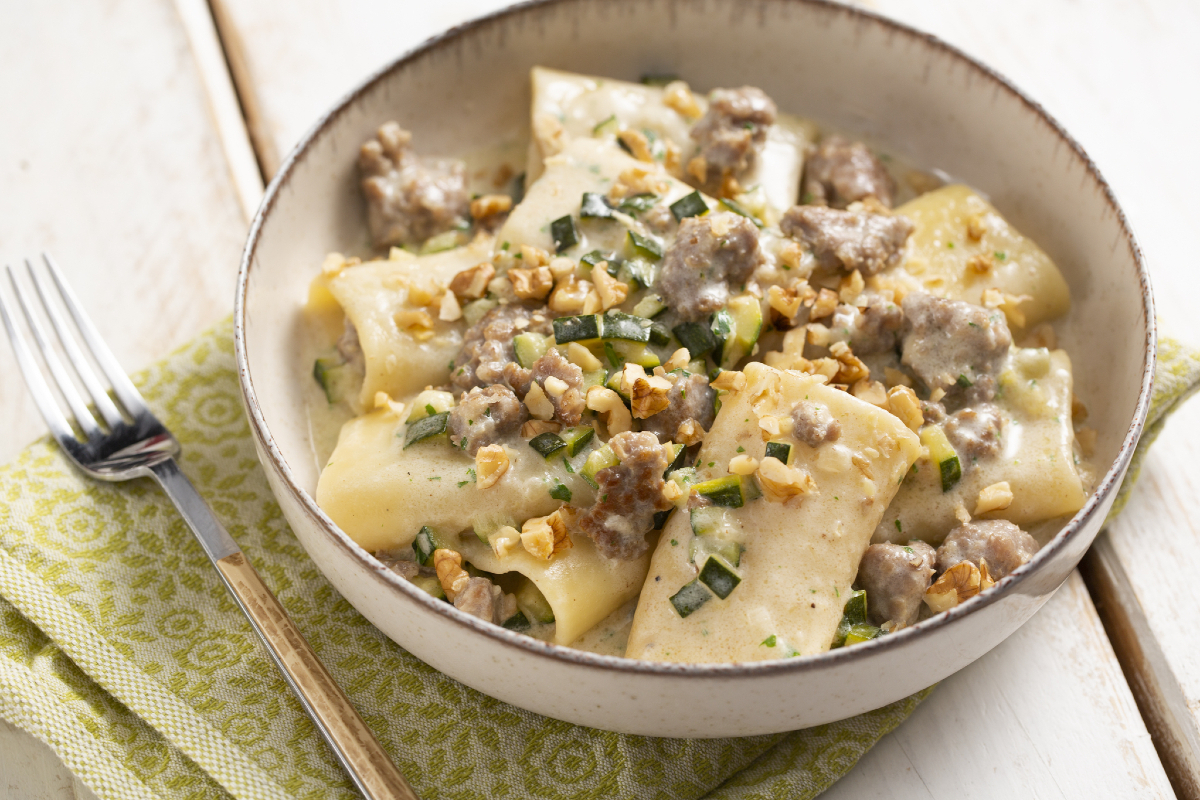
Time
- Preparation Time: 20 minutes
- Cooking Time: 30 minutes
- Total Time: Approximately 50 minutes
Needed Equipment
- Large pot for boiling pasta
- Large skillet or frying pan
- Sharp knives for chopping and crumbling
- Cutting board
- Measuring cups and spoons
- Grater for cheese
- Wooden spoon or spatula for stirring
- Kitchen tongs or pasta fork
- Small bowl for mixing cheese and pasta water
- Strainer or colander for draining pasta
- Optional: garlic press (if adding garlic), depending on preference
Tags
Italian, Pasta, Comfort Food, Cheese, Sausage, Quick Dinner, Homemade, Traditional, Hearty, Family-Friendly

Serving Size
Serves 4 generous portions, suitable for sharing among family or friends and perfect for a fulfilling main course.
Difficulty Level
Intermediate. This recipe involves multiple steps—cooking the sausage, caramelizing onions, preparing the cheese sauce, and combining everything seamlessly. However, with patience and attention to detail, it is accessible to home cooks with some experience in pasta dishes.
Allergen Information
- Contains dairy (Pecorino Romano, Parmigiano Reggiano)
- Contains pork (Italian sausage)
- Contains gluten (Paccheri pasta)
Note: Always check ingredient labels and opt for gluten-free pasta if necessary for dietary restrictions.
Dietary Preference
Non-vegetarian, Contains dairy, Can be adapted to gluten-free by substituting gluten-free pasta.
Course
Main Course
Cuisine
Italian
Ingredients
| Ingredient | Quantity |
|---|---|
| Paccheri (large pasta tubes) | 320g |
| Sausage (preferably Italian) | 150g |
| Pecorino Romano (grated) | 60g |
| Parmigiano Reggiano DOP (grated) | 40g |
| Red onions (finely chopped) | 90g |
| Extra virgin olive oil | 20g |
| Red wine | 30g |
| Freshly ground black pepper | to taste |
Instructions
Step 1: Preparing the Vegetables and Sausage
Start by gathering all your ingredients. Peel the red onions carefully, removing the outer layers to ensure a clean and smooth surface. Using a sharp chef’s knife, finely chop the onions into small, uniform pieces—this ensures even caramelization and a balanced flavor distribution in your sauce. Place the chopped onions aside. In a large skillet or frying pan, pour in 20 grams of extra virgin olive oil, heating it over medium heat. Once the oil shimmers, add the chopped onions, spreading them evenly across the pan. Cook the onions, stirring occasionally with a wooden spoon or spatula, until they soften and develop a golden hue, approximately 5 to 7 minutes. This caramelization process is crucial for adding depth and sweetness to the final dish, balancing the savory components.
Step 2: Cooking the Sausage
While the onions are caramelizing, prepare the sausage. Remove the casing by gently slicing along the length of the sausage with a sharp knife and peeling it away. Crumble the sausage into small pieces, roughly the size of peas, ensuring they are evenly distributed. Once the onions are golden, add the sausage to the skillet. Increase the heat slightly to medium-high, and cook the sausage, breaking it apart with your spatula to prevent clumping. Stir frequently, cooking for about 10 minutes or until the sausage is browned and cooked through. The goal is to render the fat and develop a crispy exterior while keeping the interior juicy and flavorful. Properly cooked sausage imparts a rich, smoky flavor that will enhance the entire dish.
Step 3: Deglazing with Red Wine
When the sausage is cooked and browned, pour in 30 grams of red wine. Use the wine to deglaze the pan, scraping up any browned bits stuck to the bottom—these are packed with flavor. Allow the wine to simmer, cooking for 2-3 minutes until the alcohol evaporates and the liquid reduces slightly. This step amplifies the complexity of the flavor profile, introducing subtle fruity and tannic notes that complement the richness of the sausage. Once the wine has reduced, remove the skillet from the heat and set aside, ready to combine with the pasta later.
Step 4: Cooking the Paccheri
Fill a large pot with water, adding a generous amount of salt—enough to make the water taste like the sea, about 10 grams of salt per liter of water. Bring the water to a rolling boil over high heat. Once boiling, add the 320 grams of paccheri pasta. Stir immediately to prevent sticking. Cook the pasta according to package instructions, typically around 16 minutes, until al dente—firm yet tender. Stir occasionally during cooking to prevent clumping. To check for doneness, taste a piece; it should offer a slight resistance but not be hard in the center. Reserve about one cup of the starchy pasta water before draining the rest through a colander. This reserved water is crucial for adjusting the sauce’s consistency later.
Step 5: Preparing the Cheese Mixture
While the pasta cooks, prepare your cheese mixture for the sauce. In a large mixing bowl, combine the grated Pecorino Romano (60g) and Parmigiano Reggiano (40g). Add a generous amount of freshly ground black pepper—about 1 teaspoon or to taste. Gradually add a few spoonfuls of the reserved hot pasta water, mixing well with a spatula or whisk to create a smooth, emulsified paste. The hot water helps melt the cheeses, resulting in a creamy, velvety sauce that will cling beautifully to the pasta. Adjust the amount of pasta water as needed to achieve the desired consistency—thick enough to coat the pasta without becoming runny or lumpy.
Step 6: Combining the Pasta and Sausage
Once the pasta is cooked and drained, transfer it to the skillet with the sausage and onion mixture. Toss gently to coat each piece of pasta evenly with the flavorful sauce. Add the cheese mixture gradually, stirring continuously to help the cheese melt into a creamy sauce. If the sauce appears too thick or begins to stick, gradually add more reserved pasta water, a spoonful at a time, to loosen it up and ensure a silky, smooth texture. The key is to work quickly and gently to avoid breaking the pasta or making the sauce too watery. The heat from the pasta and the skillet will help melt the cheese, creating a luscious coating that envelops every tube of Paccheri.
Step 7: Final Adjustments and Serving
Once the pasta is evenly coated with the cheese and sausage mixture, taste and adjust seasoning if necessary—adding more black pepper or a pinch of salt if desired. For presentation, use tongs or a pasta fork to serve the Paccheri onto warm plates, ensuring each portion has a generous amount of sausage, cheese, and sauce. Finish with a light sprinkle of freshly ground black pepper and, if desired, an extra grating of Pecorino Romano for added sharpness. Serve immediately, while hot, to enjoy the full creaminess and depth of flavors.
Preparation Tips
- Cheese Quality: Use authentic Pecorino Romano and Parmigiano Reggiano for the best flavor. Freshly grated cheeses melt more smoothly and yield a richer sauce.
- Cooking Pasta: Do not overcook the Paccheri; aim for al dente to retain texture and prevent it from turning mushy when combined with the sauce.
- Cheese Emulsification: Always add hot pasta water gradually to cheese to prevent clumping and achieve a glossy, velvety sauce.
- Flavor Balance: Adjust black pepper to taste—this dish heavily relies on the pepper’s pungency to cut through the richness of cheese and sausage.
- Sausage Variations: For a milder flavor, opt for chicken or turkey sausage, or experiment with spicy varieties for a kick.
Nutritional Information
| Nutrient | Amount per Serving |
|---|---|
| Calories | 520 kcal |
| Protein | 24 g |
| Carbohydrates | 53 g |
| Fat | 25 g |
| Saturated Fat | 9 g |
| Fiber | 2 g |
| Sugars | 3 g |
| Sodium | 550 mg |
Tips and Tricks
- Use Fresh Ingredients: The flavor of freshly grated cheese and quality sausage significantly elevates the dish.
- Control the Pasta Water: It’s the secret to achieving a perfect, silky sauce—add it gradually and avoid excess.
- Don’t Overcook the Pasta: Al dente pasta holds up better when mixed with hot sauces and retains its texture.
- Balance Flavors: Adjust black pepper and salt gradually, tasting as you go, to prevent overpowering the delicate balance.
- Make Ahead: Prepare the cheese mixture and sausage ahead of time for quicker assembly when ready to serve.
Add-ons
- Fresh herbs like parsley or basil, chopped finely, can add a fresh aroma and color.
- A drizzle of high-quality extra virgin olive oil before serving enhances richness.
- Spicy red pepper flakes can be added during the sausage cooking stage for heat.
- For a more luxurious touch, top with a few shavings of Parmigiano Reggiano at serving time.
Side Dishes
- Crusty Italian bread or baguette slices to mop up the creamy sauce.
- Simple arugula salad with lemon vinaigrette for a fresh contrast.
- Roasted seasonal vegetables such as zucchini, eggplant, or cherry tomatoes.
- Antipasto platter with cured meats, cheeses, and marinated vegetables.
Improvements
- Incorporate garlic or fresh herbs into the onion sauté for added aromatics.
- Use a blend of different Italian cheeses for a more complex flavor profile.
- Add a splash of cream or mascarpone for extra richness, if desired.
- Experiment with different types of sausage—spicy, sweet, or herbal—for variation.
Save and Store
This dish is best enjoyed immediately but can be stored in an airtight container in the refrigerator for up to 24 hours. Reheat gently in a skillet over low heat, adding a splash of reserved pasta water or broth to restore creaminess. However, note that the texture of the pasta may change slightly upon reheating, and it’s recommended to consume fresh for the best experience.
FAQ
Can I make this dish vegetarian?
Yes, substitute the sausage with plant-based sausage or roasted vegetables like zucchini, eggplant, or mushrooms for a vegetarian version. Adjust seasoning accordingly.
Can I prepare this in advance?
While best enjoyed fresh, you can prepare the sausage and cheese mixture ahead of time and store separately. Assemble and reheat with additional pasta water for a quick meal.
Is Paccheri available worldwide?
Paccheri is a traditional Italian pasta that may be found in specialty grocery stores or online. If unavailable, large rigatoni or penne can serve as suitable alternatives.
What wine pairs well with this dish?
A medium-bodied Italian red such as Chianti or Sangiovese complements the flavors well, but a dry white like Verdicchio can also work for a different pairing experience.
Conclusion
This Paccheri Cacio, Pepe, and Sausage recipe from Love With Recipes offers a rich, indulgent taste of Italy, blending creamy cheeses with savory sausage, caramelized onions, and perfectly cooked pasta. Its balance of textures and flavors makes it a standout dish for both weeknights and special occasions. The detailed steps and tips provided ensure a successful cooking experience, leading to a hearty, satisfying meal that embodies the comfort and elegance of Italian cuisine. Whether you’re a seasoned home cook or a passionate food enthusiast, this recipe invites you to savor the essence of Italy in your own kitchen with every bite.
References
- “The Silver Spoon” – The Classic Italian Cookbook
- Gordon Ramsay’s Recipes & Techniques – Pasta Perfection