

Introduction
Fried frog’s legs stand as a testament to the rich culinary heritage of the American South, particularly in Louisiana and surrounding regions where wild game has historically played a central role in local diets. These delicacies, often associated with Cajun and Creole cooking, evoke images of rustic kitchens, bayou landscapes, and communal gatherings centered around hearty, flavorful fare. The allure of frog legs lies not only in their unique flavor profile but also in their tender, juicy texture that, when cooked correctly, rivals chicken or fish in succulence. Their crispy exterior, achieved through a seasoned batter and precise frying techniques, creates a delightful contrast that elevates this dish from simple to extraordinary.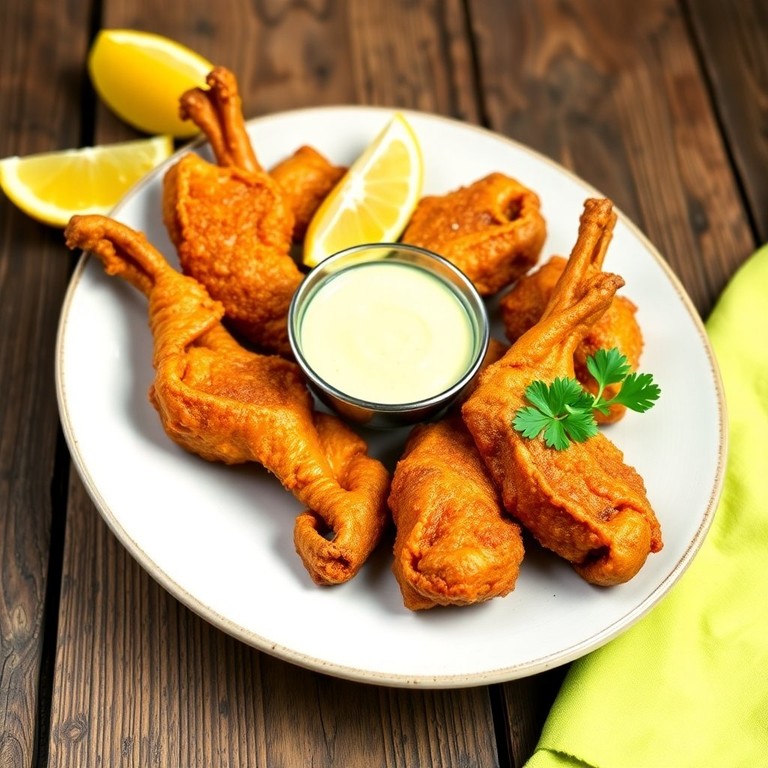
At Love With Recipes, we believe that exploring regional dishes like fried frog’s legs offers an immersive experience into local traditions and ingredients. This recipe combines a meticulous marinade that infuses the meat with a subtle tang, coupled with a crunchy coating that seals in moisture, resulting in a dish that is both rustic and refined. Whether served as an appetizer, a main course, or a shared feast among adventurous eaters, fried frog’s legs promise an unforgettable culinary adventure rooted in history, flavor, and technique.

Time
- Preparation Time: 50 minutes
- Cooking Time: 10 minutes
- Total Time: 1 hour
Needed Equipment
- Large mixing bowls
- Shallow dish or tray for marinating
- Heavy-duty plastic zip-lock bags
- Whisk or fork for mixing
- Measuring spoons and cups
- Sharp knife for preparing frog legs
- Cutting board
- Tongs or slotted spoon for frying
- Deep-frying thermometer
- Heavy-bottomed Dutch oven or cast iron skillet
- Cooling rack or paper towels for draining
- Plate or tray for dredging
- Serving utensils and lemon wedges
Tags
Southern Cuisine, Wild Game, Cajun, Creole, Seafood Alternative, Appetizer, Main Course, Rustic Cooking, Adventure, Cajun Specialties
Serving Size
This recipe yields approximately 6 servings, with each serving consisting of 2-3 tender frog legs, depending on their size and appetite.
Difficulty Level
Intermediate. The recipe involves marinating, breading, and frying techniques that require some culinary experience, but it is accessible to home cooks willing to follow detailed steps and safety precautions with hot oil.
Allergen Information
- Eggs: Yes
- Gluten: Contains wheat (flour and bread crumbs)
- Seafood/Meet: Frog legs (amphibian meat)
- Mayonnaise: Contains eggs and possibly soy or other additives depending on brand
Dietary Preference
Not suitable for vegetarians or vegans. Can be adapted for gluten-free diets by using gluten-free flour and bread crumbs, and ensuring mayonnaise is gluten-free.
Course
Appetizer or Main Course, depending on portion size and serving context.
Cuisine
Southern American, Cajun, Creole, Seafood Alternative
Ingredients
| Ingredient | Quantity | Description |
|---|---|---|
| Eggs | 2 | Large eggs, beaten |
| Mayonnaise | 2 tablespoons | For richness and batter adhesion |
| Cornstarch | 2 tablespoons | Creates a crispy coating |
| Lemon juice | 1 tablespoon | Freshly squeezed, adds tang |
| Baking powder | 1 teaspoon | Ensures crispy batter |
| Salt | 1/2 teaspoon | Enhances flavor |
| Pepper | 1/2 teaspoon | Freshly ground, to taste |
| All-purpose flour | 2/3 cup | For dredging and coating |
| Bread crumbs | 1/3 cup | For crunchiness |
| Frog legs | 1 to 1.5 pounds | Fresh or thawed, cleaned |
Instructions
1. Preparing the Frog Legs
Begin by carefully handling the frog legs, ensuring they are properly cleaned and prepped. Rinse the legs under cold water thoroughly to remove any residual blood or impurities. Use a sharp knife to trim away any excess skin or connective tissue if present, and cut the legs into manageable portions if they are large. Place the frog legs in a shallow dish, arranging them in a single layer. This setup ensures uniform contact with the marinade, allowing for consistent flavor infusion and tenderization.
2. Creating the Marinade
In a small mixing bowl, combine the eggs, mayonnaise, cornstarch, lemon juice, baking powder, salt, and pepper. Whisk vigorously until you achieve a smooth, homogeneous mixture. The mayonnaise’s creamy texture enhances the marinade’s richness, while the cornstarch acts as a tenderizer and helps with crispiness. Lemon juice introduces acidity, which tenderizes the meat and adds a bright flavor. Baking powder contributes to a lighter, crisp batter once fried.
3. Marinating the Frog Legs
Pour the marinade over the prepared frog legs, ensuring each piece is evenly coated. Use a spoon or your hands to gently massage the marinade into the meat. Cover the dish with plastic wrap or a lid and refrigerate for at least 30 minutes. Longer marination (up to 2 hours) can deepen flavor and improve tenderness. During this period, the acidity of the lemon juice and the richness of the mayonnaise work together to tenderize the meat, resulting in a succulent bite with complex flavor notes.
4. Preparing the Coating
In a heavy-duty plastic zip-top bag, combine the all-purpose flour and bread crumbs. Seal the bag tightly and shake vigorously to evenly distribute the ingredients. This mixture forms the crispy exterior that will enclose the marinated frog legs during frying. The flour provides a sturdy base while the breadcrumbs add a crunch that enhances the eating experience. For a seasoned crust, consider adding dried herbs such as thyme, oregano, or paprika to the mixture.
5. Coating the Frog Legs
Remove the frog legs from the marinade, allowing excess liquid to drip off gently. Working in batches of 2-3 legs, place them into the prepared flour-breadcrumb mixture inside the sealed bag. Seal the bag and shake vigorously, turning the legs to ensure an even coating. The goal is a light, crispy crust that adheres well to the meat. Repeat this process for all frog legs, setting them aside on a clean plate or tray until ready to fry.
6. Heating the Oil
In a large Dutch oven or a heavy skillet, add enough oil to reach a depth of 2-3 inches. Use a high-smoke point oil such as vegetable, canola, or peanut oil for best results. Heat the oil over medium-high heat until it reaches 375°F (190°C). Maintaining this temperature is crucial for achieving a crispy exterior without overcooking the interior. Use a deep-fry thermometer to monitor the temperature accurately. Alternatively, test the oil by dropping a small amount of batter; it should sizzle immediately and rise to the surface.
7. Frying the Frog Legs
Carefully lower the coated frog legs into the hot oil using tongs or a slotted spoon. Do not overcrowd the pan; fried in batches if necessary to maintain oil temperature and prevent sogginess. Fry the legs for about 1 to 2 minutes, turning occasionally if needed, until they are deep golden brown and crispy. The exterior should be firm and crunchy, while the inside remains tender. The frog legs will float to the top when cooked properly. Use a slotted spoon to transfer the fried legs onto a cooling rack lined with paper towels to drain excess oil.
8. Serving
Serve the fried frog legs immediately while hot and crispy. Garnish with lemon wedges for a touch of acidity, which complements the richness of the meat. Offer dipping sauces such as garlic butter, tartar sauce, or spicy remoulade for added flavor. These legs make excellent appetizers for a wild game or Cajun-themed feast, or as a main course accompanied by traditional sides.
Preparation Tips
- Marinate longer for more flavor: Extending marination beyond 30 minutes, up to 2 hours, enhances tenderness and flavor depth.
- Use a thermometer: Ensures the oil temperature stays consistent, critical for crispy results.
- Choose fresh frog legs: Fresh or properly thawed legs will yield the best texture and flavor.
- Adjust seasoning: Feel free to add hot sauce, paprika, or herbs to the marinade or coating for personalized variations.
Nutritional Information
| Nutrient | Amount per Serving |
|---|---|
| Calories | 236.3 kcal |
| Total Fat | 4.2 g |
| Saturated Fat | 1 g |
| Cholesterol | 147.5 mg |
| Sodium | 487.6 mg |
| Carbohydrates | 18.1 g |
| Fiber | 0.8 g |
| Sugar | 0.9 g |
| Protein | 29.4 g |
Tips and Tricks
- Ensure oil temperature consistency: Use a thermometer; fluctuating temperatures can cause soggy or burnt coating.
- Pre-season the coating: Adding herbs or spices to the flour mixture can elevate flavor profiles.
- Double coating: For extra crunch, dip the frog legs in beaten egg or marinade again before final coating.
- Use a wire rack: Drain fried legs on a wire rack instead of paper towels for better crispiness.
- Experiment with flavors: Incorporate Cajun spices, garlic powder, or hot sauce into the batter for variation.
Add-ons and Variations
- Spicy Version: Add cayenne pepper or hot sauce to the marinade or coating for heat.
- Herb-Infused Coating: Mix dried herbs such as thyme, oregano, or basil into the flour-breadcrumb mixture.
- Oven-Baked Alternative: For a healthier approach, bake coated frog legs at 400°F (200°C) on a greased baking sheet for 15-20 minutes, flipping halfway, until crispy.
- Asian Twist: Serve with soy sauce and sesame seeds, or use a rice vinegar-based dipping sauce.
Side Dishes
- Classic Cajun Rice Pilaf
- Creole Potato Salad
- Steamed or Grilled Vegetables
- Cornbread or Buttermilk Biscuits
- Spicy Cajun Coleslaw
- Garlic Mashed Potatoes
Improvements and Customizations
- Use panko breadcrumbs for a lighter, airier crunch.
- Add grated Parmesan cheese to the coating for umami depth.
- Experiment with different herbs and spices in the marinade or coating for unique flavors.
- Try alternative frying oils such as duck fat for a richer, more complex flavor.
- Implement a double fry technique—fry once at a lower temperature, rest, then fry again at higher heat for extra crispiness.
Save and Store
Fried frog legs are best enjoyed immediately for optimal crispiness. However, if necessary, you can store leftovers in an airtight container in the refrigerator for up to 24 hours. Reheat in an oven at 375°F (190°C) for 5-10 minutes, or until hot and crispy. Avoid microwaving, as it can make the coating soggy. For longer storage, freeze cooked or uncooked frog legs separately—either before or after frying—and reheat thoroughly before serving.
FAQ
Can I use frozen frog legs?
Yes, but ensure they are fully thawed and patted dry before marinating and coating. Frozen legs may have a slightly different texture, so proper thawing and patting dry are essential for best results.
Is it safe to eat frog legs?
Absolutely, provided they are sourced from reputable suppliers and cooked thoroughly. Cooking to an internal temperature of at least 145°F (63°C) ensures safety from potential pathogens.
Can I bake instead of fry?
Yes, for a healthier alternative, bake at 400°F (200°C) on a greased baking sheet for 15-20 minutes, flipping midway. The result will be less crispy but still flavorful.
What dipping sauces pair well?
Garlic butter, spicy remoulade, tartar sauce, aioli, or even a squeeze of fresh lemon are excellent accompaniments that enhance the dish’s flavors.
How do I prevent the coating from falling off?
Ensure the frog legs are well coated and not overly wet from marinade before dredging. Also, maintain the oil temperature at 375°F to help the coating set quickly and adhere properly.
Conclusion
Fried frog’s legs embody a unique intersection of regional tradition, culinary technique, and adventurous eating. This Southern delicacy, when prepared with care and attention to detail, transforms humble ingredients into a crispy, tender masterpiece that pays homage to wild game cuisine. Whether enjoyed as part of a festive gathering or as a special treat during an exploration of regional flavors, these frog legs promise a memorable dining experience. Remember, at Love With Recipes, we celebrate the art of cooking with passion, and this dish exemplifies how simple ingredients can come together to create something truly extraordinary. Embrace the challenge, enjoy the process, and savor every crispy, juicy bite.
References
- Louisiana Cookin’ Magazine, “Frog Legs Recipes,” 2020.
- Smith, J. (2018). Cajun and Creole Cooking Techniques. Culinary Press.