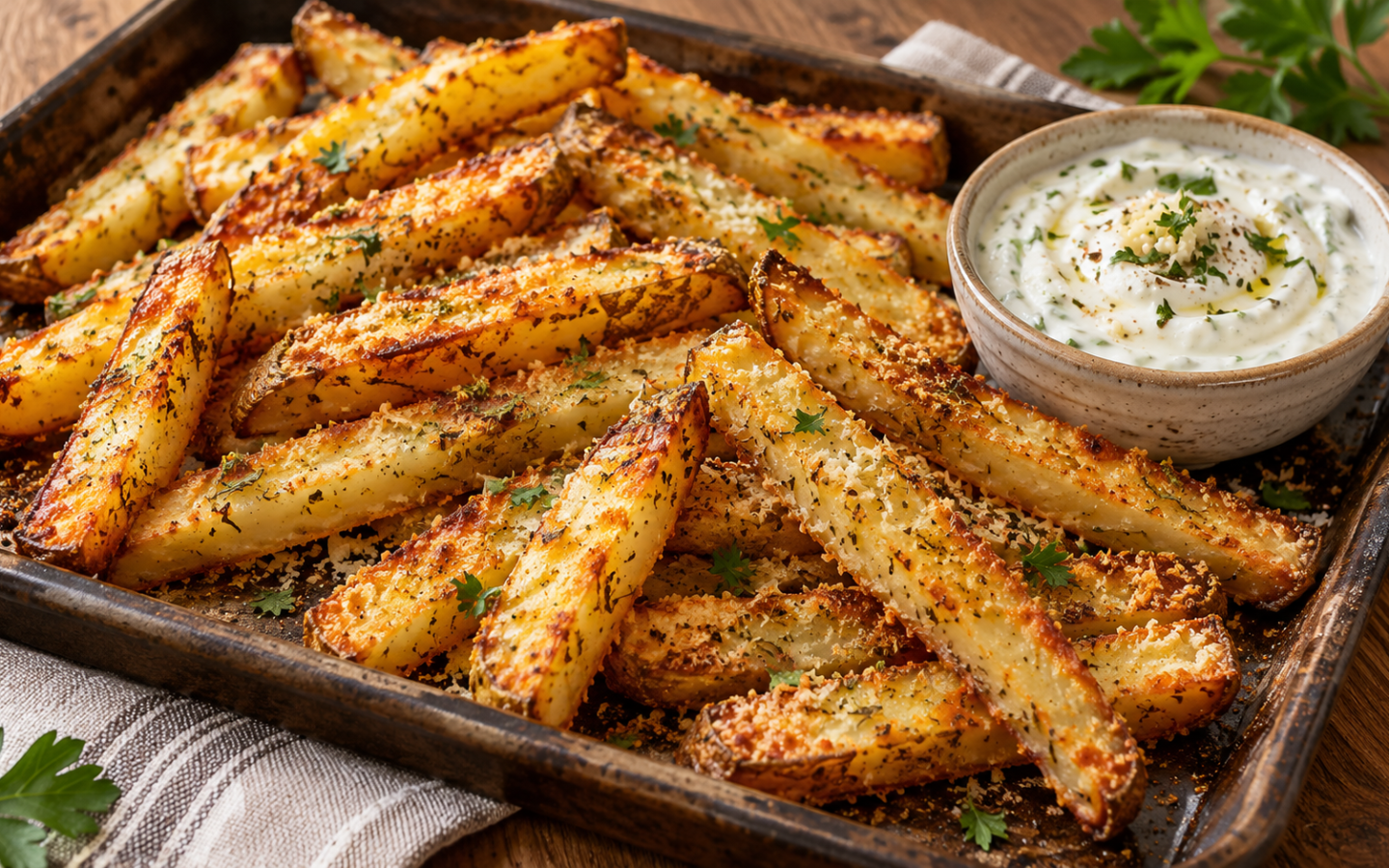
crispy Parmesan potato sticks deliver the contrast that makes a potato side genuinely memorable: deeply browned edges, a fluffy center, and a thin savory crust that stays attached. This oven method uses sturdy russet potatoes, finely grated Parmesan, a modest amount of fat, and enough space on the pan to roast rather than steam.
The recipe is designed for a standard home oven and does not require deep-frying. The key decisions—how thick to cut the potatoes, when to remove surface starch, how to distribute the coating, and where to place the tray—are explained so the result is repeatable instead of lucky.
crispy Parmesan potato sticks: recipe overview
| Prep time | 20 minutes |
|---|---|
| Cook time | 35–45 minutes |
| Total time | About 1 hour |
| Yield | 6 side-dish servings |
| Oven | 425°F / 220°C |
| Difficulty | Easy |
This overview is a planning guide rather than a cue to rush. Read the full method once, prepare every component, and use the visual and texture checks in the instructions. Ovens, pans, produce, and portion sizes vary, so reliable cooking depends on observing the food as well as watching the clock.
Why this recipe works
- Rinsing and drying remove loose surface starch and water, two common causes of a soft exterior.
- Finely grated Parmesan mingles with oil and seasonings to form a thin crust without a heavy breading.
- A hot metal sheet pan and a single uncrowded layer maximize direct contact and let steam escape.
- Turning once browns multiple faces while leaving the potatoes undisturbed long enough to release cleanly.
The formula is deliberately specific about moisture, heat, and sequencing. Those three variables decide whether the finished dish has contrast and balance or simply tastes flat. Nothing here is included only for decoration: each ingredient and each pause in the method has a practical job.
Ingredients and what each one does
Measure the ingredients before starting. When a weight is supplied, it is the most repeatable option; cup measures remain useful for cooks without a scale. Read labels if an allergy or dietary restriction matters, because prepared sauces, broths, breadcrumbs, and cultured products can vary by brand.
- 2 pounds / 900 g russet potatoes: Choose firm potatoes of similar size. Russets have enough starch for a fluffy interior and a dry surface that roasts well.
- 3 tablespoons olive oil: Oil conducts heat and helps the cheese coating adhere. A neutral high-heat oil may be used instead.
- 3/4 cup / 60 g finely grated Parmesan: Use a fine, sandy grate rather than long shreds so the cheese coats evenly and does not form isolated greasy clumps.
- 1 teaspoon garlic powder: Powder disperses more evenly than fresh garlic, which can scorch during the long hot bake.
- 1 teaspoon Italian seasoning: Dried oregano, thyme, basil, and rosemary add aroma without extra moisture.
- 3/4 teaspoon fine salt: This seasons the potatoes and cheese; reduce slightly if the Parmesan is especially salty.
- 1/2 teaspoon black pepper: Freshly ground pepper contributes warmth and balances the rich cheese.
- 2 tablespoons chopped parsley: Added after baking, parsley gives clean herbal contrast and a fresh finish.
Ingredient selection and preparation
Choose the right potato
Russet or Idaho potatoes are the most dependable choice because their high starch and relatively low moisture support a crisp shell and light center. Yukon Gold potatoes taste buttery and hold their shape, but the finished sticks will be denser and less dramatically crisp. Avoid waxy red potatoes for this particular method.
Cut for even cooking
Scrub the potatoes and leave the peel on for flavor, or peel them for a smoother finish. Square off only very thin ends, then cut each potato lengthwise into slabs and each slab into batons about 1/2 inch thick. Uniform pieces matter more than perfect geometry; thin pieces burn before thick ones soften.
Grate Parmesan finely
A Microplane-style grate produces feathery cheese, while the small holes of a box grater create slightly more texture. Both work. Pre-shredded cheese often contains anti-caking starch and its long strands do not coat as evenly, so freshly grated Parmesan gives a cleaner crust and more predictable browning.
Complete the cutting, draining, cooling, or tempering described above before heat is involved. This small mise-en-place habit prevents overcooking while another ingredient is still being prepared and makes the final seasoning easier to judge.
How to make crispy parmesan potato sticks
-
Heat the oven and pan
Set a rack in the upper-middle position and preheat the oven to 425°F / 220°C. Place a large, heavy rimmed sheet pan in the oven for 8 minutes. Starting with a hot pan gives the first potato surface immediate energy, reducing the pale, leathery stage that occurs on a cold tray.
-
Rinse the cut potatoes
Place the batons in a bowl of cold water and swish them vigorously. Drain, refill, and rinse again until the water is noticeably clearer. A 15-minute soak is useful but not mandatory. Drain in a colander, then spread the potatoes on clean towels and dry every surface thoroughly.
-
Mix the dry coating
Combine the finely grated Parmesan, garlic powder, Italian seasoning, salt, and pepper in a wide bowl. Break up any cheese clumps with your fingers. Mixing before the potatoes enter prevents concentrated pockets of salt or garlic and protects delicate seasonings from repeated handling.
-
Coat the potatoes
Toss the dry potatoes with olive oil in a large bowl until each piece has a thin sheen, with no puddle at the bottom. Add the Parmesan mixture in two additions, tossing gently after each. Press loose coating onto bare faces rather than adding more oil.
-
Arrange one layer
Carefully remove the hot sheet pan. Spread the potatoes in one layer with a small gap between pieces and place a broad cut face against the metal. If the pan looks crowded, divide the batch between two pans; overcrowding traps vapor and defeats the crisping strategy.
-
Roast and turn
Bake for 20 minutes without disturbing the sticks. Check one: if it releases and the underside is golden, turn the pieces with a thin metal spatula. Roast for another 15 to 25 minutes, rotating the pan if the oven browns unevenly, until multiple sides are crisp and the centers yield to a knife.
-
Finish and serve
Let the potatoes rest on the pan for 3 minutes; the cheese crust firms as steam settles. Transfer to a platter, scatter with parsley, and taste before adding extra salt. Serve promptly while the exterior is at its crispest, with lemon wedges or a cool dip if desired.
Technique notes for dependable results
Dryness is non-negotiable
Water must evaporate before browning begins. Potatoes that look dry but still feel slick will steam beneath the cheese. Use an absorbent towel, roll the pieces gently, and give them a few minutes exposed to air. This step has a larger effect than adding extra oil or extending the bake.
Use enough pan space
A full two-pound batch needs a large half-sheet pan. Each baton releases moisture, and touching pieces create humid pockets. Two smaller pans are better than one crowded pan; switch their rack positions halfway through and rotate front to back for balanced color.
Know when to turn
Potatoes often stick early because their crust is still forming. If a baton resists the spatula at 15 minutes, leave it alone for several more minutes. Once the contact surface has browned, it usually releases with little force and keeps its Parmesan layer intact.
Balance browning and tenderness
Color is only half the test. Pierce a thick stick with a paring knife; it should slide through the center with almost no resistance. If the crust is dark before the center is tender, lower the oven to 400°F / 200°C and finish for a few more minutes.
Common mistakes and how to fix them
Soft, pale potatoes
The usual causes are residual water, a cold oven, or an overcrowded tray. Move pieces apart and continue roasting at full heat. Convection can help for the final 5 minutes, but watch closely because the cheese darkens quickly.
Burned cheese bits
Coarse cheese falls off and burns on exposed metal. Grate it more finely, coat the oiled potatoes in a bowl, and shake away loose excess before arranging. Dark amber crumbs are flavorful; black crumbs taste bitter and should be discarded.
Overly salty coating
Parmesan salinity varies. Begin with the measured salt, not a generous handful, and season again only after baking. If a batch tastes too salty, pair it with unsalted yogurt dip and avoid salty accompaniments.
Unevenly cooked sticks
Mixed thickness is the culprit. Remove thin pieces as they finish and return thick ones to the oven. On the next batch, use one baton as a visual template while cutting.
Variations and substitutions
Smoky paprika
Replace half the black pepper with 1 teaspoon smoked paprika. The flavor suits grilled chicken and burgers, but use sweet smoked paprika rather than hot paprika unless everyone enjoys noticeable heat.
Lemon-herb
Add finely grated lemon zest to the parsley after baking, not before, so the citrus oils remain bright. Dill or chives can replace parsley for a fresher profile.
Gluten-free
The base recipe contains no wheat, but verify that the Parmesan and seasonings are processed without unwanted cross-contact. No breadcrumb substitute is necessary.
Air-fryer option
Cook a half batch at 400°F / 200°C in a single layer, turning after 10 minutes, then continue until crisp and tender. Basket capacity varies, so multiple small batches are essential.
Treat every variation as a controlled change. Keep the central ratio and method intact the first time, then adjust one variable on the next batch. That approach makes it clear which change improved the dish and prevents several substitutions from altering texture in unpredictable ways.
Serving ideas
Serve the potato sticks as a side for roast chicken, grilled fish, burgers, or a large chopped salad. For an appetizer, arrange them on a wide platter so steam does not collect underneath. A dip of Greek yogurt, lemon, garlic, and herbs adds acidity without hiding the Parmesan crust.
Because the potatoes are salty and rich, pair them with something fresh or acidic: tomato salad, vinegar-dressed slaw, steamed green beans with lemon, or roasted broccoli. Avoid covering them with a heavy sauce before serving; offer sauce at the side to preserve texture.
Make-ahead, storage, and reheating
Cool leftovers completely and refrigerate in a shallow airtight container for up to 4 days. Do not seal them while hot, because trapped condensation softens the crust. Freezing is possible for up to 2 months, although the center becomes slightly drier after reheating.
Reheat in a 425°F / 220°C oven or toaster oven on a metal tray for 8 to 12 minutes. An air fryer at 375°F / 190°C needs about 4 to 7 minutes. A microwave warms the center but makes the coating soft, so use it only when crispness is not important.
Food safety and allergen notes
Parmesan contains milk. Check seasoning blends for allergen statements and cross-contact if needed. Keep hot trays on a stable surface, use dry oven mitts, and remember that the preheated sheet pan is already extremely hot before the food is added.
Nutrition values are estimates calculated from typical ingredients and the stated yield. They are not medical advice and will change with brands, substitutions, trimming, and actual portion size.
Frequently asked questions
Do I have to soak the potatoes?
A short cold-water soak improves consistency by lifting loose starch, but a thorough rinse is enough when time is limited. Drying matters more than the exact soaking time. Never soak cut potatoes at room temperature for an extended period; refrigerate if preparing them several hours ahead.
Can I use grated Pecorino Romano?
Yes, but Pecorino is sharper and usually saltier. Replace no more than half the Parmesan on the first try and reduce the added salt. Its stronger sheep-milk flavor works especially well with black pepper and rosemary.
Why did my Parmesan potato sticks stick to the pan?
They may have been turned before the crust browned, or the pan surface may be damaged. Give them more time, slide a thin spatula underneath, and use parchment on a troublesome pan. Parchment reduces direct metal contact slightly but prevents major losses.
Can I prepare them in advance?
Cut potatoes can be held submerged in cold water in the refrigerator for up to 24 hours. Drain and dry them exceptionally well before coating. Do not add oil, cheese, or salt until shortly before roasting.
Can I leave the potato skins on?
Yes. Scrub them well, remove green areas and deep blemishes, and dry before cutting. The peel adds a rustic texture and helps some pieces hold their shape, but peeling is entirely acceptable.
How do I keep a second batch crisp?
Hold the first batch on a wire rack set over a sheet pan in a 225°F / 110°C oven. Do not cover it. Add parsley only when both batches are ready so the herbs stay fresh.
Final cooking note
The most important lesson is that crispness comes from moisture control and space, not from drowning potatoes in fat. Cut evenly, dry thoroughly, preheat the metal, and wait for the crust to release. Follow those cues and these crispy Parmesan potato sticks will be dependable enough for both weeknight dinners and party trays.