

Introduction
Embarking on the journey of creating homemade jerky, especially from wild game like deer, is a rewarding culinary experience that combines traditional methods with modern food preservation techniques. This Spicy Deer Jerky recipe, featured on lovewithrecipes.com, exemplifies the perfect balance of savory, sweet, and fiery flavors, making it an ideal snack for outdoor enthusiasts, hunters, or anyone seeking a protein-rich, portable treat. The process involves marinating lean deer meat with a carefully crafted spice blend, followed by dehydration to achieve a chewy, flavorful result that can be stored for weeks or even months without refrigeration. The beauty of this recipe lies not only in its taste but also in its adaptability—you can tweak the spice levels or marinade components to suit your personal preferences. Whether you’re preparing for a camping trip or simply want to elevate your snack game, this comprehensive guide will walk you through every step, ensuring your homemade jerky is a culinary success.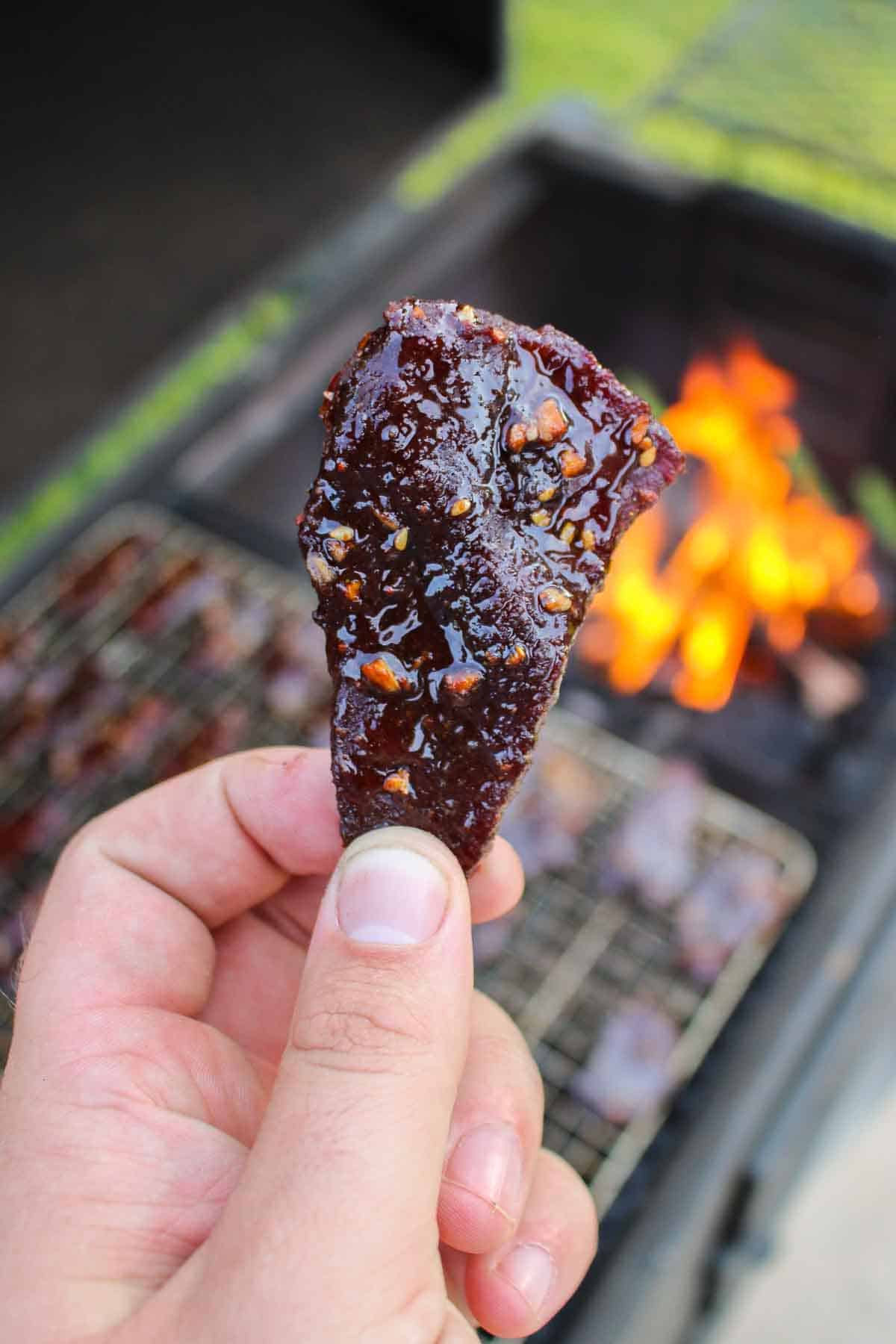
Time
- Preparation Time: 20 minutes
- Marinating Time: Minimum 4 hours, optimal overnight (up to 24 hours)
- Cook Time (Dehydration): 8 hours
- Total Time: Approximately 8 hours 20 minutes (plus marination)
Needed Equipment
- Dehydrator: Essential for even drying, preferred over oven or sun-drying for safety and consistency
- Sharp Knife or Meat Slicer: For slicing the deer meat into uniform strips
- Cutting Board: Large and stable surface for preparation
- Mixing Bowls: For combining marinade ingredients
- Meat Tenderizer or Mallet: To tenderize the meat and help marinade absorption
- Measuring Cups and Spoons: For accurate ingredient measurement
- Resealable Plastic Bags or Shallow Dishes: For marinating the meat
- Aluminum Foil or Parchment Paper: For lining surfaces and easy cleanup
- Food Thermometer: Optional, to monitor meat temperature during processing
- Airtight Storage Containers or Vacuum Sealer: To preserve jerky freshness
Tags
- Wild Game
- Deer Meat
- Jerky
- Spicy
- Homemade Snack
- Dehydrator Recipe
- Protein Snack
- Food Preservation
Serving Size
Approximately 1 ounce (28 grams) per serving, yielding about 20-25 servings depending on the thickness of slices and dehydration level.

Difficulty Level
Intermediate. This recipe requires basic meat preparation skills, marinade mixing, and familiarity with dehydrator operation. Attention to detail ensures safe and successful drying, but the process is straightforward for those with some kitchen experience.
Allergen Information
This recipe contains soy (Worcestershire sauce) and may contain traces of gluten depending on Worcestershire sauce brand. Always check ingredient labels if you have allergies. No nuts, dairy, or eggs are involved in this recipe.
Dietary Preference
Gluten-Free (if gluten-free Worcestershire sauce is used). High protein, low carbohydrate, paleo-friendly, keto-compatible depending on spice levels and marinade adjustments.
Course
- Snack
- Appetizer
- Protein Source
Cuisine
American, Wild Game, Outdoor Cuisine
Ingredients
| Ingredient | Quantity | Notes |
|---|---|---|
| Deer Meat (lean cuts such as tenderloin, sirloin, or round) | 2 pounds (approximately 900 grams) | Trimmed of fat and connective tissue |
| Brown Sugar | 1 cup (200 grams) | Provides sweetness and aids in preservation |
| Ground Black Pepper | 1/4 cup (about 20 grams) | Adjust to taste for heat and flavor |
| Worcestershire Sauce | 1/2 cup (120 ml) | Adds umami and moisture; opt for gluten-free if needed |
| Seasoning Salt | 1/4 cup (about 15 grams) | Can substitute with sea salt or smoked salt for variation |
| Crushed Red Pepper Flakes | 1 cup (about 80 grams) | Adjust for spiciness preference |
Instructions
1. Preparing the Meat
Begin by selecting high-quality lean deer meat. It’s critical to choose cuts that are as lean as possible because excess fat can spoil during dehydration, leading to rancidity and spoilage. Once you have your meat, lay it out on a clean surface lined with aluminum foil or parchment paper to keep the workspace tidy. Using a sharp knife or meat slicer, cut the meat into strips approximately 1/8 to 1/4 inch thick and about 3 to 4 inches long. Uniform thickness ensures consistent drying, which is vital for achieving the ideal chewiness and preventing some pieces from becoming over-dried while others remain underdone.
2. Tenderizing and Seasoning the Meat
Place the meat strips on a clean cutting board. Lightly sprinkle seasoning salt evenly over each piece. Using a meat tenderizer mallet or a rolling pin, gently pound the salt into the meat, pressing it in to promote absorption and tenderization. This step not only enhances flavor but also helps break down muscle fibers, resulting in a more tender finished product. Alternatively, you can massage the salt into the meat with your fingers for a similar effect. Allow the meat to rest for 10-15 minutes after seasoning to help the salt penetrate and start the tenderization process.
3. Making the Marinade
In a mixing bowl, combine the brown sugar, ground black pepper, Worcestershire sauce, and crushed red pepper flakes. Mix thoroughly using a whisk or spoon until the sugar is dissolved and all ingredients are evenly incorporated. The marinade should have a balanced flavor profile—savory, sweet, and spicy. Feel free to adjust the amount of red pepper flakes if you prefer a milder or hotter jerky. This marinade acts as both a flavor enhancer and a preservative, helping to draw moisture from the meat and inhibit microbial growth.
4. Marinating the Meat
Arrange the seasoned deer strips in a large resealable plastic bag or a shallow dish, ensuring they are spread out in a single layer for even coverage. Pour the marinade over the meat, pressing down gently to ensure all pieces are submerged. Seal the bag tightly or cover the dish with plastic wrap. Refrigerate for a minimum of 4 hours, but ideally overnight, to allow the flavors to deeply infuse and the meat to absorb the marinade fully. For best results, flip the meat strips halfway through the marinating process to ensure even flavor distribution.
5. Preparing for Dehydration
After marination, remove the meat from the refrigerator and let it sit at room temperature for about 30 minutes. This step helps the meat come to a safe temperature and ensures uniform dehydration. While the meat is warming up, preheat your dehydrator to 155°F (68°C) or according to the manufacturer’s instructions. Line the dehydrator trays with non-stick sheets or parchment paper to prevent sticking and facilitate cleanup.
6. Arranging the Meat for Drying
Lay the marinated meat strips onto the dehydrator trays, ensuring they do not overlap. Leave ample space between each piece to enable air circulation, which is crucial for consistent drying. If your dehydrator has multiple trays, rotate them periodically during the drying process to promote even dehydration. You may need to work in batches if your dehydrator is small—just keep the process consistent across all batches.
7. Dehydrating
Set your dehydrator to 8 hours, checking periodically for doneness. The jerky is ready when it is dry yet still pliable, with a slight bend without cracking. The internal temperature of the meat should reach at least 160°F (71°C) during the process to ensure food safety, especially when using wild game. If using an oven, set it to the lowest temperature (usually 170°F or 75°C) and leave the door slightly ajar to allow moisture to escape. For sun-drying, ensure the environment is hot and dry, but note this method is less controlled and may pose safety risks.
8. Cooling and Storage
Once the jerky has dried to your desired texture, remove it from the dehydrator and allow it to cool completely on wire racks or parchment paper. Proper cooling prevents condensation and mold growth during storage. Transfer the cooled jerky into airtight containers or vacuum-sealed bags. Store in a cool, dark, and dry place. Properly dried and stored jerky can last for several weeks at room temperature or longer if refrigerated or frozen.
Preparation Tips
- Meat Slicing: For uniform strips, partially freeze the meat for 1-2 hours before slicing. This firms up the meat, making it easier to cut evenly.
- Marinade Variations: Add garlic powder, onion powder, smoked paprika, or cayenne pepper to customize flavor profiles.
- Adjusting Spiciness: Increase or decrease red pepper flakes according to your heat tolerance.
- Dehydrator Settings: Always follow your dehydrator’s manual for safety and optimal drying conditions.
Nutritional Information
| Nutrient | Per Serving (approx. 1 oz) |
|---|---|
| Calories | 321.8 kcal |
| Fat | 0.6 g |
| Saturated Fat | 0.1 g |
| Cholesterol | 0 mg |
| Sodium | 5145.9 mg |
| Carbohydrates | 84.4 g |
| Fiber | 1.1 g |
| Sugar | 68.7 g |
| Protein | 1 g |
Tips and Tricks
- Monitoring Dehydration: Check jerky periodically to prevent over-drying. The ideal texture is flexible but not sticky or brittle.
- Uniform Slicing: Consistency in slice thickness is key for even drying and optimal texture.
- Marinating Duration: Longer marination enhances flavor penetration but can make the meat too salty if overdone; balance accordingly.
- Flavor Adjustments: Experiment with different spice blends, such as adding cumin, coriander, or chili powder, to create unique variations.
Add-ons
- Sprinkle with sesame seeds before dehydrating for added flavor and texture.
- Marinate with hot sauce or liquid smoke for a different smoky or spicy profile.
- Include dried herbs like thyme or oregano in the marinade for an herby twist.
Side Dishes
- Fresh vegetable sticks (celery, carrots, bell peppers) for a balanced snack platter.
- Homemade hummus or yogurt-based dips to complement the jerky.
- Crackers or bread slices for a more substantial snack setup.
Improvements
- Incorporate sous-vide cooking before dehydration for enhanced tenderness and flavor infusion.
- Use smoked salts or liquid smoke in the marinade for a deeper smoky flavor.
- Try different wild game meats like elk or antelope for variety.
Save and Store
Ensure the jerky is completely cooled before packaging. Store in airtight containers or vacuum-sealed bags in a cool, dark place. For extended shelf life, refrigerate or freeze the jerky. Use within 2-3 months for the best flavor and texture. Always check for signs of moisture or mold before consumption, especially if stored for long periods.
FAQ
Can I make jerky without a dehydrator?
Yes, you can use an oven set to the lowest temperature with the door slightly ajar or sun-dry in a hot, dry environment. However, dehydration in a controlled dehydrator is safest and yields the best results.
Is wild game jerky safe to eat?
Absolutely, provided the meat is properly handled, cleaned, and fully dehydrated to safe internal temperatures. Wild game can carry parasites or bacteria if not processed correctly, so proper marination and dehydration are critical.
How long does homemade jerky last?
When stored properly, jerky can last from 1 to 3 months at room temperature, longer if refrigerated or frozen. Always inspect for spoilage before consumption.
Can I add more spice or sweetness?
Yes, adjust the amount of red pepper flakes, sugar, or spices according to your taste. Experimenting with small batches helps perfect your preferred flavor profile.
Conclusion
This Spicy Deer Jerky recipe exemplifies the art of transforming lean wild game meat into a flavorful, shelf-stable snack that’s perfect for outdoor adventures, hunting trips, or simply satisfying a craving for something savory and spicy. The combination of sweet brown sugar, fiery red pepper flakes, and savory Worcestershire creates a complex taste experience that develops further with each bite. By following the detailed steps outlined here, including proper meat preparation, marination, and dehydration, you can achieve a professional-quality jerky right in your own kitchen. Remember to always prioritize food safety, especially when working with wild game, and enjoy the process of customizing flavors to suit your palate. LoveWithRecipes.com is dedicated to sharing culinary inspiration, and this recipe is a testament to that mission—empowering home cooks to craft delicious, healthy, and satisfying snacks from scratch.
References
- USDA Food Safety Guidelines for Jerky Preparation
- Wild Game Processing Techniques from the National Wild Turkey Federation