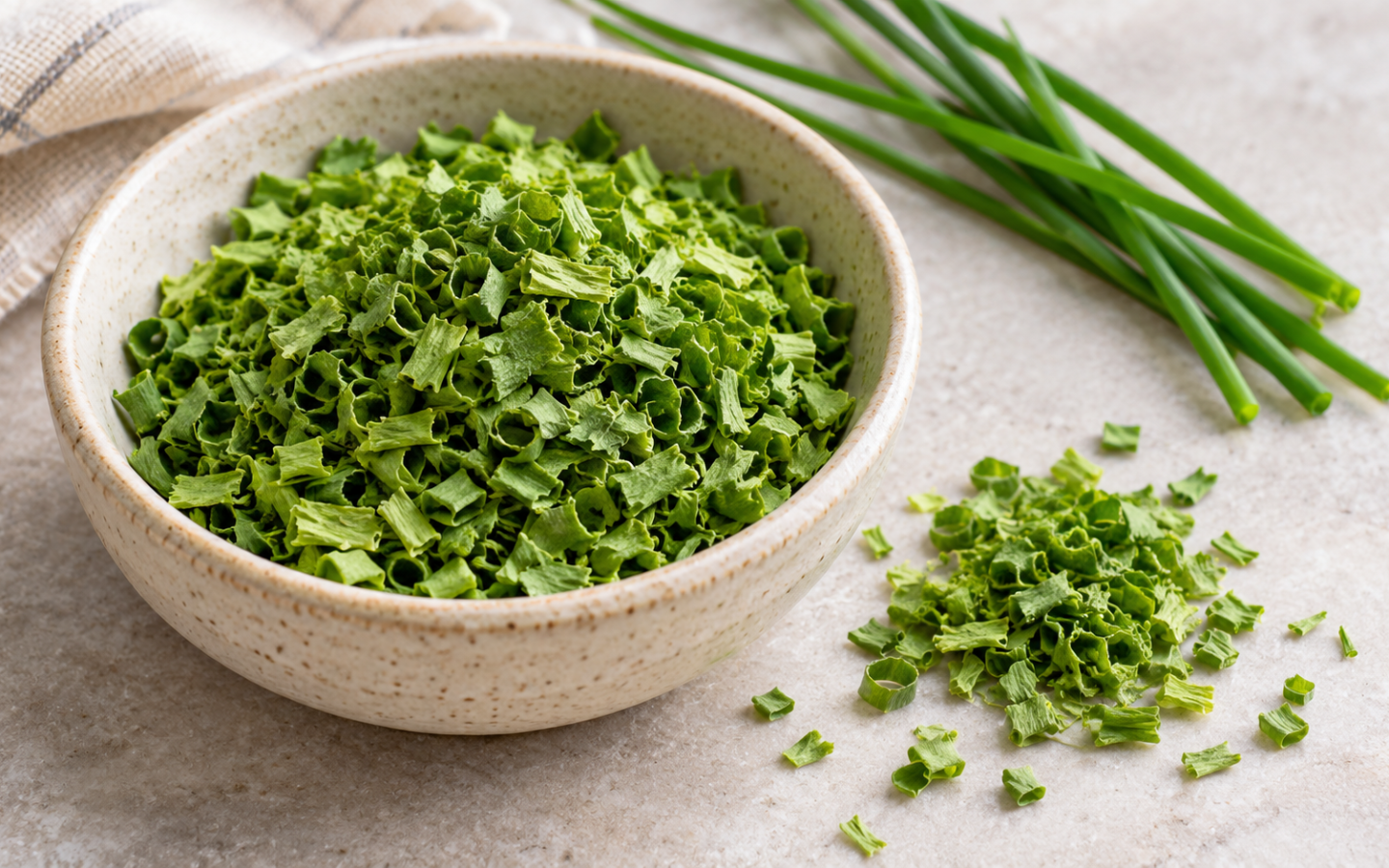
freeze-dried chives are a lightweight pantry form of the familiar mild onion herb. They are useful when fresh chives are out of season, when a recipe needs a stable garnish, or when a small household cannot use a full bunch before it wilts. Their best quality is convenience and concentrated aroma—not a promise that a teaspoon-sized serving will transform nutrition.
This guide explains what freeze-drying changes, how the product differs from ordinary air-dried chives, where it performs well, when fresh chives are better, how to rehydrate it, and how to read nutrition claims in realistic serving sizes. Product labels differ, so the package remains the authority for a specific brand.
What are freeze-dried chives?
Chives are slender leaves from Allium schoenoprasum, a relative of onions, garlic, leeks, and scallions. Fresh leaves taste gently onion-like with a clean grassy finish. In freeze-drying, prepared chives are frozen and placed under reduced pressure so ice moves from solid to vapor. Removing water at low temperature can preserve shape, color, and volatile aroma better than aggressive hot-air drying.
The finished pieces are crisp, porous, and extremely light. That porous structure is why they rehydrate quickly when they meet soup, sauce, dressing, or water. It also makes them vulnerable to humidity: an open jar can turn crisp pieces limp, mute their aroma, and shorten useful shelf life long before they become visibly spoiled.
“Freeze-dried,” “dried,” and “dehydrated” are not always interchangeable on retail labels. Conventional dried chives may be flatter, darker, and less aromatic, while freeze-dried pieces often retain brighter color and a more recognizable tubular shape. Neither is automatically superior in every dish; the correct choice depends on timing, moisture, texture, and cost.
How freeze-dried chives taste
Expect a mild allium aroma, less sharpness than raw scallion, and a soft herbal sweetness. Straight from the jar, the dry pieces can feel papery and the aroma may seem faint. Moisture releases more fragrance, so judging them only while dry underestimates their flavor. Warm fat also carries the aroma well, but intense heat over a long period can drive it away.
Freeze-dried chives are most convincing in foods where chives are a supporting accent: scrambled eggs, baked potatoes, creamy soups, compound butter, soft cheese, yogurt dip, biscuits, salad dressing, mashed potatoes, and pan sauces. They are less successful when the recipe depends on the crisp snap and vivid freshness of a large quantity of raw chives.
The ingredient is not a direct substitute for garlic. Chives are gentler and greener; garlic is more pungent and sulfurous. If a dish tastes flat after adding chives, it may need salt, acid, or pepper rather than simply a larger amount of dried herb.
Fresh-to-dried conversion
A practical starting point is 1 teaspoon freeze-dried chives for 1 tablespoon chopped fresh chives. This three-to-one fresh-to-dried volume ratio is only a baseline because piece size and aroma strength vary by brand and age. Add less than the calculation at first, allow time for hydration, then taste before adding more.
For a recipe calling for 1/4 cup fresh chopped chives, begin with 1 tablespoon plus 1 teaspoon freeze-dried chives. In a cold dip, let that amount rest for at least 10 minutes before evaluating. In soup, add most near the end and reserve a little for the bowl. In bread dough, measure by volume and distribute through the dry ingredients.
Do not substitute by weight using a casual online conversion. Water accounts for most of the weight of fresh herbs, while dry pieces weigh very little. Volume plus tasting is more practical in a home kitchen unless a tested commercial formula gives exact weights.
How to rehydrate freeze-dried chives
For a dry garnish that should soften before serving, combine 1 part chives with about 2 parts cool water by volume. Rest 5 to 10 minutes, then drain and blot gently. Cool water preserves a fresher impression; hot water works faster but can flatten delicate aroma. Do not soak for an hour, because extended immersion dilutes flavor into the discarded water.
Rehydration is unnecessary when the recipe already contains accessible moisture. Stir chives directly into soup during the final minutes, fold them into yogurt or sour cream 10 to 20 minutes before serving, or mix them into a vinaigrette before the dressing rests. For eggs, a teaspoon of water or milk in the beaten mixture is generally enough to soften a small amount.
In butter or oil, there is little free water, so dry chives remain slightly crisp. If a soft texture is desired in compound butter, rehydrate and blot them first. Blotting matters: excess water can bead inside butter, shorten quality, and cause spattering if the butter is later heated.
Best culinary uses
For baked potatoes, mix chives into sour cream ahead of time and add a small pinch on top at service. For scrambled eggs, add them when the eggs are nearly set so the aroma stays clear. In mashed potatoes, stir them in after the milk and butter. These timings hydrate the herb without exposing it to unnecessary heat.
In biscuits, scones, and savory breads, whisk dry chives through the flour so they disperse instead of clumping. The dough supplies enough moisture during mixing and baking. Pair with cheddar, black pepper, or lemon zest, but keep the chives recognizable rather than burying them under several competing dried herbs.
Creamy foods are especially compatible because fat carries allium aroma and pale backgrounds display the green pieces. Blend them into cottage cheese, cream cheese, labneh, ranch-style dressing, potato soup, or a pan sauce. Give cold mixtures a short rest, then adjust salt and acidity after the herb has opened up.
Nutrition in realistic portions
Dry-food nutrition tables can look dramatic when values are presented per 100 grams. A household serving of freeze-dried chives is often only a teaspoon or two, while 100 grams would be an unusually large volume. Therefore, a high per-100-gram vitamin or mineral value does not mean a garnish supplies that amount in practice.
Chives are a plant food and can contribute small amounts of fiber and micronutrients, but typical culinary portions should be understood mainly as flavor. Use the Nutrition Facts panel on the actual package for serving-specific numbers. Values compiled from different products may not match because processing, moisture, cultivar, testing, and serving definitions vary.
Claims that dried chives cure disease, regulate blood sugar, cause weight loss, or “boost” immunity go beyond what a normal garnish can establish. Enjoy them as part of varied meals. Anyone managing a medical condition should follow guidance from a qualified clinician rather than treating pantry herbs as a substitute for care.
Allergens and dietary considerations
Pure chives are naturally plant-based and do not inherently contain milk, egg, wheat, soy, peanuts, tree nuts, fish, or shellfish. That does not guarantee every packaged product is free of cross-contact. Seasoned blends may also contain salt, dairy powders, flavorings, or anti-caking ingredients, so read both the ingredient list and allergen statement.
People with an allergy to onion, garlic, or other alliums should not assume chives are safe simply because the flavor is mild. Those following a medically directed low-FODMAP plan may tolerate certain small herb portions differently, but personal clinical advice and current reputable guidance take priority over generalized lists.
Pet safety is different from human food safety. Allium plants can be harmful to cats and dogs. Keep jars and prepared foods containing chives away from pets, and contact a veterinarian or animal poison service if a pet consumes a concerning amount.
How to buy and assess quality
Choose a sealed package with a clear best-by date and pieces that look green rather than uniformly brown or gray. A transparent jar helps evaluate color but should still be stored away from light. Check whether the product is pure chives or a blend, and compare price by net weight rather than container size because the pieces occupy a great deal of space.
At home, open the package and smell immediately. Good freeze-dried chives should have a recognizable mild onion-herb aroma. A stale product may be safe yet offer little culinary value. Damp clumps, condensation, an off odor, visible mold, or insect activity are reasons to discard the contents.
Buy a container size that matches actual use. A large jar can be poor value if it remains open for years. Small packets protect turnover, while a frequently used professional kitchen may benefit from larger packaging divided into airtight working and reserve containers.
Storage and shelf life
Store freeze-dried chives in an airtight container in a cool, dark, dry cupboard away from the stove, dishwasher, sink, and sunny window. Heat speeds aroma loss; light fades color; moisture destroys crispness. Close the lid immediately after measuring and use a completely dry spoon.
Do not hold an open jar over a steaming pot. Rising vapor enters the container and condenses among the porous pieces. Measure into a small dish away from the stove, close the jar, then add the herb. This single habit protects quality more effectively than transferring the product repeatedly.
The printed date is a quality guide for an unopened product, not a universal promise after opening. Track opening date on the label and judge color, aroma, dryness, and package instructions. Freezing is usually unnecessary and may introduce condensation each time the container is opened.
Substitutes for freeze-dried chives
Fresh chives are the closest substitute: use about 1 tablespoon chopped fresh chives for each teaspoon freeze-dried. Add fresh chives at the very end. Scallion greens are stronger and wetter; slice them thinly and begin with a smaller volume. Leek greens are tougher and need cooking, so they are not an ideal garnish.
For dry herb blends, onion powder contributes onion flavor but no green freshness or visual flecks. Use only a pinch because it is concentrated. Dried parsley supplies color but not allium flavor. A combination of parsley and a tiny amount of onion powder can imitate the broad role when neither fresh nor dried chives is available.
The best substitute depends on the dish. Choose fresh chives for uncooked toppings, scallion greens for stir-fries and soups, and onion powder for dough or seasoning mixes where visible leaves do not matter. Substitution should preserve the function—freshness, allium flavor, color, or dryness—rather than copy one ingredient mechanically.
Practical checklist
- Confirm the package contains chives rather than tapioca-like filler or a seasoned blend.
- Start with 1 teaspoon freeze-dried for 1 tablespoon fresh, then taste after hydration.
- Add near the end of hot cooking to protect delicate aroma.
- Rehydrate before mixing into low-moisture foods such as compound butter.
- Use a dry spoon and keep the open container away from steam.
- Interpret nutrient data in the serving size actually eaten, not only per 100 grams.
- Discard damp, moldy, infested, or off-smelling product.
Frequently asked questions
Are freeze-dried chives as good as fresh chives?
They are better for shelf stability and convenience, while fresh chives are better for crisp texture, the brightest aroma, and generous raw garnishes. In moist cooked foods and dips, a good freeze-dried product can be an effective substitute after it has time to hydrate.
Do freeze-dried chives need to be cooked?
No. They can hydrate in cold dips, dressings, and soft cheese, or they can be scattered sparingly over a moist finished dish. Cooking is useful only when the recipe itself requires it. Long boiling tends to mute their delicate flavor.
How long do freeze-dried chives last after opening?
There is no single safe or quality period for every brand and container. Follow the label, record the opening date, keep them airtight and dry, and replace them when aroma and color have faded substantially. Discard immediately if moisture or spoilage appears.
Can I freeze fresh chives instead?
Yes. Chop washed, thoroughly dried chives and freeze them in a thin layer or in small portions. Frozen chives soften after thawing but work well in cooked dishes. They are not the same as freeze-dried chives and should remain frozen until used.
Can freeze-dried chives be eaten straight from the jar?
A small amount is edible if the product label indicates a ready-to-use food, but the dry texture may be papery and the flavor muted. They perform better after contacting moisture. Always respect allergen labeling and avoid products with signs of spoilage.
Why did my chives turn soft in the jar?
Humidity entered the container, often from a wet spoon or steam. If the product only lost crispness but has no off odor or visible spoilage, follow the manufacturer’s guidance. Do not attempt to rescue moldy or suspicious herbs by heating them.
Bottom line
Freeze-dried chives earn pantry space because they deliver mild allium flavor with almost no preparation and little waste. Their value depends on realistic expectations: protect them from moisture, add them at the right time, convert by volume, and judge nutrition in teaspoon-sized portions. Used that way, they are a practical ingredient rather than an exaggerated “superfood.”