Introduction
Originating from the heartland of Central Europe, specifically from the regions of Czechoslovakia, this hearty and rustic dish known as Haluski has been a cherished family favorite for generations. Passed down from grandmothers, aunts, and family elders, it embodies the comforting flavors of home-cooked European cuisine. The combination of tender potatoes, savory bacon, tangy sauerkraut, and aromatic onions creates a perfect harmony of flavors that evoke nostalgia and warmth. Whether you are seeking a quick weeknight meal or preparing a special family gathering, this authentic Haluski recipe from Love With Recipes promises to bring a taste of European tradition to your table, with an abundance of flavors, hearty textures, and a history that enriches every bite.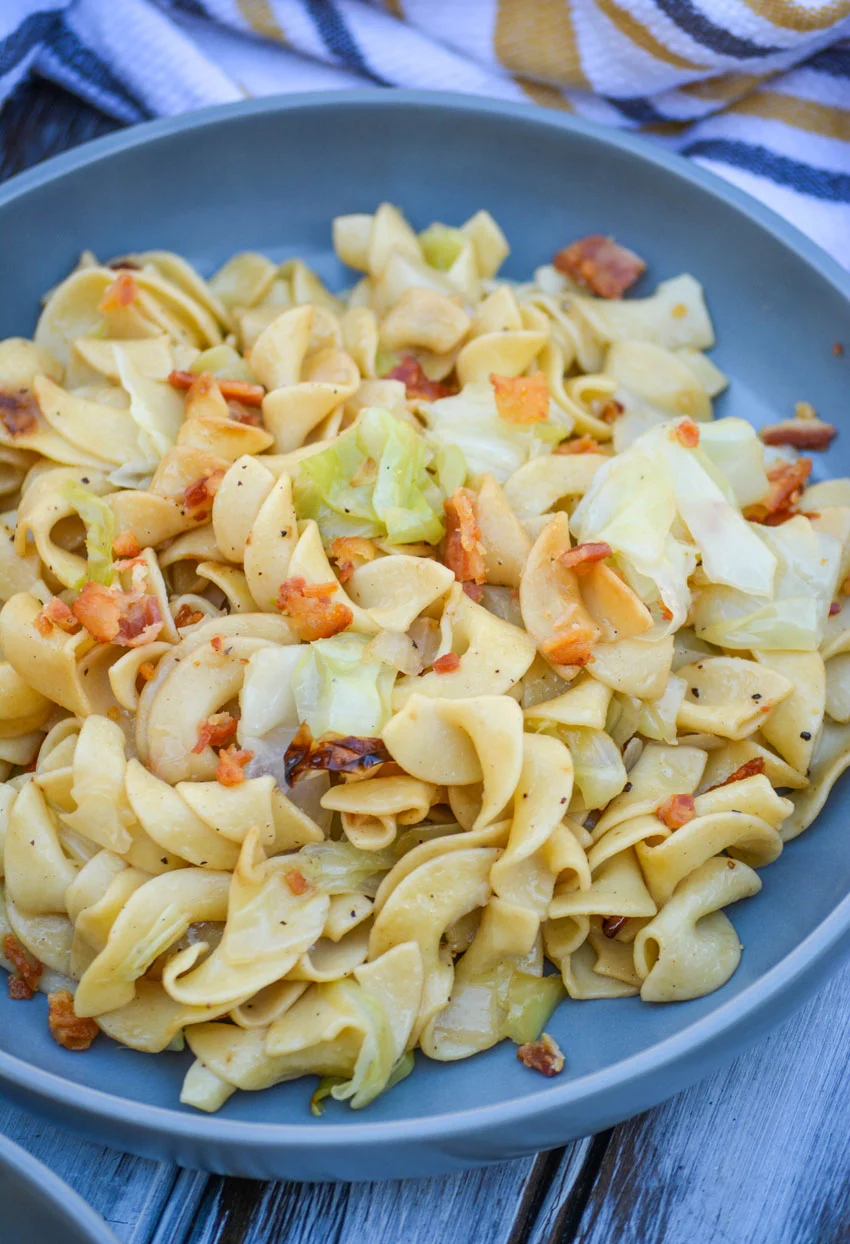
Time
- Preparation Time: 15 minutes
- Cooking Time: 20 minutes
- Total Time: 35 minutes
Needed Equipment
To prepare this traditional Haluski, gather the following essential kitchen tools:
- Large Pot or Stockpot: For boiling potatoes and cooking dumplings.
- Skillet or Frying Pan: To fry bacon and sauté onions.
- Blender or Food Processor: For blending or pureeing the potatoes into a smooth mash.
- Mixing Bowls: For combining the potato batter and assembling ingredients.
- Colander: To drain the potatoes and rinse the sauerkraut.
- Wooden Spoon or Silicone Spatula: For stirring and mixing ingredients.
- Measuring Cups and Spoons: Precise measurement of ingredients.
- Knife and Cutting Board: For chopping onions, bacon, and other ingredients.
- Grater (optional): If adding cheese or other toppings.
- Springform Pan or Flat Surface: For shaping the potato dumplings.
- Timer: To keep track of cooking stages.
- Serving Utensils: For plating and serving.
Tags
Traditional, European, Comfort Food, Hearty, Family Favorite, Potluck, Easy, Rustic, Savory, Breakfast, Dinner, Authentic, Homemade
Serving Size
This recipe conveniently serves approximately 6 generous portions, making it perfect for family dinners or small gatherings. Each serving provides a hearty amount of food, rich in flavors and textures, ideal for satisfying appetites and creating memorable mealtime experiences.
Difficulty Level
This recipe is rated as Moderate in difficulty. It involves multiple steps, including potato preparation, batter mixing, dumpling shaping, and frying, but is accessible for home cooks with basic culinary skills. Detailed instructions and tips ensure a successful outcome, even for those new to making dumplings or traditional European dishes.
Allergen Information
| Allergen | Present in this recipe | Notes |
|---|---|---|
| Gluten | Yes | Flour used in batter |
| Egg | Yes | Included in the potato batter |
| Sulfites / Preservatives | Possible | Sauerkraut may contain preservatives; use fresh or organic for allergen-free options |
| Pork | Yes | Bacon |
| Onions | Yes | |
| Potatoes | Yes |
Dietary Preference
This recipe is inherently pork-based and contains gluten and eggs. To adapt it for specific dietary needs:
- Vegetarian: Replace bacon with mushrooms, tofu, or smoked paprika for smoky flavor.
- Gluten-Free: Use gluten-free flour blends in place of wheat flour.
- Vegan: Substitute eggs with flaxseed or chia seed gel, and bacon with plant-based bacon or smoked tempeh.
Course
This dish is versatile enough to be served as a Main Course or a Side Dish depending on your menu and meal structure.
Cuisine
European, specifically Central European — reflecting the culinary traditions of Czech, Slovak, and Polish cuisines.
Ingredients
Ingredient List
| Ingredient | Quantity | Notes |
|---|---|---|
| Potatoes | 4 medium-sized | Russet or Yukon Gold work well |
| Egg | 1 large | For binding the batter |
| Flour | 2-3 cups | Adjust for desired batter consistency; use unbleached or gluten-free if needed |
| Salt | 1 teaspoon | To season the batter |
| Sauerkraut | 1 cup | Rinsed and drained |
| Onion | 1 large | Chopped finely |
| Bacon | 1 pack (about 8-12 slices) | Cut into bite-sized pieces |
Instructions
1. Prepare the Bacon and Onions
Start by laying out all your ingredients and equipment in an organized workspace. Cut the bacon into small, bite-sized pieces using a sharp knife on a clean cutting board. This process is straightforward but requires attention to avoid uneven cuts, which can affect cooking consistency. Once cut, set aside.
In a large skillet or frying pan, heat over medium heat. Add the bacon pieces and cook, stirring occasionally, until they begin to crisp up and release flavorful fat. This process usually takes about 5-7 minutes, depending on the thickness of the bacon. The goal is to render the fat and develop a rich, smoky flavor. As the bacon cooks, chop the onion into small, uniform pieces to ensure even caramelization.
Once the bacon reaches your preferred level of crispiness, add the chopped onions to the skillet. Stir well to coat the onions with the bacon fat. Continue cooking, stirring frequently, until the onions are golden brown and caramelized, approximately 5-8 minutes. Achieving caramelization enhances the depth of flavor, giving the dish its characteristic richness. If the skillet becomes too dry, you can add a small splash of water or oil.
Remove the skillet from heat and set aside. The bacon and onions will be incorporated into the final dish later, providing a savory base that elevates the entire recipe.
2. Boil the Potatoes
While the bacon and onions cook, prepare to boil the potatoes. Fill a large pot with water, enough to fully submerge the potatoes. Add a pinch of salt to the water to enhance flavor during boiling. Place the pot over high heat and bring to a rolling boil.
While waiting for the water to boil, peel the potatoes using a vegetable peeler or paring knife. Cut each potato into uniform chunks, roughly 1.5 to 2 inches in size, to ensure even cooking. Place the peeled and cut potatoes into a bowl of cold water to prevent browning until ready for blending.
Once the water boils, carefully add the potato chunks. Reduce heat to medium and cook until the potatoes are tender when pierced with a fork, approximately 10-15 minutes. Test for doneness regularly to avoid overcooking, which can make the potatoes waterlogged and difficult to work with in the batter.
Drain the potatoes in a colander and set aside to cool slightly. Hot potatoes are easier to blend, but be cautious to avoid burns or overmixing.
3. Prepare the Potato Batter
Transfer the cooked potatoes to a blender or food processor. Add the egg to help with binding, especially since the potatoes are hot and may be slightly dry. Puree the potatoes until smooth, ensuring there are no lumps. If the mixture is too thick or dry, add a small splash of water or milk to facilitate blending, but keep the mixture thick enough to form a doughy batter.
Pour the smooth potato mash into a large mixing bowl. Gradually add flour, starting with 2 cups, and stir with a spoon or spatula to incorporate. The goal is to form a loose, slightly sticky batter that can be shaped into dumplings. If the batter feels too wet or sticky, add more flour in small increments until the desired consistency is achieved. Conversely, if it’s too dry, add a little more water, egg, or milk.
Mix thoroughly to ensure even distribution of flour and to develop a cohesive batter. Rest the batter for a few minutes if needed, to allow the flour to hydrate, making shaping easier later on.
4. Shape the Dumplings
Prepare a clean, flat surface such as a cutting board or a baking sheet lined with parchment paper. Use a large spoon or ice cream scoop to take a generous portion of the potato batter. Place it onto the surface, then shape it into finger-sized dumplings using a fork or your hands. For uniformity, gently roll each portion into a log and then flatten slightly, or use a spoon to form a rounded dumpling shape.
Alternatively, if you prefer, you can shape the dumplings into small balls or ovals, ensuring they are about the size of a finger for even cooking. The shape influences cooking time, so consistency is key for uniform doneness.
5. Cook the Dumplings
Carefully lower the shaped dumplings into the boiling water, a few at a time to avoid overcrowding. Use a slotted spoon or a skimmer to gently place them into the water. The dumplings will sink initially but will float to the surface once cooked through, approximately 4-6 minutes.
Gently stir the water with a wooden spoon or spatula to prevent the dumplings from sticking to the bottom of the pot. Make sure the water remains at a gentle boil, not a rolling boil, to maintain delicate dumplings.
Once the dumplings float to the surface and are tender in the center, carefully remove them with a slotted spoon and transfer to a large bowl or colander to drain excess water.
6. Combine Ingredients and Final Assembly
Rinse the sauerkraut under cold running water to remove excess brine, which can overpower the dish. Squeeze out any remaining liquid to prevent sogginess. Set aside.
Add the cooked bacon and caramelized onions to the bowl with the drained dumplings. Gently fold everything together using a spatula or large spoon. Incorporate the sauerkraut evenly, mixing well to ensure every bite is flavorful and balanced.
Season the mixture with salt and freshly ground black pepper to taste. Remember, the bacon already adds saltiness, so adjust accordingly to avoid over-seasoning.
For an optional richer flavor, you can stir in a tablespoon of melted butter or a handful of grated cheese, such as cheddar or Swiss, for added creaminess and depth.
7. Serve Hot and Enjoy
Transfer the prepared Haluski to serving dishes and serve immediately while hot. It can be enjoyed on its own or accompanied by additional toppings like chopped fresh herbs (parsley, chives), sour cream, or a drizzle of tangy mustard for an extra flavor dimension.
This dish pairs beautifully with crusty bread, pickles, or a fresh green salad for a complete meal. The combination of textures and flavors makes it a versatile dish suitable for casual family dinners or festive gatherings alike.
Preparation Tips
- Uniformity: Keep potato chunks uniform in size for even cooking and blending.
- Flavor Enhancements: Add a pinch of smoked paprika or crushed red pepper flakes to the bacon and onion mixture for a spicy twist.
- Texture Variations: For a crunchier topping, sprinkle crispy bacon bits or toasted breadcrumbs before serving.
- Adjusting Consistency: The batter should be manageable but not too sticky. Adjust flour or liquid accordingly.
- Making Ahead: Prepare the dumplings in advance, store them in the refrigerator, and reheat in a skillet or microwave.
Nutritional Information
| Nutrient | Per Serving (approximate) |
|---|---|
| Calories | 629.2 kcal |
| Protein | 18 g |
| Carbohydrates | 78 g |
| Dietary Fiber | 7 g |
| Fat | 25 g |
| Saturated Fat | 9 g |
| Sodium | 900 mg |
Tips and Tricks
- Use Fresh Ingredients: Fresh potatoes and high-quality bacon significantly impact the flavor.
- Control Salt Content: Rinse sauerkraut thoroughly to manage saltiness.
- Cooking Dumplings: Do not overcrowd the boiling water; cook in batches if needed.
- Flavor Depth: Incorporate a splash of apple cider vinegar or a pinch of caraway seeds during cooking for authentic regional flavor.
- Presentation: Garnish with chopped herbs or a dollop of sour cream for a visually appealing dish.
Add-ons
- Cheese: Grated Swiss, Cheddar, or Parmesan can be stirred into the batter or sprinkled on top before serving.
- Herbs: Fresh parsley, chives, or dill add freshness and color.
- Spices: Paprika, red pepper flakes, or caraway seeds for additional aroma and flavor.
- Protein Boost: Add cooked sausage, smoked ham, or tofu for extra protein.
Side Dishes
- Fresh crusty bread or rye bread slices
- Sour pickles or gherkins
- Simple green salad with vinaigrette
- Roasted vegetables such as carrots and Brussels sprouts
- Traditional Polish or Czech beet salad
Improvements
- Vegetarian Version: Replace bacon with sautéed mushrooms or smoked paprika for a smoky flavor.
- Vegan Version: Use plant-based bacon or tempeh, and substitute eggs with flaxseed meal mixed with water.
- Cheesier Version: Incorporate various cheeses into the batter or sprinkle on top before serving.
- Spice Variations: Experiment with different spices like cumin or turmeric to add a unique twist.
Save and Store
Leftover Haluski can be stored in an airtight container in the refrigerator for up to 3 days. To reheat, microwave in short bursts, stirring occasionally, or reheat in a skillet over medium heat until warmed through. For best results, avoid freezing, as the texture of the dumplings and sauerkraut may change upon thawing.
If you wish to prepare in advance, cook the dumplings and assemble the dish, then store separately. Combine and reheat just before serving to preserve freshness and texture.
FAQ
Can I make this dish gluten-free?
Yes, substituting regular flour with a gluten-free blend will work. Be sure to check that all other ingredients, especially sauerkraut and bacon, are gluten-free.
Is there a vegetarian version?
Absolutely. Replace bacon with sautéed mushrooms or smoked paprika. Use vegetable broth if needed, and consider adding smoked spices for flavor.
Can I freeze the leftovers?
While you can freeze cooked dumplings and sauerkraut, the texture may change. It’s best to store leftovers in the fridge and reheat within 3 days for optimal freshness.
What variations can I try?
Experiment with adding cheese, herbs, or spices. For a spicy kick, incorporate red pepper flakes or hot sauce. For a creamier version, stir in sour cream or melted cheese at the end.
Conclusion
Grandma’s authentic Haluski is more than just a dish; it’s a culinary tradition that connects generations through its rich flavors and comforting textures. Whether enjoyed as a main course or a hearty side, this recipe embodies the essence of Central European home cooking. With simple ingredients and straightforward techniques, you can create a dish that radiates warmth, nostalgia, and deliciousness. Perfect for family dinners, holiday feasts, or cozy nights in, this timeless recipe from Love With Recipes will surely become a treasured part of your culinary repertoire, inviting loved ones to gather around and share in the joy of good food and good company.
References
1. Czech Recipes & Traditions — CzechTourism: https://www.czechtourism.com
2. Polish and Slovak Cuisine — The Spruce Eats: https://www.thespruceeats.com