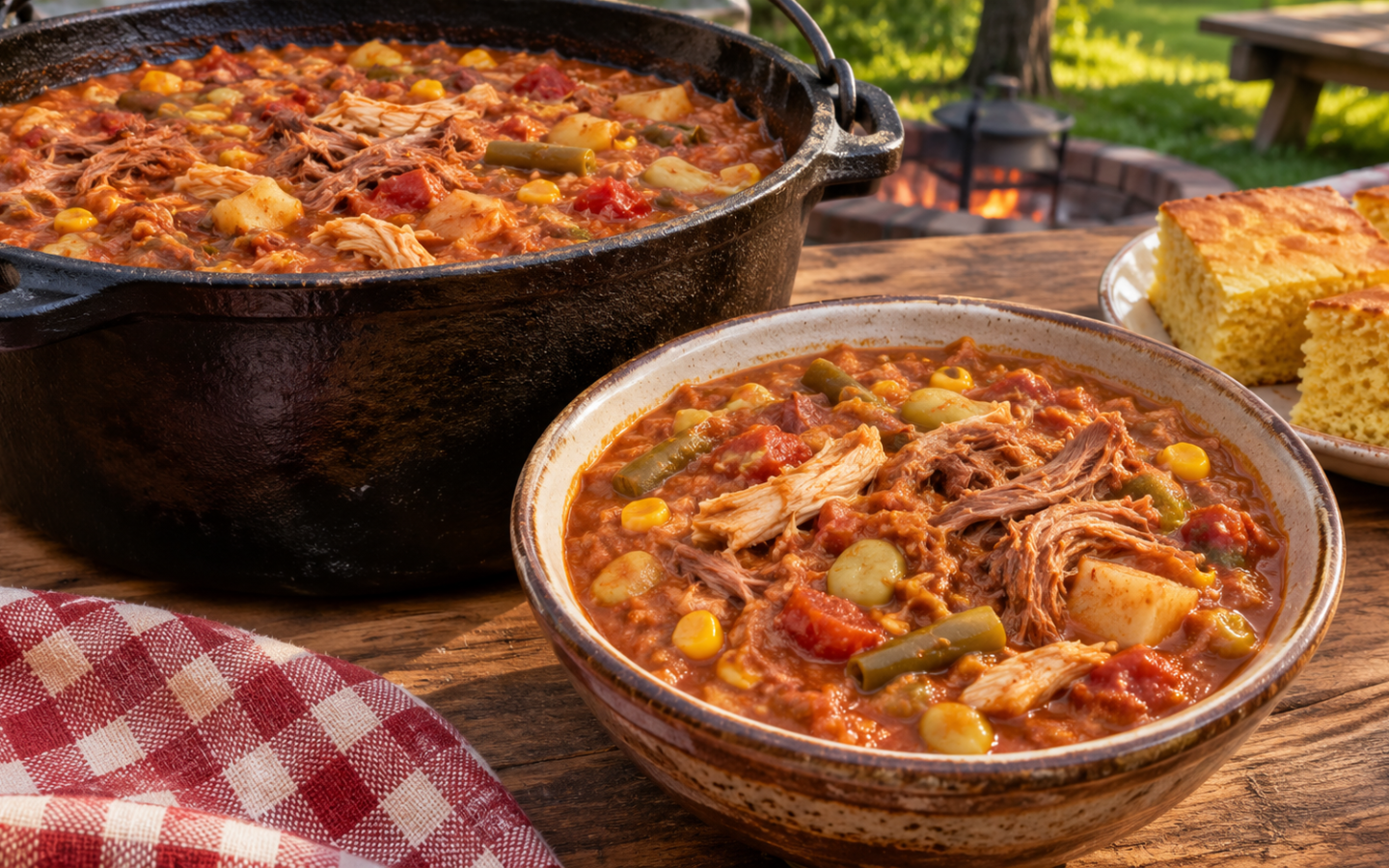
Brunswick stew for a crowd is a practical large-batch version of the Southern favorite: tender shredded chicken and smoked pork simmered with tomato, corn, lima beans, green beans, and potatoes until the broth becomes thick enough to support a spoon. The flavor is smoky, tangy, savory, and gently sweet rather than aggressively spicy.
The recipe fits a 14-quart pot and yields about 20 modest bowls. It includes two safe heat options—a stable outdoor propane burner used entirely outside, or a heavy indoor stockpot—and separates cooking, shredding, vegetable timing, and final reduction so no component is sacrificed to the size of the batch.
Brunswick stew for a crowd: recipe overview
| Prep time | 45 minutes |
|---|---|
| Cook time | 2 hours 30 minutes |
| Total time | 3 hours 15 minutes |
| Yield | 20 servings |
| Pot size | 14 quarts minimum |
| Difficulty | Intermediate |
This overview is a planning guide rather than a cue to rush. Read the full method once, prepare every component, and use the visual and texture checks in the instructions. Ovens, pans, produce, and portion sizes vary, so reliable cooking depends on observing the food as well as watching the clock.
Why this recipe works
- Chicken is poached first, creating both tender meat and a seasoned broth for the stew.
- Cooked pulled pork enters later, preserving its smoky character instead of boiling it to threads.
- Potatoes and lima beans provide natural body while uncovered simmering controls final thickness.
- Acidic barbecue sauce and vinegar are adjusted at the end, after reduction concentrates salt and sweetness.
The formula is deliberately specific about moisture, heat, and sequencing. Those three variables decide whether the finished dish has contrast and balance or simply tastes flat. Nothing here is included only for decoration: each ingredient and each pause in the method has a practical job.
Ingredients and what each one does
Measure the ingredients before starting. When a weight is supplied, it is the most repeatable option; cup measures remain useful for cooks without a scale. Read labels if an allergy or dietary restriction matters, because prepared sauces, broths, breadcrumbs, and cultured products can vary by brand.
- 1 whole chicken, 4 to 5 pounds: The chicken supplies meat and broth. Remove giblets and keep it chilled until cooking.
- 2 bay leaves and 12 cups water: These form the poaching liquid; prepared low-sodium chicken stock can replace part of the water.
- 4 cups shredded smoked pork: Use cooked pulled pork without an overwhelming sweet sauce so the stew remains balanced.
- 2 large onions and 5 garlic cloves: They build the aromatic base and dissolve into the long-cooked stew.
- 2 pounds potatoes: Yukon Golds hold shape while releasing enough starch to thicken the pot.
- 28 ounces crushed tomatoes plus 4 cups tomato-vegetable juice: Tomato provides body and acidity; low-sodium juice leaves room for seasoning.
- 3 cups corn, 2 cups lima beans, and 2 cups green beans: Fresh or frozen vegetables work; thawing is unnecessary if the stew returns promptly to a simmer.
- 1 1/2 cups barbecue sauce and 2 tablespoons cider vinegar: Use a tangy sauce, then adjust only after the stew has reduced.
- 2 tablespoons Worcestershire sauce, 2 teaspoons smoked paprika, salt, pepper, and cayenne: These deepen savoriness. Check Worcestershire labels for fish and gluten when relevant.
Ingredient selection and preparation
Choose compatible meats
Brunswick stew is associated with regional variations, so there is no single mandatory meat combination. Chicken and pulled pork are accessible and crowd-friendly. Smoked pork should taste clean rather than candy-sweet. Remove excess surface fat, large bark pieces that are hard, and any bones before measuring.
Plan pot capacity
A 14-quart vessel gives the ingredients room to simmer without reaching the rim. Never fill a pot so high that stirring causes splashes. If the vessel is smaller, divide the recipe between two pots rather than reducing safety margins or accepting uneven heating.
Prepare vegetables evenly
Cut potatoes into 3/4-inch cubes and green beans into bite-size lengths. Similar dimensions make serving easier and prevent some potatoes from dissolving while larger pieces remain firm. Keep frozen corn and beans frozen until their turn so they do not sit warm outdoors.
Complete the cutting, draining, cooling, or tempering described above before heat is involved. This small mise-en-place habit prevents overcooking while another ingredient is still being prepared and makes the final seasoning easier to judge.
How to make brunswick stew for a crowd
-
Set up a safe cooking station
For outdoor cooking, place a rated propane burner on stable, level, noncombustible ground in open air, well away from walls, roofs, branches, doors, and foot traffic. Never use an outdoor burner in a garage, tent, porch, or other enclosure. Keep the fuel hose away from heat and follow the equipment manufacturer. Indoors, use a sturdy stockpot on a burner sized for it.
-
Poach the chicken
Place the chicken, bay leaves, half an onion, 1 teaspoon salt, and water in the pot. Bring just to a boil, then lower to a steady simmer. Cook until the thickest breast and thigh areas reach at least 165°F / 74°C, usually 50 to 70 minutes. Avoid a violent boil, which clouds the broth and toughens the outer meat.
-
Cool, strain, and shred
Lift the chicken to a rimmed tray and let it cool only until safe to handle. Strain the broth, discard bay leaves and cooked onion, and skim excess fat. Remove every piece of skin, cartilage, and bone; shred meat into spoon-size pieces. Refrigerate it if the remaining preparation will take more than a short interval.
-
Build the vegetable base
Return 10 cups broth to the pot. Add chopped onion, garlic, potatoes, crushed tomato, tomato-vegetable juice, paprika, black pepper, and a small pinch of cayenne. Simmer 20 minutes, stirring across the bottom, until potatoes are partly tender. Reserve extra broth for adjusting consistency.
-
Add beans and meats
Stir in lima beans, green beans, corn, shredded chicken, and pulled pork. Return gently to a simmer; a large cold addition can drop the pot temperature substantially. Cook 30 to 40 minutes, stirring more frequently as the stew thickens, until the vegetables are tender and the meats are piping hot.
-
Season and reduce
Add 1 cup barbecue sauce and the Worcestershire sauce. Simmer uncovered for 30 to 60 minutes, scraping the bottom with a flat-edged spoon. Mash a few potato and lima-bean pieces against the side for body. Add reserved broth if the stew becomes too dense before flavors have melded.
-
Finish, hold, and serve
Stir in cider vinegar, then taste. Add more barbecue sauce, salt, pepper, or cayenne in small increments. Keep hot servings at 140°F / 60°C or above and stir from the bottom during service. Ladle into heat-safe bowls, keeping the serving area clear of the burner.
Technique notes for dependable results
Control the fire, not just the timer
A large iron vessel stores considerable heat. Make small burner adjustments and wait for the response. A gentle bubble is enough once meat and vegetables are combined. Scorching begins at the bottom before it is obvious at the surface, so stir with a tool that reaches the entire base.
Build thickness naturally
Traditional Brunswick stew is usually thicker than soup, but flour is unnecessary. Potato starch, soft lima beans, shredded meat, and evaporation create body. Mash only a small portion so the bowl still contains recognizable vegetables and strands of meat.
Season late
Smoked meat, barbecue sauce, juice, broth, and Worcestershire all contribute salt. Reduction concentrates them. Hold back salt and some sauce until the last half hour, then balance in the order of salt, acidity, sweetness, and heat.
Scale by pot, not guesswork
For ten servings, halve every ingredient and use a 7- to 8-quart pot; cooking may shorten. For more than twenty, cook in parallel pots instead of overfilling one vessel. Multiple manageable pots heat and cool more safely than one improvised oversized batch.
Common mistakes and how to fix them
Burning on the bottom
Lower heat immediately and transfer the unburned upper stew to a clean pot without scraping the scorched layer. Do not stir burnt material through the batch. Prevent recurrence with a heavier pot, more frequent stirring, and a smaller flame.
Thin, soup-like texture
Simmer uncovered and stir regularly. Mash a cup of vegetables and return it to the pot. Do not add raw flour directly; it clumps and dulls flavor. Remember that stew thickens slightly as it cools.
Sweet, one-note flavor
Barbecue sauce was probably added too early or in excess. Add cider vinegar a teaspoon at a time, then black pepper and salt if needed. Extra tomato or unsalted broth can dilute a seriously sweet batch.
Mushy vegetables
Potatoes were cut too small or all vegetables entered together. Add sturdy potatoes first, green beans later, and corn near the end. Frozen vegetables need only enough time to become tender and hot.
Variations and substitutions
Indoor stovetop
Use the same sequence in a heavy 14-quart stockpot. Keep the burner below the pot base, run ventilation, and stir often. The absence of live-fire smoke does not reduce authenticity; smoked pork already contributes the defining note.
Slow-cooker smaller batch
For a half batch, use cooked shredded chicken and a large slow cooker. Combine all but corn, vinegar, and final sauce adjustment; cook until potatoes are tender, then finish the remaining ingredients. Do not place a whole raw chicken in an overloaded cooker.
Spicier stew
Add hot sauce at the table or increase cayenne cautiously. Offering heat separately keeps a crowd-friendly base and allows guests to control intensity.
Gluten-aware version
Use verified gluten-free broth, barbecue sauce, Worcestershire, and spices. The stew does not otherwise require wheat, but labels and cross-contact determine suitability.
Treat every variation as a controlled change. Keep the central ratio and method intact the first time, then adjust one variable on the next batch. That approach makes it clear which change improved the dish and prevents several substitutions from altering texture in unpredictable ways.
Serving ideas
Serve in warmed bowls with cornbread, saltine crackers, vinegar slaw, or a simple green salad. For an outdoor event, organize one clear serving line away from the flame, use a long-handled ladle, and provide small bowls first; guests can return for seconds without wasting oversized portions.
The stew is rich and smoky, so crisp acidic sides work better than another heavy casserole. Cabbage slaw, pickled vegetables, cucumber salad, and unsweetened iced tea refresh the palate. A bottle of hot sauce and a small pitcher of cider vinegar let guests personalize bowls without changing the main pot.
Make-ahead, storage, and reheating
Divide leftovers into shallow containers within 2 hours of cooking—1 hour when ambient temperature is above 90°F / 32°C. Large deep pots cool too slowly. Refrigerate at 40°F / 4°C or below for up to 4 days, or freeze meal-size portions for up to 3 months. Label with the date.
Reheat only the amount needed to 165°F / 74°C, stirring so cold pockets disappear. Add a little broth or water because chilled stew becomes thick. Do not repeatedly warm and cool the full batch during a multi-day event.
Food safety and allergen notes
This recipe contains meat and may contain fish, gluten, soy, or other allergens through Worcestershire, broth, and barbecue sauce. Raw chicken must stay separate from vegetables and serving tools. Outdoor propane equipment produces carbon monoxide and must be used only in a fully open outdoor location according to its manual.
Nutrition values are estimates calculated from typical ingredients and the stated yield. They are not medical advice and will change with brands, substitutions, trimming, and actual portion size.
Frequently asked questions
What makes Brunswick stew different from vegetable soup?
Brunswick stew combines finely shredded meat, tomato, corn, beans, and other vegetables in a broth reduced until distinctly thick. Regional recipes differ, but the cohesive spoon-coating texture and barbecue-adjacent flavor distinguish it from a light vegetable soup.
Can I use rotisserie chicken?
Yes. Use about 6 cups shredded meat and begin with prepared low-sodium broth. Add the chicken with the pork so it heats without disintegrating. Check rotisserie seasoning and allergen labels before adding salt.
Can Brunswick stew be made a day ahead?
Yes, and flavor often improves overnight. Cool it rapidly in shallow containers, refrigerate, and reheat to 165°F while stirring. Add broth as needed and make the final vinegar adjustment after reheating.
What if I cannot find lima beans?
Frozen butter beans are the closest widely available option. Shelled edamame changes the flavor and introduces soy; white beans are softer and can thicken the stew but are less traditional.
How much stew should I plan per person?
Plan roughly 1 1/2 cups for a main course with sides or 1 cup as part of a buffet. Appetite, weather, and other dishes affect demand, so keep a small reserve rather than filling bowls excessively.
Can I cook this over a campfire?
Only with equipment and a site designed for the task, experienced fire management, and local permission. Heat is harder to regulate than propane. A stable outdoor gas burner or indoor stovetop is more predictable for a very large, heavy pot.
Final cooking note
Successful Brunswick stew for a crowd depends on logistics as much as seasoning. Use a pot with headroom, poach and shred carefully, stagger the vegetables, reduce at a gentle simmer, and cool leftovers rapidly. The result is a thick, balanced stew that serves generously without compromising texture or outdoor safety.