

Introduction
At Love With Recipes, we believe that a perfectly cooked ham can elevate any meal, transforming an ordinary dinner into a memorable celebration. This ham recipe combines a harmonious balance of sweet, tangy, and savory flavors, meticulously crafted to produce a succulent and flavorful centerpiece for your table. Whether you’re preparing for a holiday feast, a family gathering, or a cozy weekend dinner, this dish promises to impress with its rich taste, tender texture, and irresistible glaze. The technique involves scoring the ham to allow the flavors to penetrate deeply, complemented by a luscious glaze made from mustard, brown sugar, and maple syrup, infused with a touch of apple juice for moisture and aromatic complexity. This comprehensive guide from lovewithrecipes.com will walk you through every step, ensuring perfect results every time.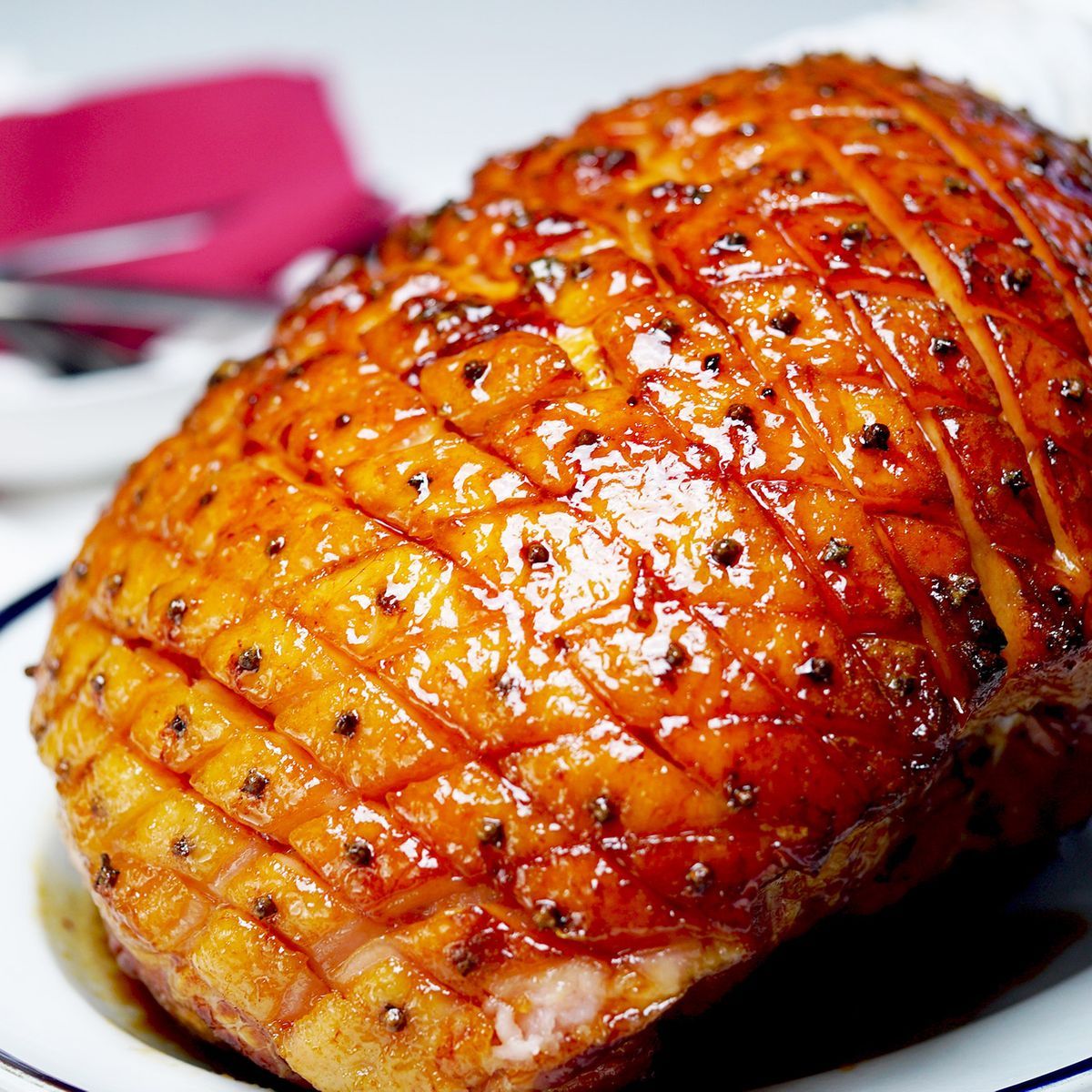
Time
- Prep Time: 10 minutes
- Cook Time: 1 hour and 30 minutes
- Total Time: 1 hour and 40 minutes
Needed Equipment
- Baking dish or roasting pan: Preferably with a lid or cover to retain moisture.
- Sharp paring or utility knife: For scoring the ham.
- Basting brush or silicone brush: To evenly apply the mustard and glaze.
- Measuring cups and spoons: For accurate measurement of ingredients.
- Aluminum foil or oven-safe cover: To cover the dish while baking.
- Kitchen thermometer (optional but recommended): To check the internal temperature of the ham.
- Serving platter or cutting board: For slicing and serving.
- Cooking tongs or fork: For handling the hot ham safely.
Tags
- Holiday
- Main Course
- Centerpiece
- Roast
- Game Day
- Family Dinner
- Festive
- Meat
Serving Size
This recipe yields approximately 8-10 servings, depending on the size of the ham and portion preferences. The precise serving size can vary, but generally, a standard ham weighs between 8 to 12 pounds, providing enough for generous slices and leftovers if desired.

Difficulty Level
This ham recipe is rated as Easy to Moderate. It involves basic preparation techniques such as scoring, spreading, and baking, making it suitable for home cooks with some experience in roasting meats. The key to success is careful monitoring during baking and ensuring the glaze is evenly applied.
Allergen Information
| Allergen | Present in Recipe | Notes |
|---|---|---|
| Mustard | Yes | Contains mustard seeds or mustard powder depending on type used. |
| Sugar | Yes | Brown sugar and maple syrup contain natural sugars. |
| Gluten | No | Traditional ingredients are gluten-free; check mustard if using prepared versions. |
| Tree Nuts | No | None in the recipe. |
Dietary Preference
This recipe is suitable for omnivores and can be adapted for specific dietary needs. It is naturally gluten-free if gluten-free mustard and maple syrup are used. For a low-sugar option, reduce or omit the brown sugar and maple syrup, but note that the glaze’s caramelization and flavor profile will be affected.
Course
Main Course / Roasted Meat
Cuisine
American / Holiday / Festive
Ingredients
| Ingredient | Quantity | Notes |
|---|---|---|
| Ham | 1 whole ham (preferably smoked or baked, about 8-12 lbs) | Bone-in or boneless, choose according to preference |
| Brown sugar | 1/2 cup | Adjust for sweetness preference |
| Mustard | 1/2 cup | Use Dijon or yellow mustard depending on flavor profile desired |
| Maple syrup | To taste (about 1/4 to 1/2 cup) | Pure maple syrup recommended for best flavor |
| Apple juice | 1 cup | For moisture and aromatic infusion |
Instructions
Preparation Phase
Commence by selecting a high-quality ham, preferably a pre-cooked, smoked, or baked variety, which simplifies the process and enhances flavor. When choosing the ham, consider the size based on your guest list, ensuring enough for everyone with some leftovers for subsequent meals or snacks. For the best results, purchase a ham with a layer of fat on top, which will help keep the meat moist and tender during roasting.
Scoring the Ham
The initial step involves scoring the ham’s surface. Place the ham on a stable cutting board. With a sharp paring knife, make four parallel strokes across the top of the ham, about a quarter-inch deep, spaced evenly. Turn the ham 1/2 turn and make four more parallel cuts perpendicular to the first set, creating a grid pattern. This scoring technique allows the glaze and flavors to penetrate deeply into the meat, resulting in a more flavorful and caramelized surface.
Preparing the Baking Dish
Select an appropriately sized baking dish or roasting pan that comfortably holds the ham. Ideally, the dish should have a lid or be covered with aluminum foil to trap heat and moisture. Place the scored ham in the dish, fat side up, to allow the juices to render and baste the meat during baking. Pour the apple juice into the bottom of the dish, which will serve as a steaming liquid, keeping the ham moist and imparting subtle fruity notes.
Applying the Glaze
In a small bowl, combine the mustard, brown sugar, and maple syrup. Stir well until the mixture is smooth and cohesive. Using a basting brush or silicone spatula, evenly spread the mustard mixture over the entire surface of the ham, ensuring every crevice and scored cell is coated thoroughly. The mustard adds a tangy complexity that balances the sweetness, while the brown sugar and maple syrup contribute caramelization and richness.
Layering the Flavors
Pat the brown sugar generously over the mustard-coated ham, pressing gently to help it adhere and form a luscious crust during baking. Drizzle the maple syrup over the brown sugar layer, covering the ham uniformly. This combination creates an enticing glaze that will develop into a caramelized, glossy coating, adding visual appeal and a burst of flavor with each bite.
Baking Process
Preheat your oven to 350°F (175°C). Cover the baking dish tightly with a lid or aluminum foil to retain moisture. Place the dish in the center of the oven and bake for approximately 1 hour and 30 minutes. This duration allows the heat to penetrate the meat thoroughly, ensuring it reaches an internal temperature of at least 140°F (60°C) for pre-cooked hams, or higher if uncooked. Use a kitchen thermometer to monitor the internal temperature for precise doneness.
Monitoring and Basting
Every 30 minutes, carefully remove the cover and baste the ham with the juices accumulated in the dish. This step enhances flavor, promotes even caramelization, and prevents the meat from drying out. Be gentle during basting to maintain the glaze’s integrity.
Final Glaze and Resting
In the last 15 minutes of baking, remove the cover entirely to allow the glaze to caramelize further, developing a beautiful, sticky crust. Once the ham has reached the desired internal temperature and the glaze is glossy and slightly charred at the edges, remove it from the oven. Transfer the ham to a cutting board or serving platter and tent loosely with foil. Let it rest for 10-15 minutes to allow the juices to redistribute, ensuring each slice remains moist and flavorful.
Preparation Tips
- Ensure the ham is at room temperature before roasting to promote even cooking.
- Use a sharp knife for scoring to avoid tearing the meat.
- Adjust the amount of glaze based on your taste preference—more maple syrup for sweetness, more mustard for tanginess.
- For added flavor, insert cloves or fresh herbs into the scored pattern.
- Use a meat thermometer for accuracy; aim for an internal temperature of 140°F for pre-cooked ham.
Nutritional Information
| Per Serving (approximate) | Calories | Fat | Saturated Fat | Cholesterol | Sodium | Carbohydrates | Sugar | Protein |
|---|---|---|---|---|---|---|---|---|
| 1 slice (about 4 oz) | 125.3 kcal | 1.2 g | 0.1 g | 0 mg | 361 mg | 28.6 g | 26.9 g | 1.4 g |
Tips and Tricks
- For an extra smoky flavor, brush the ham with smoked paprika mixed into the glaze.
- Use honey instead of maple syrup for a different sweetness profile.
- Apply the glaze in layers, allowing each to set before adding the next, for a richer crust.
- Wrap the ham tightly with foil during baking to retain moisture, especially if cooking at higher altitudes.
- For a more pronounced caramelization, increase oven temperature to 375°F during the last 15 minutes.
Add-ons
- Cloves inserted into the scored pattern for aromatic flavor.
- Fresh herbs such as rosemary, thyme, or sage added to the glaze or placed atop the ham.
- Orange or lemon zest mixed into the glaze for citrus brightness.
- Crushed pineapple or cherry preserves incorporated into the glaze for additional fruitiness.
Side Dishes
- Honey-glazed carrots
- Creamy scalloped potatoes
- Roasted Brussels sprouts with balsamic glaze
- Buttery dinner rolls or crusty bread
- Fresh green salads with vinaigrette
- Sweet potato casserole
- Green beans almondine
Improvements and Variations
- Marinate the ham overnight with a mixture of apple cider, garlic, and herbs for enhanced flavor.
- Glaze the ham with bourbon or brandy mixed into the maple syrup for a boozy twist.
- Use a slow cooker for an even more tender result, adding the glaze during the last hour.
- Stuff the scored ham with a mixture of herbs, garlic, and breadcrumbs before roasting for a stuffed ham variation.
Save and Store
Leftover ham can be stored in an airtight container in the refrigerator for up to 4 days. Wrap slices tightly in plastic wrap or foil to prevent drying out. For longer storage, freeze the ham slices or uncut ham in freezer-safe bags for up to 3 months. To reheat, gently warm in the oven at 250°F covered with foil, or in the microwave, ensuring not to overcook and dry out the meat.
FAQ
Can I use a fresh, uncooked ham for this recipe?
Yes, but you’ll need to adjust cooking time and ensure the internal temperature reaches at least 145°F for safety. Pre-cooked hams are recommended for ease and flavor consistency.
Can I substitute honey for maple syrup?
Absolutely. Honey will add a slightly different sweetness and caramelization but works well as a substitute. Adjust quantities based on your sweetness preference.
Is it necessary to score the ham?
Scoring helps the glaze penetrate the meat and creates an attractive presentation. It’s highly recommended for maximum flavor and visual appeal.
What should I do if my ham isn’t fully cooked after the baking time?
Continue baking, checking internal temperature regularly. Cover with foil to prevent excessive browning, and allow additional time until it reaches the safe internal temperature.
Can I prepare this ham ahead of time?
Yes. You can score and glaze the ham a day before, then bake it fresh. Alternatively, cook and glaze the ham in advance, refrigerate, and reheat gently before serving.
Conclusion
This ham recipe from lovewithrecipes.com is a testament to how simple ingredients can come together to create an extraordinary dish. Its balance of sweet, tangy, and savory flavors, combined with a luscious caramelized glaze, makes it an ideal centerpiece for any occasion. By following the detailed steps, you ensure a moist, flavorful, and visually stunning ham that will delight your guests and elevate your culinary reputation. Experiment with the suggested add-ons and variations to make this recipe uniquely yours, and enjoy the process as much as the delicious results. Remember, the key to a perfect ham lies in patience, quality ingredients, and a little love in the kitchen.
References
- USDA Food Safety and Inspection Service. (2020). Ham Cooking Guidelines.
- Serious Eats. (2021). How to Roast Ham Perfectly.