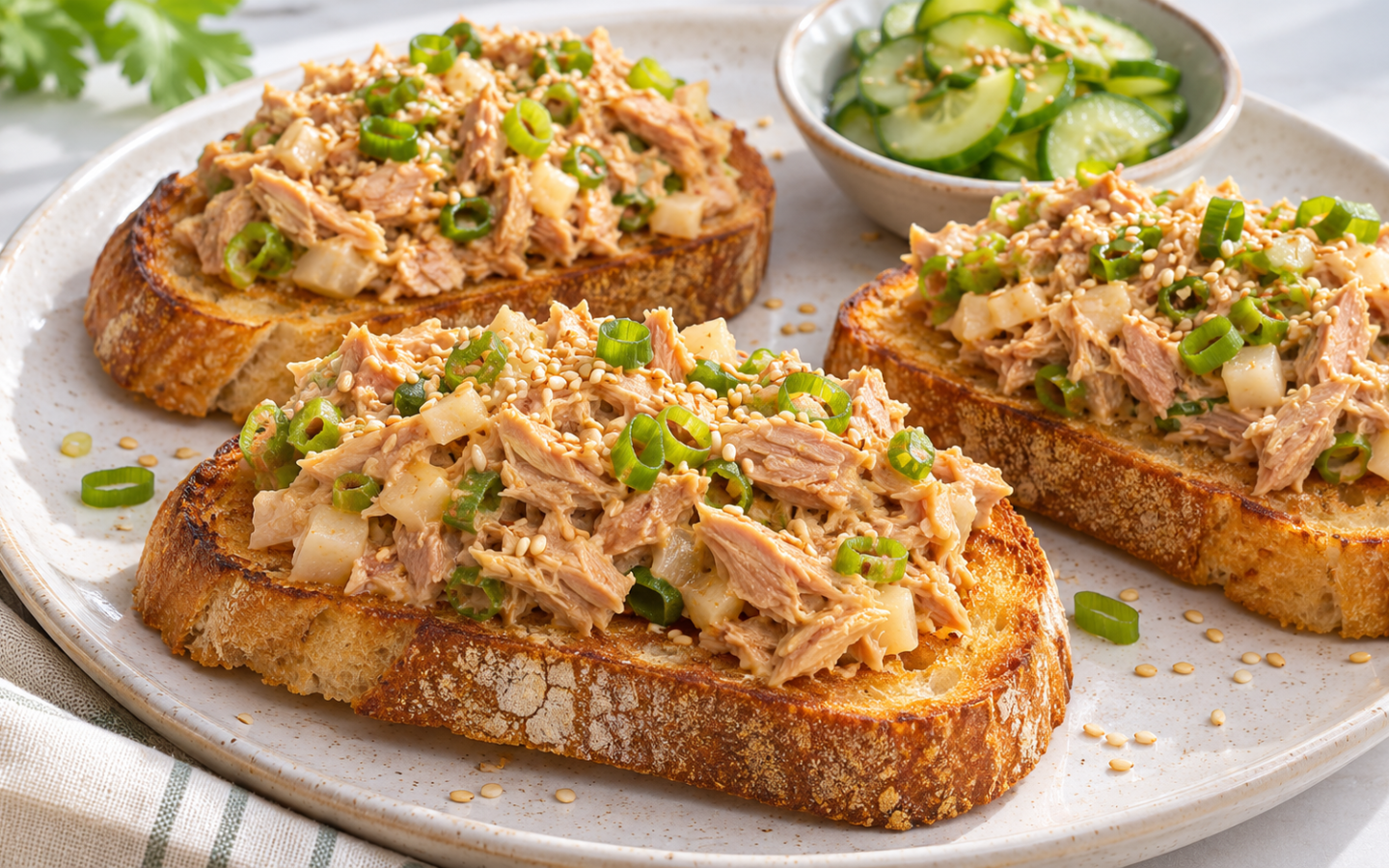
crunchy tuna toast pairs a creamy savory tuna mixture with diced water chestnuts and crisp golden bread. Soy sauce, sesame, scallion, ginger, and lemon provide a balanced Asian-inspired profile, while a short hot bake warms the topping without drying the tuna. It is an open-faced lunch, not a heavy casserole.
The recipe pre-toasts the bread so moisture from mayonnaise and tuna does not soak straight into the crumb. Draining the fish and chestnuts, chopping vegetables evenly, and baking on a rack preserve contrast. A brief optional broil adds color only after the center is hot.
crunchy tuna toast: recipe overview
| Prep time | 15 minutes |
|---|---|
| Cook time | 10 minutes |
| Total time | 25 minutes |
| Yield | 6 toasts / 3 servings |
| Oven | 425°F / 220°C |
| Difficulty | Easy |
Read the complete method before beginning and prepare every component in advance. The times are planning estimates; ingredient temperature, pan material, appliance calibration, and portion thickness all affect the finish. Use the visual, texture, and temperature cues in the instructions rather than treating the clock as the only test.
Why this recipe works
- Pre-toasting creates a moisture barrier and a sturdy base.
- Water chestnuts remain crisp after heating and distribute fresh crunch through the topping.
- Acid, soy, and sesame season the tuna so less mayonnaise is required.
- A hot short bake heats the topping before prolonged oven time can make tuna dry.
The method is organized around moisture, heat, and sequencing. Each pause has a purpose: it may stabilize a mixture, protect texture, or make the final seasoning easier to judge. Following the order is more useful than adding extra ingredients to compensate for a technical problem.
Ingredients and their roles
Weights are the most repeatable measures where provided. Read labels for allergens and sodium, especially on preserved seafood, broth, bread, condiments, and prepared dairy. Bring only the ingredients specified to room temperature; keep fish, meat, eggs, and other perishable foods safely chilled until needed.
- 2 cans (5 ounces each) light tuna in water: Drain and press gently; chunk light tuna generally contains less mercury than albacore.
- 1/2 cup finely diced water chestnuts: Drain, rinse, and blot to protect the toast from excess water.
- 1/3 cup mayonnaise: Use enough to bind, not enough to hide the tuna; plain Greek yogurt may replace part.
- 2 scallions, thinly sliced: Reserve green tops for garnish and use pale portions in the mixture.
- 2 teaspoons reduced-sodium soy sauce: Tamari can provide a gluten-free option when all other products qualify.
- 1 teaspoon toasted sesame oil and 1 teaspoon grated ginger: Both are concentrated; measured amounts keep them from dominating.
- 1 tablespoon lemon juice or rice vinegar: Acidity lightens mayonnaise and sharpens the fish.
- 1 teaspoon sesame seeds and black pepper: Toast sesame seeds briefly for aroma; pepper adds mild heat.
- 6 slices sturdy country or sandwich bread: Choose slices about 1/2 inch thick with enough structure for topping.
- 1 teaspoon neutral oil: A very light brushing assists browning without making the toast greasy.
Ingredient selection and preparation
Choose tuna thoughtfully
Canned light tuna has a softer texture and is suitable for this mixed topping. Drain thoroughly but do not squeeze until dry. Follow local health guidance on tuna frequency for pregnancy and children because mercury recommendations vary by species and person.
Prepare water chestnuts
Canned water chestnuts should smell clean and feel crisp. Rinse away packing liquid, blot, then cut into small even cubes. Large pieces make topping fall from the toast; minced paste loses the defining crunch.
Select bread for structure
A tight-crumb sourdough, whole-wheat sandwich bread, or country loaf works. Very airy bread leaks topping through holes. Extremely thick slices remain soft in the middle before the topping heats.
Finish all chopping, draining, zesting, weighing, and pan preparation before active cooking starts. Good mise en place prevents a delicate component from overcooking while another is still being measured and reduces cross-contamination between raw and ready-to-eat ingredients.
How to make crunchy tuna toast
-
Heat oven and rack
Heat oven to 425°F / 220°C. Set a wire rack over a rimmed sheet pan if available; air circulation browns the underside. Brush bread very lightly with neutral oil.
-
Pre-toast bread
Bake bread 4 to 5 minutes, turning once, until the surface feels dry and edges begin to color. It should not be fully dark because it returns to the oven. Cool 2 minutes.
-
Mix the dressing
Whisk mayonnaise, soy sauce, sesame oil, ginger, lemon juice, sesame seeds, and pepper. Taste before adding salt; tuna and soy already contribute plenty.
-
Fold the topping
Add drained tuna, water chestnuts, and pale scallion portions. Fold rather than mash so some tuna flakes remain. The mixture should hold on a spoon without pooling liquid.
-
Top evenly
Divide among six slices and spread close to the edges in a layer no thicker than about 1/2 inch. A high central mound heats slowly and slides during eating.
-
Bake until hot
Return to oven for 6 to 8 minutes until the topping is hot and bread edges are golden. For color, broil 30 to 60 seconds while watching continuously; mayonnaise can brown suddenly.
-
Finish and serve
Rest 2 minutes, scatter with scallion greens and extra sesame, then cut only if desired. Serve hot or warm while bread and water chestnuts retain their distinct crunch.
Technique notes for dependable results
Manage moisture
Drain every canned ingredient and pre-toast the bread. These steps matter more than adding extra binder. If topping looks loose, add more tuna or a tablespoon of fine breadcrumbs, not another long bake.
Keep tuna flaky
Aggressive stirring makes a paste. Whisk seasoning first, then fold fish in last. Visible flakes create a better texture and keep the topping from seeming overly processed.
Use the broiler carefully
Broiling is optional and only for surface color. Keep the pan close enough to brown but never walk away. Parchment must be rated for broiler use; a bare rack and metal tray are safer.
Balance salt and acid
Taste the mixed topping on a piece of bread because bread dilutes seasoning. Add lemon before salt. Reduced-sodium soy still varies by brand.
Common mistakes and fixes
Soggy toast
Bread was not pre-toasted or canned ingredients were wet. Bake on a rack and serve promptly. Do not cover hot toast.
Dry topping
Too little binder or excessive baking is responsible. Add a spoonful of mayonnaise before topping and use a hot short bake.
Overpowering sesame
Toasted sesame oil is potent. Measure it rather than pouring from the bottle. Dilute an overly strong mixture with more tuna and water chestnuts.
Falling topping
The layer is too thick or the chestnuts too coarse. Chop smaller, spread evenly, and allow a 2-minute rest before lifting.
Variations and substitutions
Spicy
Add 1 to 2 teaspoons sriracha or chili crisp, checking sodium and heat. Offer spice separately for a mixed group.
Lighter dressing
Replace half the mayonnaise with thick Greek yogurt. The flavor becomes tangier and the toast should be served immediately.
Gluten-free
Use certified gluten-free bread and tamari, and verify mayonnaise and canned ingredients.
No water chestnuts
Finely diced celery gives fresh crunch but softens faster in the oven. Blot it well and use the same volume.
Make one substitution at a time the first time you vary the recipe. That preserves the core ratio and makes the effect of the change clear. Several simultaneous substitutions can alter moisture, salt, fat, and cooking time in ways that are difficult to diagnose.
Detailed cook’s notes
Why “Asian-inspired”
The seasoning borrows from several pantry flavors rather than claiming one traditional regional dish. The precise title describes the style without presenting a modern tuna toast as an authentic classic.
Serving temperature
The topping needs to be hot enough for a cohesive bite but does not need prolonged cooking because canned tuna is already cooked. A short bake protects moisture.
Scaling
For a party, make smaller baguette toasts and reduce the topping layer. Pre-toast ahead, but top and bake in batches so pieces do not sit and soften.
Make-ahead boundary
Mix topping up to one day ahead and refrigerate. Water chestnuts remain crisp, though scallion aroma strengthens. Pre-toast bread the same day and keep uncovered after cooling.
Tuna type
Oil-packed tuna tastes richer but must be drained well and may need less mayonnaise. Albacore is firmer and paler but carries different mercury considerations.
Meal balance
Add cucumber salad, steamed edamame, shredded cabbage, or fruit. The toast supplies protein and starch; a fresh side makes lunch more complete without another rich element.
Choosing slice thickness
Bread around one-half inch thick offers the best balance: enough crumb to support tuna, but not so much that the center remains soft while the crust darkens. If using a dense seeded loaf, cut slightly thinner. If slices are very small, reduce topping per piece instead of building a tall mound that heats unevenly and falls away when lifted.
Buffet and lunch-box planning
For a buffet, keep topping cold in a bowl nested over ice and bake small batches close to service. Do not leave a mayonnaise-and-fish mixture on a warm table. For a packed lunch, carry chilled tuna mixture separately from dry toast and assemble just before eating; previously baked assembled toast loses crunch and should remain safely refrigerated.
Controlling sodium
Rinse water chestnuts, choose reduced-sodium soy, and compare tuna labels. Build flavor with ginger, scallion, lemon, sesame, and pepper before adding salt. If the mixture is too salty, fold in unsalted tuna, chestnuts, or shredded cabbage rather than adding enough mayonnaise to make it heavy.
Oven versus toaster oven
A toaster oven is efficient for two or three slices and often browns edges faster, so check early. A full oven gives even results for six. Keep bread in one layer and prevent parchment, tall topping, or loose garnish from contacting exposed heating elements.
Cooling on a rack
Leave baked toasts on the rack for two minutes. Steam escaping from the underside would condense against a flat plate and soften the crust. Once the first steam passes, move them with a broad spatula and serve without stacking.
Serving and pairing
Serve two toasts per adult for lunch or one as a snack, with cucumber salad, steamed peas, cabbage slaw, or fruit. Cut diagonally with a serrated knife after the brief rest. A squeeze of lemon at the table refreshes the topping.
Unsweetened iced tea, sparkling water, or light soup pairs well. Avoid a very salty side because soy and canned tuna already contribute sodium. Pickled vegetables can work in a small portion.
Make-ahead, storage, and reheating
Refrigerate unused topping up to 2 days in an airtight container. Store bread separately. Fully assembled baked toast is best immediately; refrigerate leftovers within 2 hours for up to 2 days.
Reheat on a rack at 375°F / 190°C for 6 to 9 minutes until 165°F / 74°C. The microwave heats quickly but softens bread and water chestnuts. Do not reheat more than once.
Food safety and allergen notes
Contains fish, egg, soy, sesame, and wheat unless substituted. Check personal tuna-consumption guidance for pregnancy and children. Refrigerate mayonnaise-based topping, use clean utensils, and avoid leaving it above 40°F / 4°C for over 2 hours.
Nutrition values are estimates based on typical products and the stated yield. Brands, trimming, substitutions, retained cooking fat, and actual portions change the result; the estimate is not medical advice.
Frequently asked questions
Can I use tuna in oil?
Yes. Drain thoroughly, reduce mayonnaise initially, and add only enough for binding.
Can I serve it cold?
The topping can be served on cooled toast, but the baked version has better cohesion and contrast. Keep it refrigerated until assembly.
What replaces mayonnaise?
Thick Greek yogurt, mashed avocado, or a blend can bind it, but each changes flavor and storage life.
Can I use an air fryer?
Yes. Pre-toast at 375°F, top, then heat 3 to 5 minutes. Keep topping below the heating element and watch closely.
Why pre-toast twice?
The first short bake dries the surface; the second heats topping and completes browning. One long bake tends to dry tuna before the underside crisps.
Can I add cheese?
A small amount of mild grated cheese can brown on top, but it makes the toast heavier and lessens sesame and ginger clarity.
Final cooking note
Crunchy tuna toast succeeds through contrast: dry golden bread, moist flaky tuna, and crisp water chestnuts. Drain carefully, season before salting, pre-toast, and use a short hot finish. Those small controls turn pantry ingredients into a quick lunch that tastes deliberate rather than improvised. Keep the topping layer even, allow steam to escape on a rack, and add fresh scallion only after baking. The same discipline also makes the recipe easy to scale: prepare cold topping and dry toast separately, then combine only the number of pieces that can be baked and eaten promptly.