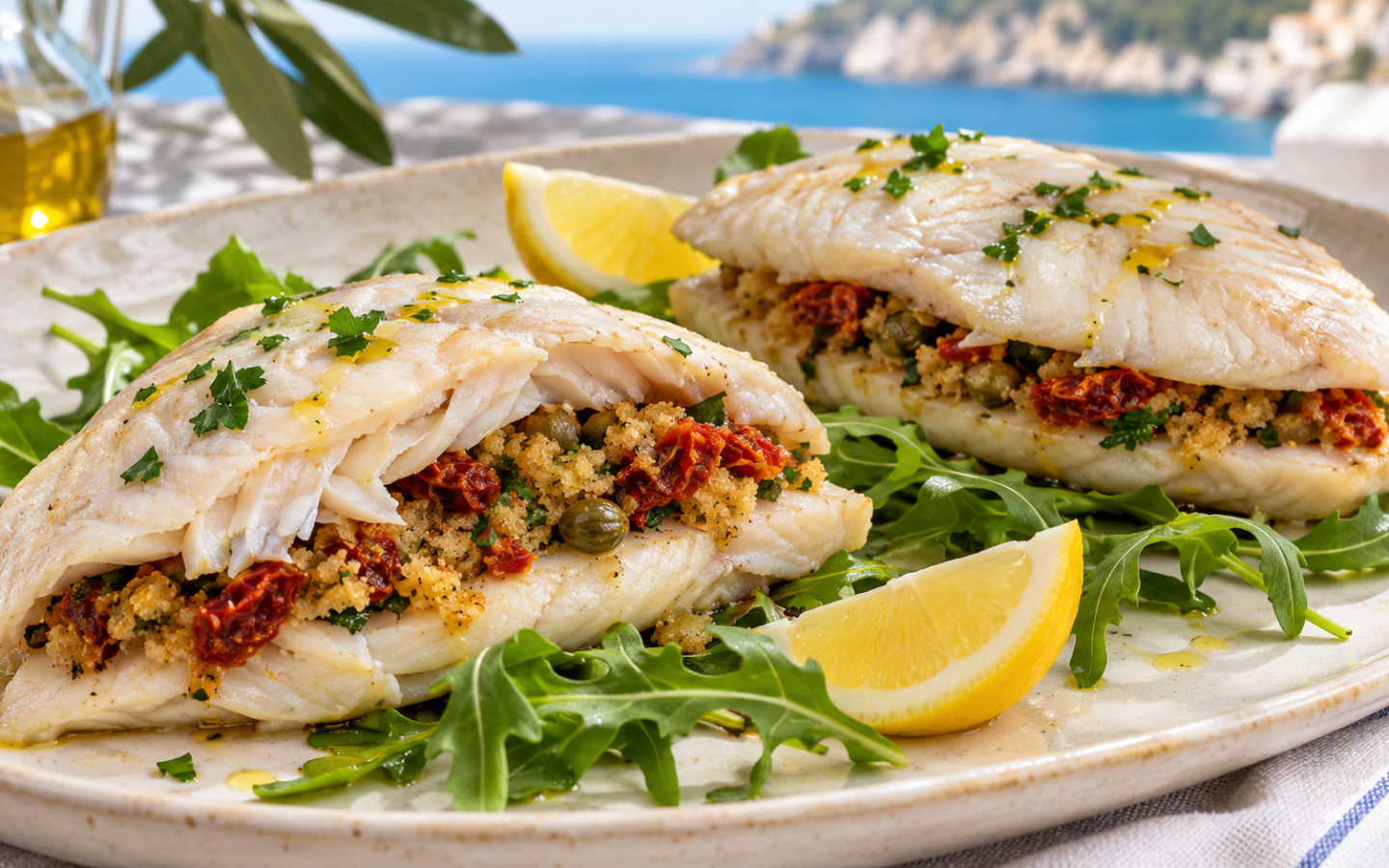
Sicilian sea bream fillet sandwiches are not bread sandwiches: two boneless fish fillets enclose a savory filling of sun-dried tomato, capers, parsley, lemon, and soft breadcrumbs. Gentle steaming cooks the parcels evenly and protects the lean fish from drying, while arugula and lemon keep the finished plate fresh.
The method starts with ready-cut fillets so home cooks are not asked to learn whole-fish butchery in the middle of dinner. It explains pin-bone checks, filling moisture, parcel sizing, steam safety, and doneness. The finished dish feels special but uses a compact Mediterranean pantry.
Sicilian sea bream fillet sandwiches: recipe overview
| Prep time | 35 minutes |
|---|---|
| Cook time | 10–14 minutes |
| Total time | About 50 minutes |
| Yield | 4 servings |
| Method | Covered steaming |
| Difficulty | Intermediate |
Read the complete method before beginning and prepare every component in advance. The times are planning estimates; ingredient temperature, pan material, appliance calibration, and portion thickness all affect the finish. Use the visual, texture, and temperature cues in the instructions rather than treating the clock as the only test.
Why this recipe works
- Equal-size fillets create compact parcels that cook at the same rate.
- Bread absorbs tomato and caper moisture, turning the filling cohesive rather than watery.
- Egg white binds the filling lightly without making it taste like an omelet.
- Steam transfers heat gently around the fish, preserving flakes while cooking the center safely.
The method is organized around moisture, heat, and sequencing. Each pause has a purpose: it may stabilize a mixture, protect texture, or make the final seasoning easier to judge. Following the order is more useful than adding extra ingredients to compensate for a technical problem.
Ingredients and their roles
Weights are the most repeatable measures where provided. Read labels for allergens and sodium, especially on preserved seafood, broth, bread, condiments, and prepared dairy. Bring only the ingredients specified to room temperature; keep fish, meat, eggs, and other perishable foods safely chilled until needed.
- 8 skinless sea bream fillets, 3 to 4 ounces each: Ask the fishmonger for even boneless portions and still check every fillet for pin bones.
- 3/4 cup / 45 g fresh soft breadcrumbs: Pulse crustless country bread; dry packaged crumbs absorb differently and can make the center heavy.
- 1/2 cup / 85 g drained sun-dried tomatoes in oil: Blot and chop finely so concentrated tomato is distributed rather than forming chewy lumps.
- 2 tablespoons rinsed capers: Rinsing controls salt while preserving their bright briny character.
- 1/3 cup chopped flat-leaf parsley: Fresh parsley supplies color and a clean herbal finish.
- 1 egg white: It binds the filling; use pasteurized egg white if preferred.
- 1 teaspoon lemon zest and 1 tablespoon lemon juice: Zest perfumes the filling and juice seasons the finished plate.
- 2 tablespoons extra-virgin olive oil, divided: A little enriches the filling and the remainder dresses arugula.
- 4 cups arugula, salt, and black pepper: Peppery greens balance the rich preserved ingredients.
Ingredient selection and preparation
Buy and inspect the fish
Sea bream should smell mild and marine, not sharp. Flesh should look moist and resilient. Run a clean fingertip along the center line and remove pin bones with sanitized tweezers. Pat dry; water on the surface prevents seasoning from adhering and dilutes the filling.
Balance preserved ingredients
Sun-dried tomatoes and capers vary greatly in salt. Drain tomatoes, rinse capers, taste both, and delay most added salt. Oil-packed tomatoes are pliable; fully dry tomatoes must be rehydrated and blotted before measuring.
Make suitable breadcrumbs
Fresh breadcrumbs create a tender stuffing. Tear day-old white or semolina bread and pulse into coarse crumbs. If only dry crumbs are available, begin with half the volume and add just enough to make a mixture that holds when pressed but is not stiff.
Finish all chopping, draining, zesting, weighing, and pan preparation before active cooking starts. Good mise en place prevents a delicate component from overcooking while another is still being measured and reduces cross-contamination between raw and ready-to-eat ingredients.
How to make sicilian sea bream fillet sandwiches
-
Prepare the steamer
Set a steamer basket over a wide pot with 1 to 2 inches of water that does not touch the basket. Add strips of lemon peel and a few parsley stems if desired. Bring to a simmer, then keep covered on low while assembling. Line the basket with perforated parchment or lightly oil it to reduce sticking.
-
Mix the filling
Combine breadcrumbs, chopped tomatoes, capers, parsley, egg white, lemon zest, 1 tablespoon olive oil, black pepper, and only a small pinch of salt. Let stand 5 minutes. The mixture should hold together when squeezed without releasing liquid; adjust with a teaspoon of crumbs or water if necessary.
-
Portion and season fillets
Pair fillets by similar footprint and thickness. Season lightly with pepper and minimal salt. Place four fillets presentation-side down on a board. Divide filling among them, spreading an even 1/3-inch layer while leaving a narrow border so it does not squeeze out.
-
Build the fish parcels
Place each matching fillet on top, presentation-side up, and press very gently. Tuck thin tail ends inward if needed to create even thickness. Secure loosely with kitchen twine only when the shapes slide; tight tying compresses flakes and forces out filling.
-
Steam in one layer
Place parcels in the basket with space between, cover, and maintain steady steam rather than a violent boil. Cook 10 to 14 minutes depending on thickness. Avoid lifting the lid repeatedly; each opening releases heat and extends cooking.
-
Check doneness accurately
The fish should turn opaque, separate into moist flakes under gentle pressure, and reach 145°F / 63°C at the thickest central point. Insert the thermometer from the side to reach the filling without dismantling the parcel. Continue 1 to 2 minutes if below temperature.
-
Dress the arugula
While fish cooks, toss arugula with remaining olive oil, lemon juice, and pepper. Add salt only after tasting. Arrange a loose bed on four plates; a compact mound traps steam and wilts immediately.
-
Plate and finish
Lift parcels with a wide spatula, remove any twine, and set over the greens. Spoon a little clean steaming juice only if desired, then finish with lemon zest, parsley, and a small olive-oil drizzle. Serve while the fish is hot and the arugula still lively.
Technique notes for dependable results
Control filling moisture
A wet filling slides out and steams the fish from inside; a dry one crumbles. After resting, it should resemble a tender stuffing. Sun-dried tomato oil, egg white, and fresh crumbs need time to distribute before making the final adjustment.
Pair by thickness
A thin fillet stacked with a thick one creates an uneven parcel. Match sizes, fold tapered tips, and place larger parcels toward the hotter center of a metal steamer only if the manufacturer’s design creates a clear hot spot.
Keep steam gentle
The water must simmer continuously, but it should not splash the fish. Violent boiling can wet parchment, disturb parcels, and empty the pot sooner. Check the water level between batches, never while leaning into escaping steam.
Use temperature and texture together
A thermometer verifies safety, while flakes show quality. Fish continues cooking briefly after removal. Pull it when it reaches 145°F and flakes moistly; holding it in the closed hot steamer makes it chalky.
Common mistakes and fixes
Filling falls out
The layer may be too thick, too wet, or spread to the edge. Remove excess before cooking, leave a border, and use loose twine on irregular fillets.
Fish is dry
The parcels were too small for the cooking time or remained in residual steam. Check at 9 minutes for thin portions and transfer to plates immediately when done.
Dish tastes too salty
Capers, tomatoes, and bread may all contribute sodium. Rinse, blot, taste, and add no final salt until the complete filling has rested. Lemon and arugula can rebalance a mildly salty serving.
Fish sticks to basket
Use perforated parchment or a thin oil coating and wait until the protein is fully set before lifting. Slide a broad flexible spatula underneath rather than pulling from the top.
Variations and substitutions
Alternative fish
Sea bass, snapper, sole, or thin cod portions can work if boneless and evenly sized. Cooking time follows parcel thickness, not the species name.
Olive variation
Add 2 tablespoons finely chopped green olives and reduce capers by half. Taste before adding salt.
Gluten-free filling
Use fresh gluten-free breadcrumbs from a bread that is not overly sweet, and verify all preserved ingredients for cross-contact.
Oven-steamed method
Place parcels in a covered baking dish with 2 tablespoons water and bake at 375°F / 190°C until 145°F. The texture is slightly firmer but the method suits kitchens without a basket.
Make one substitution at a time the first time you vary the recipe. That preserves the core ratio and makes the effect of the change clear. Several simultaneous substitutions can alter moisture, salt, fat, and cooking time in ways that are difficult to diagnose.
Detailed cook’s notes
Why the aromatic water is subtle
Peppercorns or lemon peel in steaming water scent the surrounding vapor only lightly; they do not season the fish as effectively as zest in the filling. Use the water aromatics as a background, not a replacement for seasoning.
Scaling for guests
Prepare parcels up to 4 hours ahead, cover, and refrigerate. Steam in a single layer, using multiple baskets or batches. Never stack raw parcels because steam cannot circulate predictably.
Skin-on option
Crisp skin is not possible in a steamer. If using skin-on fillets, place skin outside and accept a soft texture, or remove it. Pan-searing requires a different assembly and risks filling loss.
Bread’s structural job
The bread is inside the fish, not around it. It captures flavorful oil and juices and gives the stuffing a sliceable tenderness. Too much turns the center into paste; too little lets concentrated ingredients scatter.
Portion design
Two small fillets per parcel are easier to handle than two large full sides. A finished parcel of roughly 7 ounces fish plus filling is generous without needing an excessively long steam.
Using whole fish responsibly
Whole-fish filleting can reduce cost and provide bones for stock, but only cooks comfortable with scaling, gutting, sanitation, and bone removal should do it. Ready fillets make this recipe safer and more approachable.
Serving and pairing
Serve one parcel per person on lemon-dressed arugula. Roasted fennel, small boiled potatoes, grilled zucchini, or a tomato salad complete the plate without competing with the concentrated filling. Cut the first parcel at the table only if you want to display the colorful center.
Crisp mineral white wine, sparkling water with lemon, or unsweetened iced tea complements the briny filling. Keep side sauces light; a heavy cream sauce would hide the fish and make the sun-dried tomato taste overly rich.
Make-ahead, storage, and reheating
Cool leftovers promptly and refrigerate in a shallow airtight container for up to 2 days. Store arugula separately. The raw assembled parcels may be refrigerated up to 4 hours before cooking but should not be left at room temperature.
Reheat gently in a covered dish at 300°F / 150°C with a teaspoon of water until the center reaches 165°F / 74°C. Microwaving at reduced power also works but can toughen edges. Reheat only once and add fresh greens.
Food safety and allergen notes
The recipe contains fish, egg, and wheat; capers and preserved tomatoes may carry additional label warnings. Keep raw fish below 40°F / 4°C, sanitize tools, remove every pin bone, and beware of hot steam when lifting the lid away from your face.
Nutrition values are estimates based on typical products and the stated yield. Brands, trimming, substitutions, retained cooking fat, and actual portions change the result; the estimate is not medical advice.
Frequently asked questions
Are these served in bread?
No. “Sandwich” describes the structure: filling enclosed between two fish fillets. Breadcrumbs are part of the stuffing, but there is no bun or outer bread layer.
Can I prepare the filling ahead?
Yes, mix it up to one day ahead and refrigerate tightly covered. Bring it out only while preparing fish. If it firms as crumbs hydrate, loosen with a teaspoon of water or olive oil.
Can I omit egg white?
The filling will be looser. A tablespoon of aquafaba or a little extra moist bread can help, but the parcels must be handled gently. Egg-free substitutions change binding strength.
How do I remove pin bones?
Feel along the fillet with clean fingertips, grip the exposed end with fish tweezers, and pull in the direction the bone points. Recheck after removing each one.
Can I pan-fry the parcels?
Pan-frying is possible but more likely to split them and burn the filling. Secure well, use moderate heat, and verify the center. The steaming method is more reliable for this structure.
Why rinse capers?
Brined capers carry surface salt and vinegar. A quick rinse lets their floral, tangy flavor remain without making the filling aggressively salty.
Final cooking note
Sicilian sea bream fillet sandwiches depend on balance and careful handling: a cohesive but tender filling, evenly paired boneless fish, gentle steam, and a bright green finish. Once the components are prepared, cooking is brief; precision before the steamer protects both flavor and the delicate flakes.