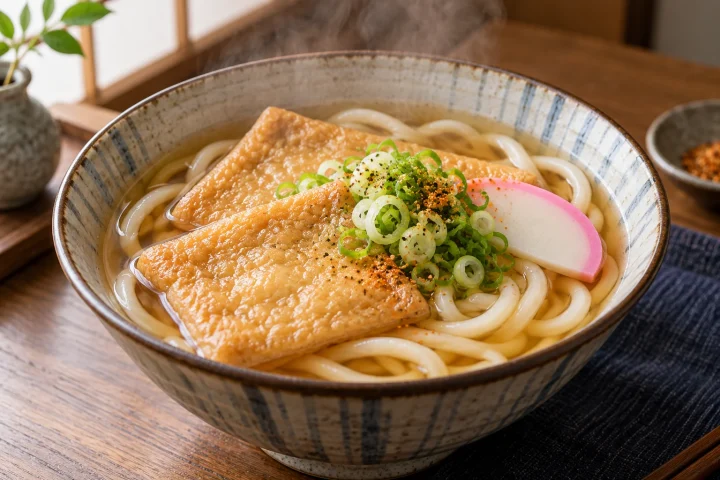
Chilled buckwheat noodles rinsed until springy and served on a bamboo tray with concentrated dashi-soy dipping sauce.
Introduction
Zaru soba is minimalist summer cooking: chilled buckwheat noodles, concentrated dipping sauce, and a few sharp garnishes. Because there is no rich topping to hide mistakes, noodle timing, rinsing, draining, and sauce balance determine the entire experience.
Soba is boiled in abundant unsalted water, then washed more vigorously than Italian pasta to remove loose surface starch. A final cold rinse firms the strands. Tsuyu is deliberately concentrated because diners dip only a bite at a time rather than pouring it over the tray. Buckwheat percentage changes both flavor and handling. Noodles with more wheat are resilient and beginner-friendly; high-buckwheat soba has a stronger aroma but breaks more readily. Follow the package before applying a universal minute count. When washing, support fragile noodles in a bowl of cold water rather than blasting them directly from a high-pressure tap. Drain only after the center has cooled. A properly chilled strand should feel firm and clean, not hard, slimy, or waterlogged, and it should lift from the tray without carrying a puddle into the dipping cup. For consistent results, record the ingredient brand, cookware size, actual heat level, and final cooking time on the first attempt. Those observations make the next batch more useful than changing several variables from memory.
This guide is designed for a home cook who wants more than a short ingredient list. It explains what to look for, why the sequence matters, where substitutions are reasonable, and where they change the character of the dish. Read the method once before heating the pan, measure everything, and use the visual and sensory cues alongside the clock.
Japanese food is not one fixed set of restaurant dishes. It includes regional traditions, home cooking, modern adaptations, and careful seasonal choices. This recipe stays close to the technique and flavor structure associated with the dish while using measurements and safety guidance that work in a contemporary home kitchen.
Time, Serving Size and Recipe Facts
| Detail | Value |
|---|---|
| Preparation time | 20 minutes |
| Cooking time | 15 minutes |
| Total time | 35 minutes |
| Serving size | 4 servings |
| Difficulty level | Easy |
| Course | Main course or side |
| Cuisine | Japanese |
| Allergen information | Wheat in most soba, soy, fish if bonito dashi is used |
| Dietary preference | Vegan with 100% buckwheat noodles and kombu-shiitake dipping sauce |
Timing note: The total assumes ingredients are measured and the main accompaniment is ready when cooking begins. Knife speed, stove power, cookware, ingredient temperature, and batch size can change the clock. Use doneness, texture, aroma, and safe internal temperature as the final tests rather than treating a minute count as a guarantee.
Needed Equipment
Good equipment makes the method easier, but specialist purchases are not required. Choose cookware large enough to avoid crowding and use a stable cutting surface. A thermometer is especially valuable because color alone cannot verify safe doneness.
- Large stockpot
- Colander
- Large bowl of ice water
- Small saucepan
- Bamboo zaru trays or plates
- Four dipping cups
Set every tool out before starting. This mise en place is not cosmetic: several Japanese techniques move quickly once heat is applied, and pausing to search for a strainer or serving bowl can turn a delicate texture into an overcooked one. Keep raw-protein tools away from garnishes and ready-to-eat foods.
Tags and Recipe Classification
Tags: Japanese Recipes, Zaru Soba, Buckwheat Noodles, Cold Noodles, Summer Recipes.
This is a easy Japanese main course or side recipe. The labels help readers understand the cooking context; they do not replace checking every packaged ingredient when allergies or medical dietary needs are involved.
Ingredients
| Ingredient | Amount | Preparation and purpose |
|---|---|---|
| Dried soba noodles | 14 oz / 400 g | Check buckwheat percentage |
| Dashi | 1½ cups / 360 ml | Bonito or kombu-shiitake |
| Soy sauce | ½ cup / 120 ml | For tsuyu |
| Mirin | ½ cup / 120 ml | For tsuyu |
| Sugar | 1 tsp | Optional balance |
| Nori | 1 sheet | Cut into fine strips |
| Scallions | 4 | Thinly sliced |
| Wasabi | To taste | Optional |
| Grated daikon | ½ cup | Optional |
| Ice and cold water | As needed | For chilling |
How to shop and measure
Weighing key ingredients gives the most repeatable result, especially for flour, rice, meat, and concentrated seasonings. Tablespoons are level US tablespoons. Choose fresh ingredients with clean aromas and intact texture, check dates on refrigerated products, and read labels for hidden allergens. Soy sauces, miso, curry roux, dashi powders, noodles, sauces, and vinegars can differ substantially in sodium, sweetness, and additives.
Prepare every cut as described before cooking. Uniform pieces reach doneness together, while random sizes force a choice between undercooking the largest and overcooking the smallest. When making a substitution, preserve the ingredient’s function—salt, sweetness, acidity, fat, body, or aroma—instead of matching only its color.
Instructions
-
1. Prepare tsuyu
Simmer mirin briefly, add dashi, soy, and sugar, then cool completely. Taste after chilling because cold mutes sweetness and aroma.
What to watch: Work by appearance and texture as well as time. If the pan behaves faster than described, lower the heat or move it briefly off the burner; if moisture is accumulating instead of evaporating, avoid crowding and allow the cookware to recover its heat.
-
2. Organize garnishes
Slice scallions, grate daikon, cut nori, and portion wasabi before noodles enter the pot.
What to watch: Work by appearance and texture as well as time. If the pan behaves faster than described, lower the heat or move it briefly off the burner; if moisture is accumulating instead of evaporating, avoid crowding and allow the cookware to recover its heat.
-
3. Boil ample water
Use a large pot of unsalted water at a full boil. Soba foams and needs space.
What to watch: Work by appearance and texture as well as time. If the pan behaves faster than described, lower the heat or move it briefly off the burner; if moisture is accumulating instead of evaporating, avoid crowding and allow the cookware to recover its heat.
-
4. Add noodles gradually
Fan dried soba into the pot, stir gently to separate, and regulate heat to prevent foam overflowing.
What to watch: Work by appearance and texture as well as time. If the pan behaves faster than described, lower the heat or move it briefly off the burner; if moisture is accumulating instead of evaporating, avoid crowding and allow the cookware to recover its heat.
-
5. Cook by texture
Follow package timing but taste early. The center should be cooked without becoming soft or frayed.
What to watch: Work by appearance and texture as well as time. If the pan behaves faster than described, lower the heat or move it briefly off the burner; if moisture is accumulating instead of evaporating, avoid crowding and allow the cookware to recover its heat.
-
6. Reserve sobayu
Before draining, save some cloudy cooking water if you plan to enjoy sobayu after the noodles.
What to watch: Work by appearance and texture as well as time. If the pan behaves faster than described, lower the heat or move it briefly off the burner; if moisture is accumulating instead of evaporating, avoid crowding and allow the cookware to recover its heat.
-
7. Wash thoroughly
Drain and rinse under cold running water, rubbing strands gently between clean hands until the water is much clearer.
What to watch: Work by appearance and texture as well as time. If the pan behaves faster than described, lower the heat or move it briefly off the burner; if moisture is accumulating instead of evaporating, avoid crowding and allow the cookware to recover its heat.
-
8. Chill and drain
Immerse in ice water briefly, then drain extremely well. Excess water dilutes tsuyu and makes the tray puddle.
What to watch: Work by appearance and texture as well as time. If the pan behaves faster than described, lower the heat or move it briefly off the burner; if moisture is accumulating instead of evaporating, avoid crowding and allow the cookware to recover its heat.
-
9. Arrange the tray
Make loose, liftable nests on zaru trays and scatter nori immediately before serving.
What to watch: Work by appearance and texture as well as time. If the pan behaves faster than described, lower the heat or move it briefly off the burner; if moisture is accumulating instead of evaporating, avoid crowding and allow the cookware to recover its heat.
-
10. Teach the dip
Add scallion, daikon, or wasabi to individual cups. Dip only the lower portion of each bite, then dilute remaining tsuyu with hot sobayu if desired.
What to watch: Work by appearance and texture as well as time. If the pan behaves faster than described, lower the heat or move it briefly off the burner; if moisture is accumulating instead of evaporating, avoid crowding and allow the cookware to recover its heat.
Food-safety checkpoint: Keep raw meat, poultry, seafood, and eggs separated from ready-to-eat ingredients. Wash hands and utensils after contact, and verify safe doneness with a clean food thermometer where applicable. The USDA lists 165°F / 74°C for poultry and 145°F / 63°C plus a three-minute rest for whole cuts of pork and beef.
Preparation Tips and Troubleshooting
Preparation is easier when you separate decisions from execution. Taste sauces before they touch raw ingredients, arrange components in the order used, and keep a small amount of hot water or unsalted stock available for controlled adjustments. The goal is not to improvise constantly but to notice what the food is doing.
- Kitchen note: Read labels: many soba noodles contain substantial wheat.
- Kitchen note: Do not salt cooking water.
- Kitchen note: Rinse until the slippery surface starch is gone.
- Kitchen note: Drain with several firm shakes before plating.
- Kitchen note: Keep tsuyu cold and concentrated, but adjust for the soy brand used.
Seasoning should be corrected in small steps. Salt and soy sauce are difficult to remove, sugar can quickly hide savory nuance, and excess liquid changes texture. Add a teaspoon, mix fully, taste, and only then decide whether another adjustment is needed.
Nutritional Information
The following values are an estimate per serving, including the principal accompaniment when listed. Actual nutrition changes with brands, trimming, absorbed frying oil, portion size, and optional garnishes. It is not medical advice.
| Nutrient | Estimated amount per serving |
|---|---|
| Calories | 430 calories |
| Protein | 18 g |
| Carbohydrates | 78 g |
| Total fat | 4 g |
| Saturated fat | 1 g |
| Sodium | 1120 mg |
| Dietary fiber | 6 g |
| Sugars | 7 g |
For sodium management, compare labels on soy sauce, miso, roux, stock, noodles, and prepared sauces. For a more precise personal calculation, weigh the finished recipe and enter the exact brands and consumed portion into a verified nutrition database or consult a qualified dietitian.
Tips and Tricks for Better Results
The first attempt establishes your baseline; the second can be tuned to your stove and ingredients. Record the pan size, heat level, ingredient brand, and actual cooking time. That small kitchen note is more useful than changing several variables at once.
Serve the dish in warmed or appropriately cool tableware as the recipe demands, wipe plate edges, and add delicate garnishes at the final second. Presentation should support eating quality: crisp food stays uncovered, noodles move to the table immediately, and rice bowls are assembled only when every component is ready.
Add-ons and Variations
These additions are optional. Make the core recipe once before using multiple variations, then choose one change that preserves its balance.
- Serve with vegetable or shrimp tempura.
- Add grated nagaimo, nameko mushrooms, or shiso.
- Use a sesame dipping sauce for a richer variation.
When adding a watery vegetable, cook it separately or reduce the main liquid slightly. When adding a salty prepared ingredient, reduce soy sauce or miso first. A variation succeeds when it respects texture and seasoning, not simply when more ingredients fit in the pan.
Side Dishes and Menu Ideas
Build the meal around contrast: pair a rich or fried dish with something crisp and acidic; pair a light soup with rice and a substantial protein. Suitable companions include:
- Tempura
- Tamagoyaki
- Cucumber sunomono
- Edamame
For a multi-dish meal, keep portions modest and avoid repeating the same dominant seasoning in every bowl. Rice, soup, pickles, and a simply dressed vegetable can make the table feel complete without competing with the main recipe.
How to Improve the Recipe Next Time
If the result was technically cooked but not exciting, diagnose it in order. First check salt, then acidity or sweetness, then aroma, and finally texture. A bland dish often needs a precise seasoning correction; a heavy dish may need an acidic side; a dull aroma may simply mean the finishing garnish was added too early.
Change only one major variable on the next attempt. Use a wider pan for better evaporation, a smaller pot for deeper poaching liquid, a sharper knife for cleaner cuts, or a thermometer for tighter doneness control. Repetition with notes produces a personal, reliable version without abandoning the dish’s underlying method.
Save, Store and Reheat
Cook only what you will eat. Chilled soba sticks and becomes brittle in refrigeration, so leftovers are best used within 1 day after rinsing briefly in cold water. Tsuyu keeps refrigerated about 1 week in a clean sealed jar and can be frozen for 1 month. Store nori dry and airtight. Discard noodles left at warm room temperature for an extended period, especially when mixed with wet garnishes.
Use clean containers, label them with the date, and refrigerate promptly rather than waiting for food to become completely cold on the counter. Reheating cannot reverse toxins that may form during unsafe storage. When in doubt about time, temperature, odor, or handling history, discard the food.
Frequently Asked Questions
Is soba gluten-free?
Not necessarily. Many noodles mix buckwheat and wheat; only verified 100% buckwheat products are appropriate for a gluten-free diet.
Why rinse soba so much?
Rinsing removes loose starch that otherwise makes strands gummy and clouds the dipping sauce.
What is sobayu?
It is the cloudy noodle cooking water, traditionally added to remaining tsuyu for a warm drink at the end.
Can I pour sauce over the noodles?
Zaru soba is designed for dipping. Pouring concentrated tsuyu over everything makes the dish too salty.
Why did noodles break?
They may be overcooked, stirred harshly, or made with a high buckwheat percentage that is naturally fragile.
Can tsuyu be vegan?
Yes. Build dashi from kombu and dried shiitake and verify the soy sauce and mirin.
Can I double the recipe?
Usually, but do not simply crowd twice as much into the same cookware. Work in batches where browning or frying is involved, choose a wider pot for simmered dishes, and recheck reduction time, seasoning, and safe doneness. Rice and garnishes can be scaled separately.
How do I know the result is ready without relying only on time?
Use the recipe’s sensory cues: color, aroma, bubbling pattern, resistance to a knife, coating consistency, and internal temperature. Clocks describe an expected range; ingredients and equipment decide the actual finish.
Conclusion
Zaru Soba: Chilled Japanese Buckwheat Noodles becomes dependable when its small decisions are made deliberately: appropriate ingredients, organized preparation, controlled heat, restrained seasoning, and service at the right moment. Follow the full method the first time, then use the troubleshooting notes to adapt it intelligently to your kitchen.
Most importantly, treat the recipe as food rather than a performance. Taste carefully, cook safely, and share it while its defining textures are at their best.
References and Further Reading
- Ministry of Agriculture, Forestry and Fisheries of Japan: Washoku guide
- Japan National Tourism Organization: Japanese gastronomy
- USDA FSIS: Safe minimum internal temperature chart
References support cultural and safety context. Recipe quantities, method, testing notes, and nutrition estimates are presented as an original editorial guide for Love With Recipes.