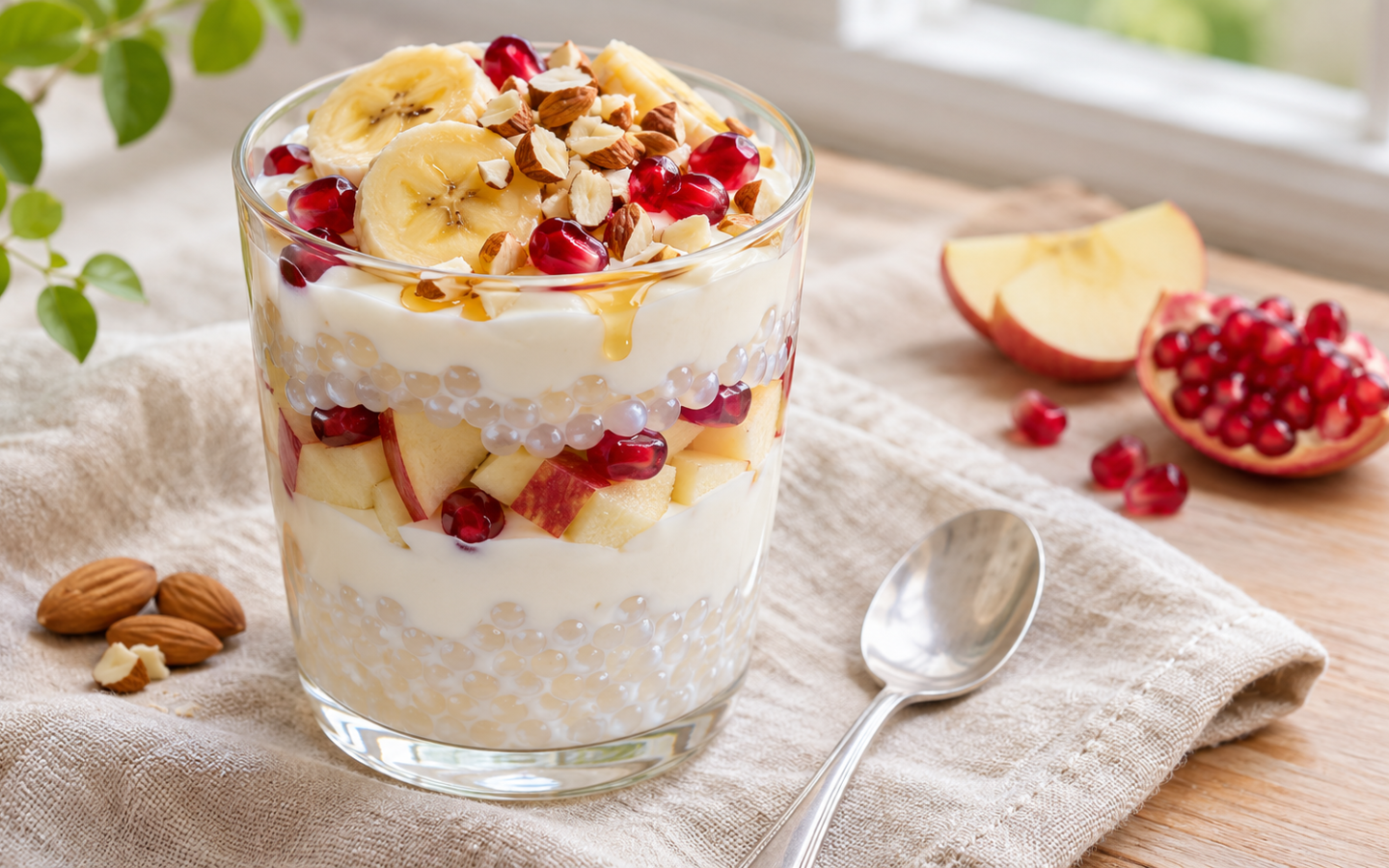
sago yogurt parfait layers cool thick yogurt, tender translucent tapioca pearls, fresh fruit, honey, and toasted almonds into a breakfast or light dessert with real textural contrast. The important detail is cooking the pearls correctly: undercooked sago is chalky, while overcooked sago collapses into glue.
This method treats the sago and yogurt as separate components until both are fully chilled. That protects the yogurt from heat, keeps the pearls pleasantly chewy, and allows the fruit to remain crisp. It also corrects the common confusion between tapioca pearls and tapioca flour: use whole small pearls, not flour.
sago yogurt parfait: recipe overview
| Prep time | 20 minutes |
|---|---|
| Cook time | 15 minutes |
| Chilling time | 30 minutes |
| Total time | 1 hour 5 minutes |
| Yield | 4 parfaits |
| Difficulty | Easy |
This overview is a planning guide rather than a cue to rush. Read the full method once, prepare every component, and use the visual and texture checks in the instructions. Ovens, pans, produce, and portion sizes vary, so reliable cooking depends on observing the food as well as watching the clock.
Why this recipe works
- Rinsing cooked pearls removes excess surface starch without washing away their gentle chew.
- Thick plain yogurt supports distinct layers and prevents the fruit from sinking immediately.
- Honey is added to taste after chilling, when sweetness can be judged accurately.
- Banana, apple, pomegranate, and almonds provide soft, crisp, juicy, and crunchy textures in the same glass.
The formula is deliberately specific about moisture, heat, and sequencing. Those three variables decide whether the finished dish has contrast and balance or simply tastes flat. Nothing here is included only for decoration: each ingredient and each pause in the method has a practical job.
Ingredients and what each one does
Measure the ingredients before starting. When a weight is supplied, it is the most repeatable option; cup measures remain useful for cooks without a scale. Read labels if an allergy or dietary restriction matters, because prepared sauces, broths, breadcrumbs, and cultured products can vary by brand.
- 1/2 cup / 90 g small sago pearls: Use whole small tapioca pearls labeled sago or sabudana, not tapioca starch, instant pudding mix, or large boba pearls.
- 6 cups water for boiling: Abundant water lets the pearls circulate and keeps released starch from becoming overly concentrated.
- 2 cups / 480 g thick plain yogurt: Greek-style or well-strained yogurt makes clean layers. Choose unsweetened yogurt so the final sweetness stays adjustable.
- 2 to 3 tablespoons honey: Honey rounds the tart yogurt. Maple syrup is a suitable alternative for a fully plant-based version.
- 1 firm-ripe banana: Slice shortly before assembly; a firm-ripe banana is sweet without turning mushy.
- 1 crisp apple: Dice it small enough to eat neatly with a spoon. A sweet-tart variety balances the honey.
- 1/2 cup pomegranate arils: Arils bring acidity, color, and a juicy snap. They are preferable to a large quantity of concentrated anardana powder here.
- 1/3 cup toasted almonds: Chop coarsely and add near serving time to preserve their crunch.
- 1/2 teaspoon ground cardamom and a pinch of salt: Both are optional; cardamom adds floral warmth and salt sharpens the fruit and yogurt flavors.
Ingredient selection and preparation
Buy pearls, not flour
Some packages use “sago” loosely. The correct product consists of dry round pearls that become translucent when cooked. Tapioca flour dissolves into a thick paste and cannot create a parfait layer. Large black boba also needs a different cooking time and has a much heavier texture.
Use thick, cold yogurt
Regular yogurt can be strained in a cheesecloth-lined sieve in the refrigerator for 1 to 2 hours. The goal is spoonable yogurt, not a dry cheese. Stir it smooth after straining, then keep it cold until the cooked pearls are completely cool.
Prepare fruit thoughtfully
Apple can be diced several hours ahead and tossed with a teaspoon of lemon juice. Banana should be cut at the last moment. Drain washed fruit thoroughly because water collecting in the glass thins the yogurt and blurs the layers.
Cool the pearls quickly and cleanly
Once the pearls are tender, move directly to the rinse instead of leaving them in hot starchy water. A wide sieve cools them faster than a deep bowl and reduces carryover cooking. After rinsing, shake gently and spread them in a shallow container for a few minutes. They should feel cool before meeting yogurt; even mild residual heat can loosen cultured yogurt, encourage whey separation, and make the finished layers appear watery.
Complete the cutting, draining, cooling, or tempering described above before heat is involved. This small mise-en-place habit prevents overcooking while another ingredient is still being prepared and makes the final seasoning easier to judge.
How to make sago yogurt parfait
-
Rinse the dry sago
Place the pearls in a fine-mesh sieve and rinse briefly under cool water to remove dust and loose starch. Do not soak unless the package specifically instructs it; many small pearls cook more evenly when added directly to abundant boiling water.
-
Boil in plenty of water
Bring 6 cups of water to a full boil in a roomy saucepan. Rain in the sago while stirring. Reduce to a lively simmer and cook for 10 to 15 minutes, stirring every minute or two, until most of each pearl is translucent with only a tiny white point remaining.
-
Rest off heat
Turn off the burner, cover the pan, and let the pearls stand for 5 to 10 minutes. Residual heat finishes the small opaque centers more gently than hard boiling. Check a pearl: it should be tender and pleasantly springy, with no dry chalky core.
-
Rinse and drain
Pour the cooked sago into a fine sieve and rinse under cool running water, moving the pearls gently with a silicone spatula. Continue until they are cool and separate rather than coated in thick gel. Drain for at least 5 minutes so the parfait does not become watery.
-
Season the yogurt
Whisk the cold yogurt with 2 tablespoons honey, cardamom, and a tiny pinch of salt. Taste and add the remaining honey only if needed. Keep the flavor slightly tangy because banana and apple contribute more sweetness in each spoonful.
-
Prepare the fruit and nuts
Dice the apple, slice the banana, separate the pomegranate arils, and chop the toasted almonds. Reserve a small amount of each attractive ingredient for the top. Pat fruit dry and remove any pieces of pomegranate membrane.
-
Layer and chill briefly
Divide sago among four glasses, add yogurt, fruit, and another thin layer of sago and yogurt. Finish with reserved fruit and almonds. Serve immediately for maximum crunch or chill up to 30 minutes; longer chilling gradually firms the pearls and softens the fruit.
Technique notes for dependable results
Recognize cooked sago
Properly cooked pearls look glassy and feel tender all the way through. A pin-size white center can finish during the covered rest, but a broad white core signals undercooking. If needed, return the pan to a gentle simmer with extra hot water for several minutes.
Prevent clumping
Start with boiling water, stir immediately after adding the pearls, and use far more water than sago. Rinsing after cooking is appropriate for this cold preparation because the loose starch is not needed to thicken a sauce.
Control sweetness
Cold foods taste less sweet than warm ones, yet the fruit introduces concentrated sweet bites. Season the chilled yogurt, then taste one spoonful with banana and apple before adding more honey. This produces balance instead of a dessert that tastes uniformly sugary.
Build layers that stay visible
Drain both the sago and fruit, choose thick yogurt, and use chilled components. Spoon rather than pour. Visible layers are attractive, but do not compress them; a relaxed assembly keeps the pearls distinct and the yogurt creamy.
Common mistakes and how to fix them
Hard white centers
The pearls need more heat or resting time. Add hot water, simmer gently, and test every 2 minutes. Package sizes differ, so appearance and texture are more reliable than a single universal time.
A gluey mass
The cooking water was too limited, the pan was not stirred, or the finished pearls were not rinsed. Transfer them to a sieve and rinse gently. Severely broken pearls cannot be restored, but they can be used to thicken a smoothie rather than wasted.
Watery parfait
Wet fruit, thin yogurt, or poorly drained sago is usually responsible. Strain the yogurt, drain the pearls longer, and assemble near serving time. Do not stir juicy fruit into the entire yogurt container hours ahead.
Brown banana and soft almonds
Both are timing problems. Slice banana and add nuts just before serving. If transporting the parfait, pack those two toppings separately.
Variations and substitutions
Vegan parfait
Use thick coconut yogurt and maple syrup. Coconut yogurt complements cardamom, but check the label because sweetness and stabilizers vary widely.
Summer berry
Replace apple and pomegranate with strawberries and blueberries. Hull and dry berries carefully; watery berries should be added only at serving time.
Tropical version
Use mango, pineapple, toasted coconut, and a squeeze of lime. Reduce honey because ripe mango is naturally sweet, and cut pineapple small so its acidity is distributed.
Nut-free
Replace almonds with toasted pumpkin seeds or omit the crunchy topping. Verify yogurt and other packaged ingredients against the relevant allergy requirements.
Treat every variation as a controlled change. Keep the central ratio and method intact the first time, then adjust one variable on the next batch. That approach makes it clear which change improved the dish and prevents several substitutions from altering texture in unpredictable ways.
Serving ideas
Use 8- to 10-ounce glasses for a breakfast portion or small jars for portable servings. The parfait is satisfying alone, but it also fits a brunch table beside savory eggs, toast, or a vegetable dish. Serve with long spoons that can reach every layer.
Unsweetened tea, masala chai with minimal sugar, or plain coffee offsets the honey. For dessert, make six smaller portions and finish each with a few pomegranate arils rather than increasing the sweetener.
Make-ahead, storage, and reheating
Store cooked, rinsed sago and seasoned yogurt in separate airtight containers in the refrigerator for up to 2 days. Store cut apple separately and wait to cut banana. Fully assembled parfaits are best within 4 hours because the layers gradually merge.
This is a chilled recipe and should not be reheated after mixing with yogurt. Refrigerated sago may firm; loosen it with a teaspoon or two of cool water and stir gently before layering. Discard dairy that has remained above 40°F / 4°C for more than 2 hours.
Food safety and allergen notes
The recipe contains milk and tree nuts. Honey should not be served to infants under 12 months. Use pasteurized dairy, refrigerate promptly, wash produce, and tailor substitutions to the needs of anyone with allergies.
Nutrition values are estimates calculated from typical ingredients and the stated yield. They are not medical advice and will change with brands, substitutions, trimming, and actual portion size.
Frequently asked questions
Is sago the same as tapioca?
True sago traditionally comes from sago palm starch, while many products sold as sago or sabudana are made from cassava tapioca. They behave similarly when they are small pearls, but package directions may differ. For this recipe, the pearl size and cooking cues matter more than the botanical source.
Can I soak the pearls overnight?
Only if the package recommends soaking. Some sabudana recipes rely on careful soaking, while quick-cooking small tapioca pearls are boiled directly. An uncontrolled overnight soak can make small pearls fragile and prone to dissolving.
Can I make sago yogurt parfait the night before?
Prepare the components the night before, but layer them in the morning. Overnight contact makes the pearls firmer, draws juice from the fruit, and softens the nuts. Separate storage preserves the intended contrast.
What can replace pomegranate?
Berries, orange segments with membranes removed, diced pear, or mango all work. Choose one acidic or juicy fruit so the parfait does not taste heavy. If using anardana powder, start with only a small pinch because it is concentrated and tart.
Can I use flavored yogurt?
Yes, but the parfait may become too sweet once honey and fruit are added. Omit the honey initially, read the added-sugar label, and choose a flavor compatible with the fruit.
Why are my pearls disappearing?
They were likely overcooked or stirred too aggressively after becoming tender. Use a gentle simmer, stop when they are nearly translucent, finish with a covered rest, and rinse with a soft spatula rather than pressing.
Final cooking note
A strong sago yogurt parfait is built on contrast, not excess sweetness. Cook the pearls until glassy, rinse and drain them, keep the yogurt thick, and add fruit according to how quickly it softens. Those details turn a simple list of ingredients into a polished breakfast with creamy, chewy, crisp, and juicy elements.