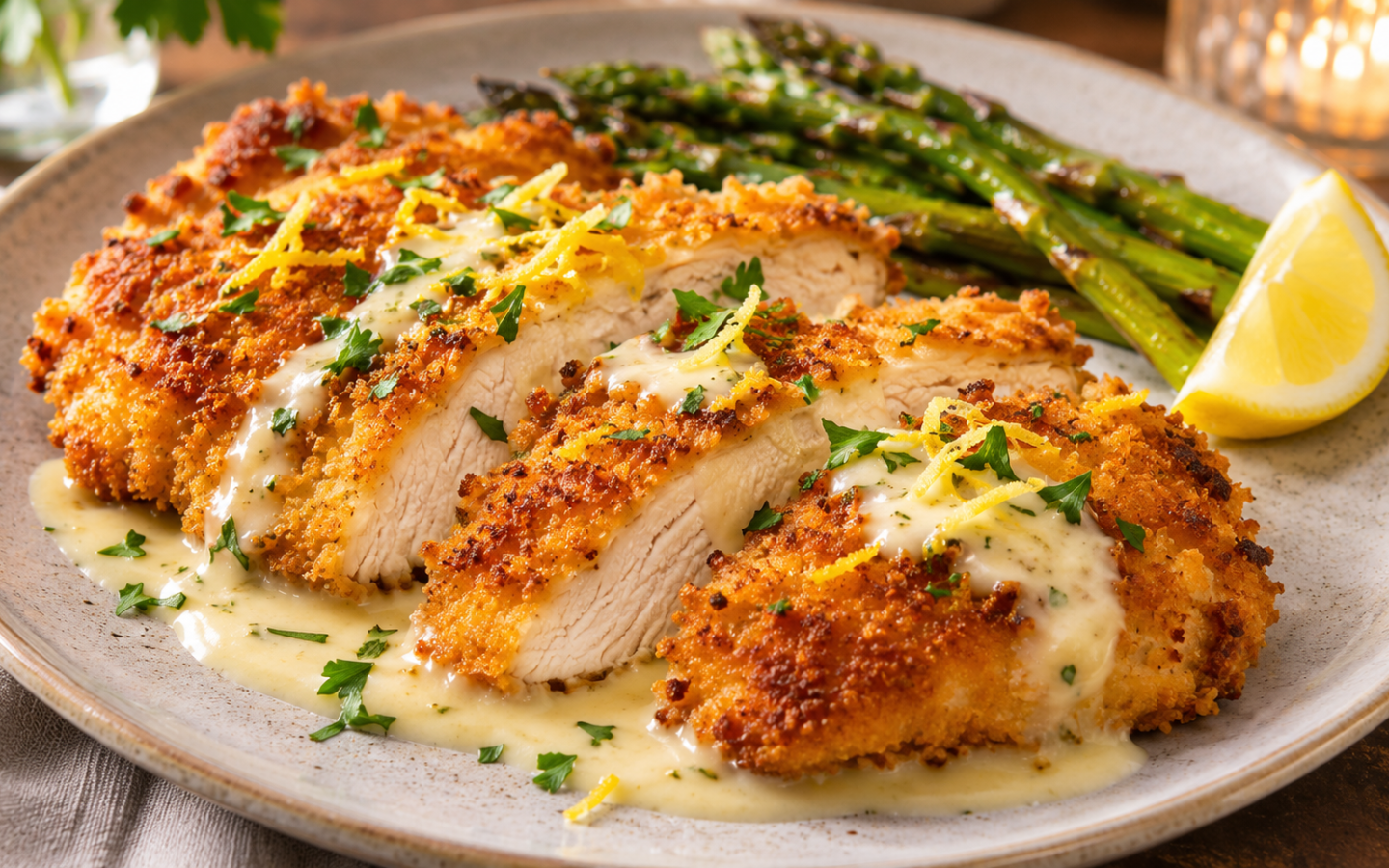
creamy lemon breaded chicken combines two textures that are often mishandled together: a truly crisp cutlet and a silky sauce. The solution is to cook thin, evenly pounded chicken, control the skillet heat, build the lemon cream separately, and spoon the sauce beneath or beside the cutlets instead of soaking their crust.
This method uses a flour–egg–panko breading, shallow frying, and an instant-read thermometer for juicy results. Lemon zest supplies fragrance, juice supplies acidity, broth gives the sauce body without excessive cream, and gentle reduction prevents separation.
creamy lemon breaded chicken: recipe overview
| Prep time | 30 minutes |
|---|---|
| Cook time | 25 minutes |
| Total time | 55 minutes |
| Yield | 4 servings |
| Safe chicken temperature | 165°F / 74°C |
| Difficulty | Intermediate |
This overview is a planning guide rather than a cue to rush. Read the full method once, prepare every component, and use the visual and texture checks in the instructions. Ovens, pans, produce, and portion sizes vary, so reliable cooking depends on observing the food as well as watching the clock.
Why this recipe works
- Cutlets of even thickness finish at the same time, preventing dry edges and raw centers.
- Resting the breaded chicken before frying helps the coating hydrate and attach.
- Panko and Parmesan form a rugged crust that stays crisp longer than fine crumbs alone.
- The sauce is reduced before the cream and lemon enter, limiting curdling and keeping citrus fresh.
The formula is deliberately specific about moisture, heat, and sequencing. Those three variables decide whether the finished dish has contrast and balance or simply tastes flat. Nothing here is included only for decoration: each ingredient and each pause in the method has a practical job.
Ingredients and what each one does
Measure the ingredients before starting. When a weight is supplied, it is the most repeatable option; cup measures remain useful for cooks without a scale. Read labels if an allergy or dietary restriction matters, because prepared sauces, broths, breadcrumbs, and cultured products can vary by brand.
- 2 large chicken breasts, about 1 1/2 pounds: Slice into four cutlets and pound to an even 1/2-inch thickness.
- 1/2 cup flour seasoned with salt, pepper, and garlic powder: The dry first layer gives egg something to grip.
- 2 large eggs plus 1 tablespoon water: Beat until no streaks remain for an even adhesive layer.
- 1 1/2 cups panko and 1/3 cup finely grated Parmesan: This combination creates crunch and savory depth.
- 1/3 cup neutral oil: Use enough for shallow frying and add more between batches only if needed.
- 1 small shallot and 1 garlic clove: Minced aromatics give the sauce depth without dominating lemon.
- 3/4 cup low-sodium chicken broth and 2/3 cup heavy cream: Broth lightens the sauce; cream smooths its acidity.
- 1 teaspoon lemon zest and 2 tablespoons fresh lemon juice: Zest and juice enter at different times for aroma and balance.
- 1 tablespoon butter and 2 tablespoons parsley: Butter rounds the finished sauce; parsley adds freshness.
Ingredient selection and preparation
Create uniform cutlets
Place a hand flat on each breast and slice horizontally, then pound between parchment with the smooth side of a mallet. Work from the thick center outward. Uniformity is more important than extreme thinness; torn meat loses juice and accepts breading unevenly.
Use fresh lemon strategically
Zest the yellow surface before juicing and avoid bitter white pith. Bottled juice tastes flatter and can be harsher. Add zest while the sauce simmers, but add most juice after lowering heat so the aroma remains bright.
Organize the breading station
Arrange flour, egg, and panko in that order, with a clean tray at the end. Use one hand for dry ingredients and one for egg to reduce clumps. Season each layer lightly rather than trying to correct an unseasoned interior with salty sauce.
Complete the cutting, draining, cooling, or tempering described above before heat is involved. This small mise-en-place habit prevents overcooking while another ingredient is still being prepared and makes the final seasoning easier to judge.
How to make creamy lemon breaded chicken
-
Prepare and season chicken
Slice and pound four cutlets to 1/2 inch. Pat dry and season both sides with salt and pepper. Let stand 10 minutes while preparing the breading, but do not leave raw poultry at room temperature for extended periods.
-
Bread in three stages
Coat each cutlet in seasoned flour and tap away excess. Dip completely in beaten egg, allowing drips to fall, then press into panko-Parmesan crumbs. Set on a rack and rest 10 minutes so flour and egg hydrate into a stronger bond.
-
Shallow-fry in batches
Heat oil in a large skillet over medium until a breadcrumb sizzles steadily without burning. Add two cutlets with space between. Cook about 3 to 4 minutes per side until golden and the center reaches 165°F / 74°C. Adjust heat whenever crumbs darken faster than the chicken cooks.
-
Drain without steaming
Move cooked cutlets to a wire rack over a tray, not a flat paper-lined plate. Air circulation protects the underside. Hold in a 225°F / 110°C oven while frying the second batch, but keep holding time short to avoid drying.
-
Start the pan sauce
Carefully pour off used oil and wipe out burnt crumbs, leaving a teaspoon of clean fond if it is golden rather than black. Melt butter, cook shallot 2 minutes, add garlic for 30 seconds, then pour in broth while scraping flavorful browned bits.
-
Reduce and add cream
Simmer broth until reduced by roughly one-third. Lower heat, stir in cream and lemon zest, and simmer gently until the sauce lightly coats a spoon. Do not hard-boil. If it becomes too thick, loosen with broth one tablespoon at a time.
-
Finish with lemon and serve
Remove from direct high heat and stir in 1 tablespoon lemon juice. Taste, then add the second tablespoon only if balance needs it. Season with salt and pepper. Spoon sauce onto plates, set cutlets partly over it, and garnish with parsley and a little zest.
Technique notes for dependable results
Manage oil temperature
A thermometer near 350°F / 175°C is useful, but visual cues work: crumbs should bubble immediately and brown gradually. Pale greasy coating means oil is too cool; rapid dark spots mean it is too hot. Let the pan recover between batches.
Protect coating adhesion
Dry chicken, shake off loose flour, drain egg, press crumbs, and rest before frying. Turn only when the first side is firm and brown. Tongs should grip gently at an edge rather than tearing the center.
Prevent sauce curdling
Reduce acidic liquids before cream, use heavy cream rather than low-fat milk, and keep the final simmer gentle. Adding lemon juice away from fierce heat minimizes separation. A slightly broken sauce can sometimes be restored by whisking in a tablespoon of cool cream.
Keep crisp and creamy distinct
Sauce belongs under or beside the chicken. If it is poured across the whole top several minutes before eating, steam and liquid soften the crumbs. Slice only at service so fewer cut surfaces lose moisture.
Deglaze only good fond
After frying, the skillet may contain golden deposits and loose black crumbs. Golden fond tastes roasted and can enrich broth; black particles are bitter. Pour off oil safely, wipe away burned crumbs with a folded paper towel held by tongs after the pan has cooled slightly, then return it to medium heat. This cleanup prevents a pale lemon sauce from becoming speckled and harsh.
Season in layers without oversalting
Salt chicken lightly before breading, season the flour, and remember that Parmesan and broth contribute sodium. Reduced sauce tastes saltier than it did at the start. Make the final salt decision only after cream and lemon are incorporated, tasting sauce together with a bite of chicken rather than evaluating each component alone.
Coordinate batches and sauce timing
Complete all cutlets before building the sauce, but keep their oven hold brief. Have shallot, garlic, broth, cream, zest, and juice measured before frying. The sauce then takes only several minutes and the chicken reaches the table hot. Trying to whisk cream sauce while an unattended cutlet fries is unsafe and likely to damage one component.
Common mistakes and how to fix them
Breading falls off
The chicken was wet, flour was heavy, or the cutlet was moved too soon. Follow the thin three-stage coating and rest it. Avoid repeatedly flipping.
Chicken browns before cooking through
Cutlets are too thick or heat is excessive. Lower heat and finish in a 350°F oven until 165°F. Next time pound evenly.
Pale oily crust
Oil temperature dropped from crowding or insufficient preheating. Fry fewer pieces, wait between batches, and drain on a rack.
Harsh or sour sauce
Too much juice was added before tasting. Whisk in a little cream or broth and a small pinch of salt. Do not neutralize with a large amount of sugar; the sauce should be savory.
Variations and substitutions
Baked cutlets
Mist breaded cutlets with oil and bake on a rack at 425°F / 220°C until crisp and 165°F, roughly 15 to 20 minutes depending on thickness. They will be lighter but less evenly browned than fried.
Gluten-free
Use a reliable gluten-free flour blend and gluten-free panko, and verify broth and Parmesan handling. Technique remains the same.
Caper lemon sauce
Add 1 tablespoon rinsed capers with the broth. Their briny flavor is strong, so delay final salt until after reduction.
Chicken thighs
Boneless skinless thighs can be pounded and breaded. They may need a little longer and have a richer flavor; always verify temperature rather than relying only on color.
Treat every variation as a controlled change. Keep the central ratio and method intact the first time, then adjust one variable on the next batch. That approach makes it clear which change improved the dish and prevents several substitutions from altering texture in unpredictable ways.
Serving ideas
Serve with roasted asparagus, green beans, broccoli, or a sharp leafy salad. Mashed potatoes, rice, or buttered noodles catch extra sauce. Keep sauce in a small pitcher for anyone who wants more without compromising every cutlet.
Acidic salad dressing should be restrained because the sauce already contains lemon. A simple vegetable with olive oil and herbs provides contrast. For a special meal, add roasted baby potatoes and keep the plate portions moderate.
Make-ahead, storage, and reheating
Refrigerate chicken and sauce separately in airtight containers for up to 3 days. Separation is essential for texture. Freeze cooked cutlets without sauce for up to 2 months; cream sauce may separate after freezing and is best made fresh.
Reheat cutlets on a rack in a 375°F / 190°C oven for 10 to 15 minutes until 165°F. Warm sauce over low heat, whisking and adding broth if needed; do not boil. Microwave reheating softens breading.
Food safety and allergen notes
The recipe contains poultry, wheat, egg, milk, and possibly allergens in broth. Use separate boards and utensils for raw chicken, wash hands, sanitize contact surfaces, and confirm 165°F / 74°C at the thickest point. Do not rinse raw poultry.
Nutrition values are estimates calculated from typical ingredients and the stated yield. They are not medical advice and will change with brands, substitutions, trimming, and actual portion size.
Frequently asked questions
Can I bread the chicken ahead?
Bread up to 4 hours ahead and refrigerate uncovered on a rack. Longer storage can make crumbs damp. Take the tray out only while oil heats, and keep raw poultry separated from ready-to-eat foods.
Why is my lemon cream sauce grainy?
Excess heat, low-fat dairy, or adding acid too quickly can cause separation. Use heavy cream, reduce heat, and stir lemon in gradually. Finely grated Parmesan should stay in the breading, not be boiled into this sauce.
Can I use milk instead of cream?
Milk curdles more easily and produces a thin sauce. For a lighter version, thicken broth with a small roux before adding a modest amount of half-and-half, then introduce lemon off heat.
How do I know the chicken is done?
Insert an instant-read thermometer horizontally into the thickest part without touching the pan. It must reach 165°F / 74°C. Thin cutlets cook quickly, so check early to preserve juiciness.
Can I reuse the frying oil?
This small amount contains breading crumbs and poultry residue. For best flavor and simple safety, cool it fully and dispose of it according to local rules; never pour oil down a drain.
What if I want sauce over the chicken?
Serve immediately after spooning a narrow ribbon over the center, leaving most crust exposed. Better yet, provide extra sauce at the table so each bite can be dipped.
Final cooking note
The dish succeeds when each component keeps its identity: juicy chicken, a dry audible crust, and a bright sauce that is creamy rather than heavy. Even thickness, controlled oil, a rack, gentle sauce heat, and last-minute plating are the practical decisions that make creamy lemon breaded chicken reliable.