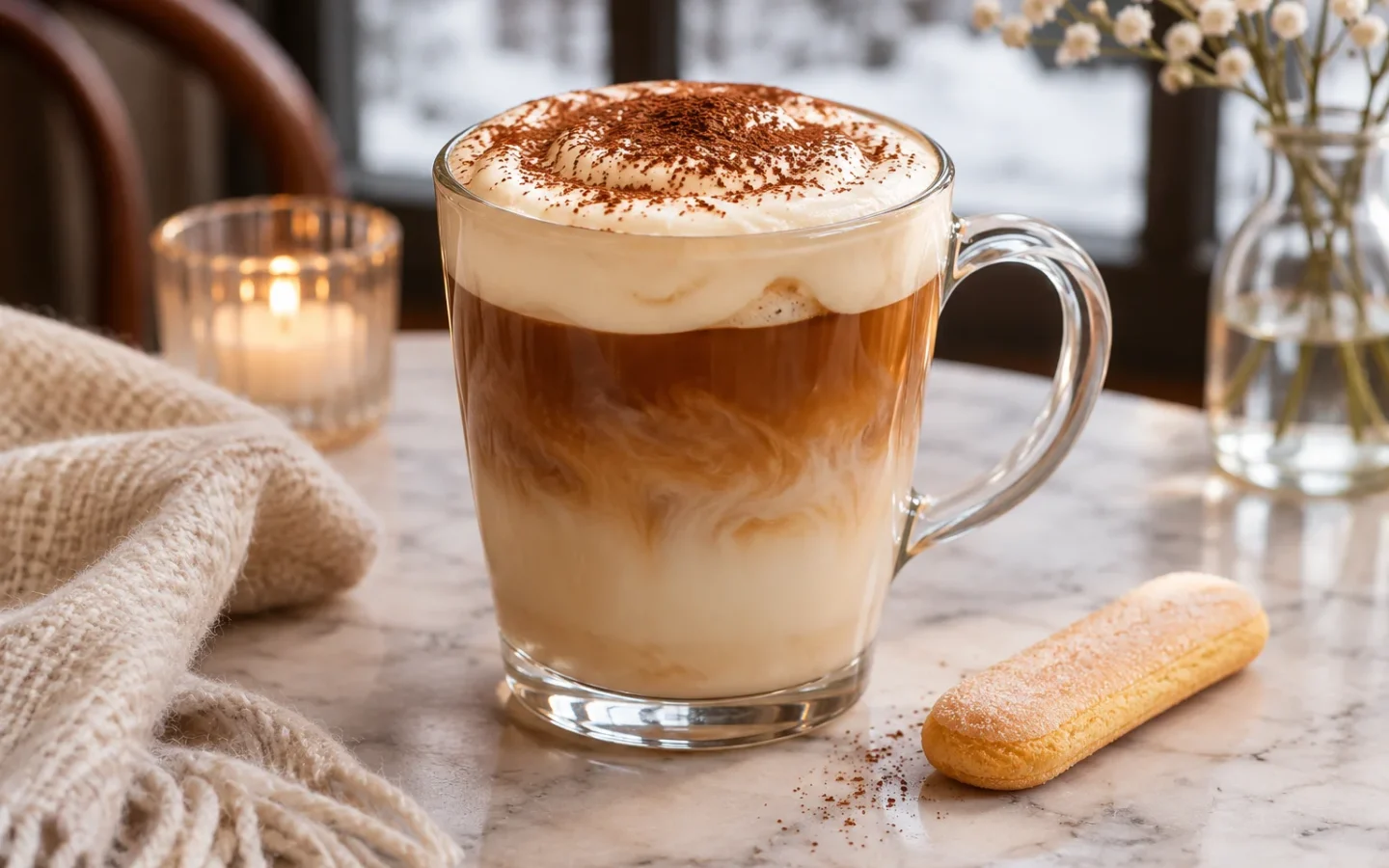
A balanced homemade tiramisu velvet latte with espresso, lightly sweet cocoa-vanilla syrup, steamed milk, and a pourable mascarpone cold foam.
Introduction
Tiramisu velvet latte is a dessert-inspired coffee built from espresso, cocoa, vanilla, dairy, and a soft mascarpone topping. Tiramisu-flavored lattes and cold brews entered major holiday menus in November 2026, turning the familiar Italian dessert profile into one of the season’s most visible drinks. A home version can preserve the appealing contrast without becoming a cup of melted frosting.
This recipe separates the drink into three controlled components. A quick cocoa-vanilla syrup provides sweetness and chocolate without sediment. Espresso supplies the bitter backbone. Mascarpone cold foam adds the dairy richness associated with tiramisu, but it is loosened with cream and milk until pourable. Keeping those parts separate makes it easy to adjust sweetness, coffee strength, and topping volume independently.
Traditional tiramisu often includes eggs, alcohol, coffee-soaked ladyfingers, and a mascarpone cream. This latte is inspired by those flavors rather than presented as the dessert itself: it contains no raw egg and no alcohol. A ladyfinger is an optional side garnish, not a structural ingredient. Instructions cover hot and iced assembly, foam troubleshooting, decaffeinated espresso, and a dairy-free alternative that stays honest about its different flavor.
Time
| Stage | Duration |
|---|---|
| Preparation time | 15 minutes |
| Cooking time | 8 minutes |
| Syrup cooling time | 15 minutes |
| Total time | 38 minutes |
The syrup takes about eight minutes to cook and 15 minutes to cool. Once it is ready, two hot lattes can be assembled in roughly seven minutes. For iced drinks, chill the syrup completely and cool espresso for a few minutes so it does not melt the ice immediately. Mascarpone foam should be made immediately before serving; after 20 to 30 minutes it begins losing its smooth, pourable structure.
Needed equipment
| Tool | Why it helps |
|---|---|
| Espresso machine, moka pot, or strong-coffee brewer | Produces the concentrated coffee needed to balance milk and mascarpone. |
| Small saucepan | Cooks a smooth cocoa syrup without scorching. |
| Fine whisk | Disperses cocoa before sugar syrup thickens. |
| Handheld milk frother or French press | Creates pourable mascarpone foam and steamed-milk texture. |
| Digital scale or jigger | Controls syrup and espresso ratios precisely. |
| Two 10-to-12-ounce heatproof glasses | Leaves space for the foam layer without overflow. |
Tags
Tiramisu Latte, Mascarpone Cold Foam, Espresso Drinks, Holiday Coffee, Café Recipes.
These tags describe the technique, central ingredients, and serving context. They are navigation aids, not guarantees for medical dietary needs; packaged products must still be checked individually.
Serving Size
This recipe yields 2 lattes. Scale ingredients by weight where possible, and remember that pan area, batch size, chilling capacity, and cooking time may need to change when doubling the recipe.
Difficulty Level
Easy. The detailed method identifies the moments that require attention so a first-time cook can understand both the action and the intended result.
Allergen Information
Milk; possible soy or nut cross-contact in chocolate, cocoa, and milk alternatives; ladyfinger garnish may contain wheat and egg Ingredient formulas and cross-contact warnings vary by country and manufacturer. For a serious allergy, read every current label, use clean equipment, and avoid substitutions with uncertain production histories.
Dietary Preference
Vegetarian; gluten-free without a ladyfinger garnish when every packaged ingredient is verified; dairy-free adaptation included
Course
Drink.
Cuisine
Italian dessert-inspired café drink. This label describes the recipe’s culinary frame and inspiration without claiming that a modern adaptation represents every regional or traditional version.
Ingredients
| Ingredient | Amount | Selection and purpose |
|---|---|---|
| Water | 80 ml / 1/3 cup | Base for the cocoa-vanilla syrup. |
| Granulated sugar | 70 g / 1/3 cup | Creates a light syrup rather than a thick dessert sauce. |
| Unsweetened cocoa powder | 12 g / 2 tbsp | Dutch-process gives a rounded dark flavor; sift if lumpy. |
| Pure vanilla extract | 1 1/2 tsp | Add after heating to preserve aroma. |
| Fine sea salt | 1 pinch | Sharpens coffee and cocoa. |
| Fresh espresso | 4 shots / about 120 ml | Two shots per latte provide enough bitterness. |
| Whole milk | 360 ml / 1 1/2 cups | Steam for the latte body; alternatives are discussed below. |
| Mascarpone | 60 g / 2 oz | Bring only to cool room temperature so it blends without becoming oily. |
| Heavy cream | 80 ml / 1/3 cup | Cold cream supports a stable but pourable foam. |
| Milk for foam | 40 ml / 2 tbsp plus 2 tsp | Loosens mascarpone and prevents a frosting-like cap. |
| Confectioners’ sugar | 15 g / 2 tbsp | A small amount sweetens and stabilizes the foam. |
| Cocoa powder for dusting | 1/2 tsp | Use a very light veil to avoid a dry first sip. |
| Ladyfingers | 2, optional | Serve beside the glass; omit for gluten-free service. |
Measuring and substitution strategy
Read the entire table before shopping. The notes explain function as well as quantity, which matters when making substitutions. Replace like with like: preserve fat with fat, acidity with acidity, and structural dry ingredients with tested equivalents. Spoon measures are level US measures. When both mass and volume appear, use mass for the most repeatable result.
Prepare and measure every ingredient before heat begins. This keeps fast steps from stalling and prevents accidental double additions. If an ingredient has a variable intensity—such as chile paste, miso, coffee concentrate, or flavored liqueur—taste it alone and begin at the lower end of the suggested adjustment.
Instructions
-
1. Make a lump-free cocoa paste
Whisk cocoa with two tablespoons of the measured water in a small saucepan until smooth. Adding all the water at once lets dry cocoa float and clump. Once the paste is glossy, whisk in the remaining water, sugar, and salt.
-
2. Cook the syrup briefly
Bring the mixture to a gentle simmer over medium-low heat, whisking continuously. Cook two to three minutes until sugar dissolves and the syrup lightly coats the whisk. Do not reduce it to fudge consistency; it must dissolve instantly in espresso and remain fluid after refrigeration.
-
3. Cool and add vanilla
Remove from heat, wait two minutes, and stir in vanilla. Transfer to a clean heatproof jar and cool until warm or fully cold for iced service. Taste a cooled drop: cocoa should be distinct, sweetness moderate, and salt invisible but supportive.
-
4. Smooth the mascarpone base
In a narrow cold vessel, whisk mascarpone and confectioners’ sugar until no dense lumps remain. Add milk a teaspoon at a time to create a smooth cream, then add cold heavy cream. Starting with mascarpone alone prevents small cheese lumps from circulating in an otherwise foamy mixture.
-
5. Froth to velvet texture
Use a handheld frother for 20 to 30 seconds, keeping the head just below the surface. Stop when the foam expands slightly and falls in a broad ribbon. It should be looser than whipped cream. If it forms stiff peaks, fold in cold milk one teaspoon at a time.
-
6. Pull the espresso
Brew two shots per serving directly before assembly. If using a moka pot, measure 60 ml strong coffee per glass. Taste the coffee unsweetened; stale or burned espresso will remain obvious beneath dairy, and extra syrup cannot restore missing aroma.
-
7. Season the coffee layer
Stir one tablespoon cocoa syrup into each double espresso. Add another teaspoon only after tasting. The mixture should taste slightly intense because milk will soften both bitterness and sweetness. Keeping syrup in the espresso ensures complete dissolution.
-
8. Steam the milk
Heat whole milk to roughly 140°F to 150°F / 60°C to 65°C and texture until glossy with fine bubbles. Avoid boiling, which dulls sweetness and creates a cooked flavor. Without a steam wand, warm the milk gently and froth in a French press.
-
9. Assemble without losing contrast
Divide sweetened espresso between glasses, then pour in steamed milk while holding back thick surface foam. Spoon or pour a 1/2-inch mascarpone layer over each drink. Dust through a fine sieve with the smallest practical amount of cocoa.
-
10. Serve and adjust
Serve immediately with an optional ladyfinger on the side rather than submerged. Sip through the foam first, then gently fold it into the drink. If too sweet, add espresso or hot milk; if too bitter, add syrup by the teaspoon instead of increasing the heavy topping.
Preparation Tips
- Use fresh mascarpone without separated liquid. Stirring an oily, broken container cannot produce a truly smooth foam.
- Keep the foam ingredients cold while allowing mascarpone just enough time to soften for lump-free mixing.
- Steam milk below boiling. Fine microfoam tastes sweeter and integrates better than large dry bubbles.
- Dust cocoa lightly through a sieve; a thick layer becomes dry and bitter on the lips.
- For iced service, combine espresso and syrup, cool briefly, pour over ice and cold milk, then add fresh foam.
Organization is part of the technique. Clear the work surface, keep ingredients that are ready to eat away from raw eggs or other raw proteins, and set a timer as a reminder rather than as the only doneness test. Appearance, aroma, texture, and temperature provide the final evidence.
Nutritional Information
Values are estimated per serving from the listed ingredients. Brands, absorbed oil, trimming, dilution, optional garnishes, and actual portion size change the result. This table is general information, not medical advice.
| Nutrient | Estimated amount per serving |
|---|---|
| Calories | 390 calories |
| Protein | 9 g |
| Carbohydrates | 39 g |
| Total fat | 23 g |
| Saturated fat | 15 g |
| Sodium | 125 mg |
| Dietary fiber | 2 g |
| Sugars | 34 g |
| Caffeine | Approximately 125 mg |
For a medically prescribed diet, calculate with the exact products you use or consult a qualified clinician or registered dietitian. Sodium, sugar, caffeine, and alcohol are especially sensitive to brand and serving decisions.
Tips and Tricks
- Paste cocoa first: A small amount of water turns powder into a smooth base before the full syrup is diluted.
- Sweeten espresso, not milk: Syrup dissolves fully in hot concentrated coffee and keeps the larger milk portion flexible.
- Stop at ribbons: Mascarpone foam should pour; whipping to stiff peaks creates dessert topping that blocks the sip.
- Build temperature contrast carefully: Hot latte with cool foam is pleasant, but ice-cold mascarpone should not be dropped in a dense lump onto delicate glass.
Add-ons
Choose one variation at a time so the core balance remains clear.
- Iced version: Pour cooled sweetened espresso over a full glass of ice and 150 ml cold milk, then float fresh mascarpone foam.
- Decaffeinated version: Use fresh decaf espresso at the same ratio; the dessert profile remains intact with substantially less caffeine.
- Dairy-free version: Replace milk with barista oat milk and make foam from a dairy-free cream-cheese alternative plus oat cream; flavor and stability vary by brand.
- Orange accent: Express a narrow orange peel over the finished drink and remove it; citrus brightens cocoa without adding more sugar.
Side dishes
Pair the recipe with contrast rather than more of the same dominant flavor.
- Plain ladyfinger: One crisp cookie recalls tiramisu without turning the drink into a soaked dessert.
- Fresh strawberries: Acidic fruit contrasts with mascarpone and cocoa.
- Toasted hazelnuts: A small unsweetened portion supports coffee and chocolate; disclose the nut allergen.
- Simple egg breakfast: For morning service, savory eggs balance the latte’s dessert-like profile.
Improvements
Use the finished result as evidence. Diagnose the specific issue before changing the next batch, and change one major variable at a time.
- The foam is lumpy: Mascarpone was too cold or liquid was added too quickly. Smooth the cheese first, then loosen gradually.
- The foam is stiff: It was overwhipped or too rich. Fold in cold milk one teaspoon at a time until it pours in ribbons.
- The latte tastes like hot chocolate: Reduce cocoa syrup and strengthen the espresso. Coffee must remain the central flavor.
- Cocoa sinks in gritty clumps: Make a paste before simmering and whisk continuously. Dusting cocoa belongs only on the surface at service.
Save and store
Refrigerate cocoa-vanilla syrup in a clean airtight jar for up to one week and stir before use. The unfrothed mascarpone mixture can be kept refrigerated for one day, but its best texture comes from same-day preparation. Do not store an assembled hot latte: milk foam collapses and coffee loses aroma. For an iced drink, keep espresso mixture, milk, foam, and ice separate until service. Discard dairy left at room temperature for more than two hours. Freeze neither mascarpone foam nor the finished latte because thawing causes separation.
Label stored components with the date and use clean, shallow containers where rapid cooling is needed. When handling history, time, temperature, or odor is uncertain, discard the food rather than relying on reheating to make it safe.
FAQ
Does this latte contain raw egg?
No. The recipe takes flavor inspiration from tiramisu but uses no egg. Mascarpone, cream, coffee, cocoa, and vanilla create the profile safely and simply.
Does it contain alcohol?
No. Traditional tiramisu may include Marsala, rum, or coffee liqueur, but this beverage is alcohol-free as written.
Can I make it without an espresso machine?
Yes. Use 60 ml strong moka-pot coffee per serving or a concentrated AeroPress brew. Ordinary drip coffee may become weak when milk and foam are added.
Can I use cream cheese instead of mascarpone?
Use full-fat cream cheese softened completely and add an extra teaspoon of milk. It will taste tangier and less delicate but can still form a smooth foam.
How do I reduce the sweetness?
Use one to two teaspoons syrup per serving and leave the foam unsweetened or use only one teaspoon confectioners’ sugar. Keep cocoa and espresso strength unchanged.
Can children drink it?
The standard version contains espresso caffeine. Use decaffeinated espresso and consider a smaller portion; caregivers should follow appropriate medical guidance for individual children.
Conclusion
A tiramisu velvet latte works when espresso remains visible beneath the dessert cues. Smooth cocoa syrup, properly textured milk, and a restrained mascarpone foam create layers that can be tasted separately or folded together. Avoid raw egg, excessive cocoa, stiff topping, and unnecessary sweetness. With the syrup prepared ahead, the drink becomes a quick seasonal café recipe that honors tiramisu’s coffee, cocoa, vanilla, and mascarpone profile without pretending to be the original dessert.
References
References support trend, safety, or ingredient context. The recipe proportions, editorial explanations, troubleshooting, and serving guidance are original to Love With Recipes.