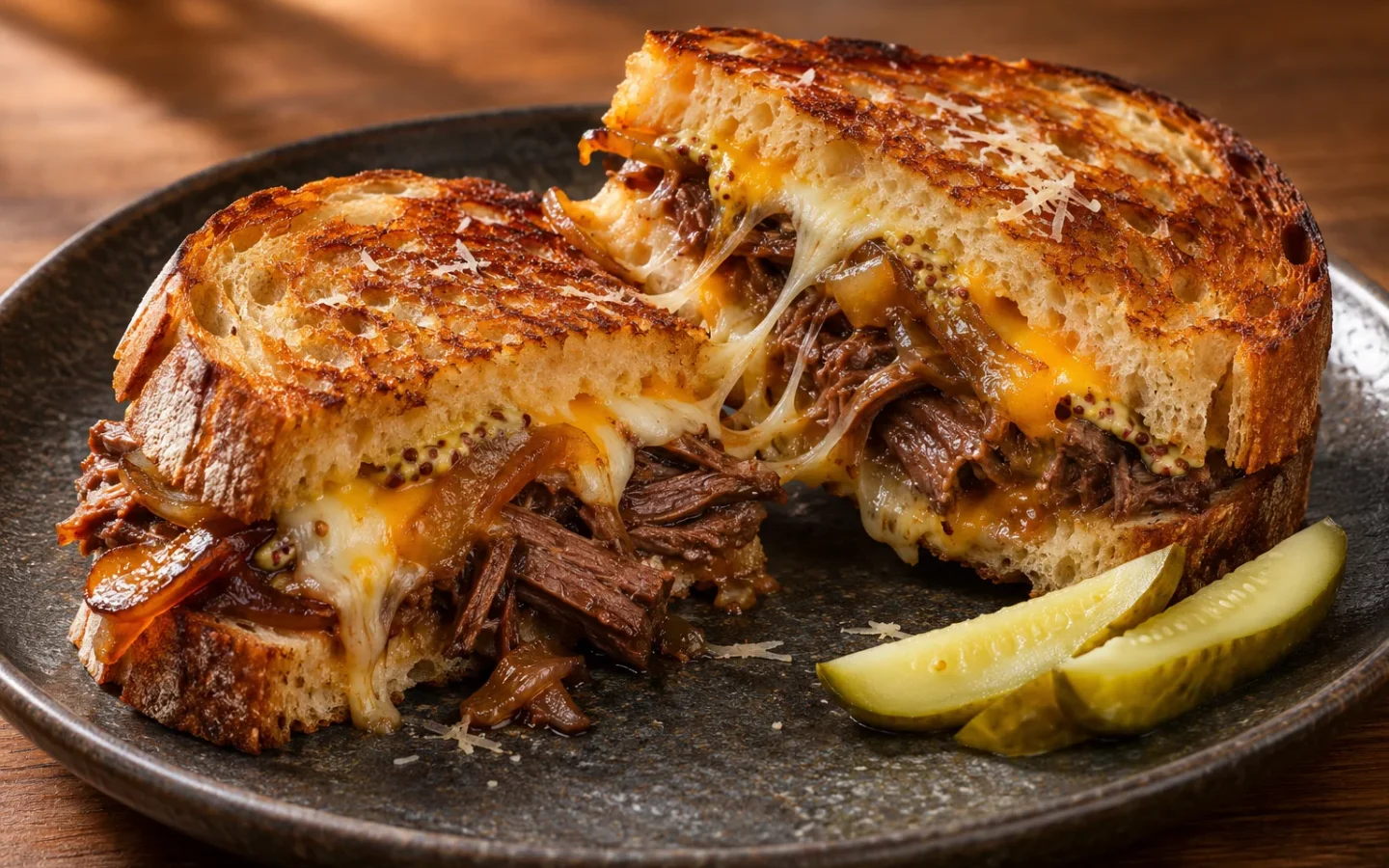
A crisp sourdough grilled cheese filled with properly braised short rib, caramelized onion jam, Dijon, and a balanced blend of cheddar, mozzarella, and Parmesan.
Introduction
Short rib grilled cheese became one of November 2026’s most discussed café sandwiches, generating millions of search-linked social views and an unusually large wave of taste tests. The concept is persuasive even without a branded menu: deeply braised beef, sharp cheese, sweet onions, mustard, and crisp sourdough bring several familiar comfort foods into one compact meal. A homemade version can improve the ratio by giving every bite enough meat without sacrificing the cheese structure that defines grilled cheese.
The sandwich has two separate cooking problems. Short ribs need slow, moist heat to convert connective tissue into gelatin, while bread and cheese need moderate direct heat to brown before the filling dries out. Solving them in one session is inefficient. This method braises the beef first, chills or rests it briefly, reduces the liquid into a glaze, and then assembles sandwiches with a controlled amount of filling. The beef stays succulent and the bread remains crisp.
Three cheeses have distinct jobs: cheddar supplies flavor, low-moisture mozzarella provides melt, and Parmesan seasons the exterior-facing layers. Caramelized onion jam contributes sweetness and acidity, while Dijon prevents the sandwich from tasting uniformly rich. The instructions include both wine and alcohol-free braising options, a safe internal temperature target, make-ahead guidance, and a plan for using extra beef without building an overloaded sandwich.
Time
| Stage | Duration |
|---|---|
| Preparation time | 30 minutes |
| Cooking time | 210 minutes |
| Resting and shredding time | 20 minutes |
| Total time | 260 minutes |
Allow roughly four hours from preparation to service, although only about 45 minutes are active. Short ribs generally braise for 2 1/2 to 3 hours, then rest for 20 minutes before shredding. The onion jam can cook during the braise. Assemble and griddle the sandwiches only when the meat is warm rather than steaming; very hot filling melts cheese before the bread has time to crisp and releases condensation into the crumb.
Needed equipment
| Tool | Why it helps |
|---|---|
| Heavy Dutch oven with lid | Maintains steady low heat and leaves fond for a flavorful braising liquid. |
| Tongs and wooden spoon | Turn the ribs safely and scrape browned bits without damaging enamel. |
| Instant-read thermometer | Confirms tenderness range and safe reheating without cutting every rib. |
| Wide skillet or griddle | Holds two sandwiches while allowing controlled, even browning. |
| Small saucepan | Reduces braising liquid separately into a glossy beef coating. |
| Fish spatula or sandwich press | Applies gentle, even contact without crushing the bread. |
| Sheet pan and rack | Provides a clean place for seared meat and finished sandwiches. |
Tags
Short Rib, Grilled Cheese, Braised Beef, Sourdough Sandwich, Comfort Food.
These tags describe the technique, central ingredients, and serving context. They are navigation aids, not guarantees for medical dietary needs; packaged products must still be checked individually.
Serving Size
This recipe yields 4 sandwiches. Scale ingredients by weight where possible, and remember that pan area, batch size, chilling capacity, and cooking time may need to change when doubling the recipe.
Difficulty Level
Intermediate. The detailed method identifies the moments that require attention so a first-time cook can understand both the action and the intended result.
Allergen Information
Milk, wheat, and mustard; Worcestershire sauce may contain fish; verify broth and bread for additional allergens Ingredient formulas and cross-contact warnings vary by country and manufacturer. For a serious allergy, read every current label, use clean equipment, and avoid substitutions with uncertain production histories.
Dietary Preference
Omnivore; not vegetarian; can be made alcohol-free and fish-free with the substitutions described in the ingredient notes
Course
Lunch or main course.
Cuisine
Modern American café. This label describes the recipe’s culinary frame and inspiration without claiming that a modern adaptation represents every regional or traditional version.
Ingredients
| Ingredient | Amount | Selection and purpose |
|---|---|---|
| Bone-in English-cut beef short ribs | 1.5 kg / 3 1/4 lb | Choose meaty ribs with even thickness; bones enrich the braise. |
| Fine sea salt | 2 tsp, divided | Season meat lightly because cheese and reduced liquid add more salt. |
| Black pepper | 1 tsp | Freshly ground for beef and final seasoning. |
| Neutral oil | 1 tbsp | Use an oil suitable for searing. |
| Yellow onions | 3 medium / about 600 g | Two for onion jam and one for the braise. |
| Carrot | 1 medium | Adds body and restrained sweetness to the braising liquid. |
| Garlic | 4 cloves | Crush for the braise; avoid burning during searing. |
| Tomato paste | 2 tbsp | Cook until brick-red to remove raw acidity. |
| Dry red wine or extra beef broth | 250 ml / 1 cup | Wine adds acidity; broth creates a fully alcohol-free braise. |
| Low-sodium beef broth | 500 ml / 2 cups | Liquid should reach about halfway up the ribs, not submerge them. |
| Worcestershire sauce | 1 tbsp | Use a fish-free version when needed. |
| Fresh thyme | 6 sprigs | Tie together or count them so stems are easy to remove. |
| Bay leaf | 1 | Remove before shredding. |
| Brown sugar | 1 tbsp | Helps the onion jam balance mustard and beef. |
| Apple cider vinegar | 2 tbsp | Divided between onion jam and final meat glaze. |
| Sourdough bread | 8 slices, 1/2 inch thick | A close, sturdy crumb resists the moist filling. |
| Sharp cheddar | 160 g / 5 1/2 oz, grated | Primary flavor cheese. |
| Low-moisture mozzarella | 120 g / 4 oz, grated | Provides reliable melt without excess water. |
| Parmesan | 40 g / 1 1/2 oz, finely grated | Adds savory intensity; divide evenly. |
| Dijon mustard | 4 tsp | One teaspoon per sandwich is enough to cut richness. |
| Softened butter | 45 g / 3 tbsp | Spread thinly on bread exteriors for even browning. |
Measuring and substitution strategy
Read the entire table before shopping. The notes explain function as well as quantity, which matters when making substitutions. Replace like with like: preserve fat with fat, acidity with acidity, and structural dry ingredients with tested equivalents. Spoon measures are level US measures. When both mass and volume appear, use mass for the most repeatable result.
Prepare and measure every ingredient before heat begins. This keeps fast steps from stalling and prevents accidental double additions. If an ingredient has a variable intensity—such as chile paste, miso, coffee concentrate, or flavored liqueur—taste it alone and begin at the lower end of the suggested adjustment.
Instructions
-
1. Season and dry the ribs
Pat short ribs completely dry, season with 1 1/2 teaspoons salt and half the pepper, and let them stand while the oven heats to 325°F / 165°C. Dry surfaces brown; wet meat steams. Trim only large exterior caps of hard fat because internal marbling protects the beef during its long braise.
-
2. Sear in uncrowded batches
Heat oil in the Dutch oven over medium-high. Brown the ribs on every meaty side, working in batches so the pot recovers heat, about eight minutes per batch. Transfer to a rack. A dark brown crust builds depth, but black burned fond will make the finished glaze bitter.
-
3. Build the braising base
Lower heat to medium. Add one chopped onion and carrot with a pinch of salt, cooking until softened. Add garlic for one minute, then tomato paste and stir until brick-red. Pour in wine or 250 ml broth, scrape every browned bit, and simmer until the liquid reduces by roughly one-third.
-
4. Braise until yielding
Return ribs and their juices to the pot. Add remaining broth, Worcestershire, thyme, and bay. Liquid should reach halfway up the meat; add a little water if needed. Cover and braise in the oven for 2 1/2 to 3 hours, turning once, until a fork slides in easily and the meat approaches 200°F / 93°C.
-
5. Make the onion jam
Thinly slice the remaining two onions. Cook them in a wide skillet over medium-low heat with a tablespoon of butter and a pinch of salt for 30 to 40 minutes, stirring more often as they darken. Add brown sugar and one tablespoon vinegar, then cook until glossy, deep amber, and spoonable rather than wet.
-
6. Rest, strain, and shred
Move tender ribs to a board and rest 20 minutes. Strain the braising liquid, discard vegetables and herbs, and skim excess fat. Pull meat from bones, remove large fat pockets and connective pieces, and shred into bite-size strands. Do not pulverize it; varied pieces retain better texture inside the sandwich.
-
7. Reduce a controlled glaze
Simmer 250 ml strained braising liquid in a small saucepan until it coats a spoon. Stir in remaining vinegar, then toss only 400 g shredded beef with enough glaze to make it succulent without dripping. Taste and add the remaining salt or pepper only if needed. Reserve extra meat and liquid separately.
-
8. Layer for reliable melting
Spread Dijon on four bread slices. Divide half the cheddar, mozzarella, and Parmesan over them, followed by 100 g warm short rib and a spoonful of onion jam per sandwich. Add the remaining cheese and top bread. Cheese on both sides acts as an edible adhesive around the heavier filling.
-
9. Griddle low and slow
Spread a thin layer of butter on each exterior. Cook sandwiches in a preheated skillet over medium-low heat for three to five minutes per side, pressing lightly. Cover for 30 seconds if cheese needs help, then uncover so steam escapes. Adjust heat before the bread darkens faster than the center melts.
-
10. Rest and serve
Transfer sandwiches to a rack for two minutes, not directly to a flat plate where trapped steam softens the underside. Slice with a serrated knife and serve immediately. The filling should stay inside the bread, the cheese should stretch modestly, and the crust should remain audibly crisp.
Preparation Tips
- Braise short ribs one day ahead for easier fat removal; chill meat in a little strained liquid so it stays moist.
- Grate cheese from blocks. Pre-shredded coatings can slow melting and create a grainier interior.
- Keep the assembled filling near 100 g beef per sandwich. More meat makes a delicious beef sandwich but weakens the grilled-cheese structure.
- Use medium-low heat and patience. High heat browns bread before cold cheese and dense beef warm through.
- Strain and reduce the braising liquid rather than spooning watery pot liquid directly onto bread.
Organization is part of the technique. Clear the work surface, keep ingredients that are ready to eat away from raw eggs or other raw proteins, and set a timer as a reminder rather than as the only doneness test. Appearance, aroma, texture, and temperature provide the final evidence.
Nutritional Information
Values are estimated per serving from the listed ingredients. Brands, absorbed oil, trimming, dilution, optional garnishes, and actual portion size change the result. This table is general information, not medical advice.
| Nutrient | Estimated amount per serving |
|---|---|
| Calories | 860 calories |
| Protein | 49 g |
| Carbohydrates | 54 g |
| Total fat | 48 g |
| Saturated fat | 23 g |
| Sodium | 1380 mg |
| Dietary fiber | 4 g |
| Sugars | 12 g |
| Cholesterol | 165 mg |
For a medically prescribed diet, calculate with the exact products you use or consult a qualified clinician or registered dietitian. Sodium, sugar, caffeine, and alcohol are especially sensitive to brand and serving decisions.
Tips and Tricks
- Use cheese as a barrier: Placing cheese against both bread slices helps seal the moist beef and onion filling away from the crumb.
- Rest the beef before shredding: Brief resting keeps juices in the meat and makes fat and connective tissue easier to identify.
- Reduce, then dress: Concentrate the braising liquid separately and add only enough to glaze the shredded meat.
- Cool on a rack: Two minutes of airflow preserves the crust while the molten interior settles enough for clean slicing.
Add-ons
Choose one variation at a time so the core balance remains clear.
- Pickled jalapeños: Drain thoroughly and add a few slices for acidity and heat without introducing much liquid.
- Horseradish cream: Serve on the side rather than inside; its sharpness cuts richness while keeping bread dry.
- Mushroom supplement: Sauté chopped mushrooms until dry and combine with beef to stretch the filling and add earthy flavor.
- Smoked cheese: Replace no more than one-quarter of the cheddar with smoked cheddar so smoke does not overwhelm the braise.
Side dishes
Pair the recipe with contrast rather than more of the same dominant flavor.
- Dill pickles: Cold acidity and crunch provide the clearest contrast to beef and melted cheese.
- Simple arugula salad: Lemon-dressed peppery leaves lighten the plate without adding more starch.
- Tomato soup: Serve a modest cup for dipping; choose a bright, not cream-heavy version.
- Roasted Brussels sprouts: Their browned bitterness complements caramelized onions and short rib.
Improvements
Use the finished result as evidence. Diagnose the specific issue before changing the next batch, and change one major variable at a time.
- The beef is tough: It needs more braising time, not more aggressive heat. Return it to the covered pot and check every 20 minutes.
- The sandwich is soggy: The beef glaze or onion jam was too wet, the filling was steaming, or the sandwich rested on a flat plate.
- Bread burns before cheese melts: Lower heat, grate cheese finer, and let refrigerated filling lose its chill before assembly.
- The flavor is too heavy: Reduce the meat portion, increase Dijon slightly, and serve with a sharp pickle or acidic salad rather than adding more salt.
Save and store
Cool braised short rib and strained liquid promptly in shallow containers. Refrigerate separately for up to four days or freeze for up to three months. Onion jam keeps refrigerated for one week in a clean sealed jar. Assemble sandwiches only when ready to cook; stored assembled sandwiches become damp. Refrigerate leftover cooked sandwiches for up to two days and reheat in a dry skillet or 375°F / 190°C oven until the center is steaming hot. Avoid the microwave when crispness matters. Discard any beef left at room temperature for more than two hours.
Label stored components with the date and use clean, shallow containers where rapid cooling is needed. When handling history, time, temperature, or odor is uncertain, discard the food rather than relying on reheating to make it safe.
FAQ
Can I use boneless short ribs?
Yes. Boneless ribs cook slightly faster and produce a less gelatin-rich liquid. Begin checking after two hours and use weight rather than piece count when scaling.
Can I use leftover pot roast?
Yes, if it is tender and safely stored. Shred it, warm it with a reduced spoonful of its cooking liquid, and keep the same 100 g portion per sandwich.
How can I make the braise without wine?
Replace wine with an equal amount of low-sodium beef broth plus one tablespoon apple cider vinegar. The acidity will be different but still balances the rich meat.
Which bread works best?
A sturdy sourdough with a close crumb holds the filling and browns evenly. Very open artisan bread leaks cheese, while very thick slices can stay cold in the center.
Can I use only one cheese?
Sharp cheddar alone works, but the melt will be less elastic. Choose a good melting cheddar and grate it finely; avoid very aged, dry cheese as the sole option.
Why is my braising liquid greasy?
Short ribs release substantial fat. Let the strained liquid settle and spoon off the surface fat, or chill it until the fat solidifies for easy removal.
Conclusion
A successful short rib grilled cheese is not created by piling every rich ingredient as high as possible. The better approach is controlled abundance: fork-tender beef coated in reduced glaze, enough onion jam for sweetness, measured Dijon for acidity, and cheese placed where it can melt and protect the bread. Braise ahead, assemble thoughtfully, and griddle over moderate heat. The result captures the appeal of the current café trend while delivering a more generous, better-balanced sandwich at home.
References
- TokConnect: TikTok food trends, November 21, 2026
- USDA FSIS: Safe minimum internal temperature chart
References support trend, safety, or ingredient context. The recipe proportions, editorial explanations, troubleshooting, and serving guidance are original to Love With Recipes.