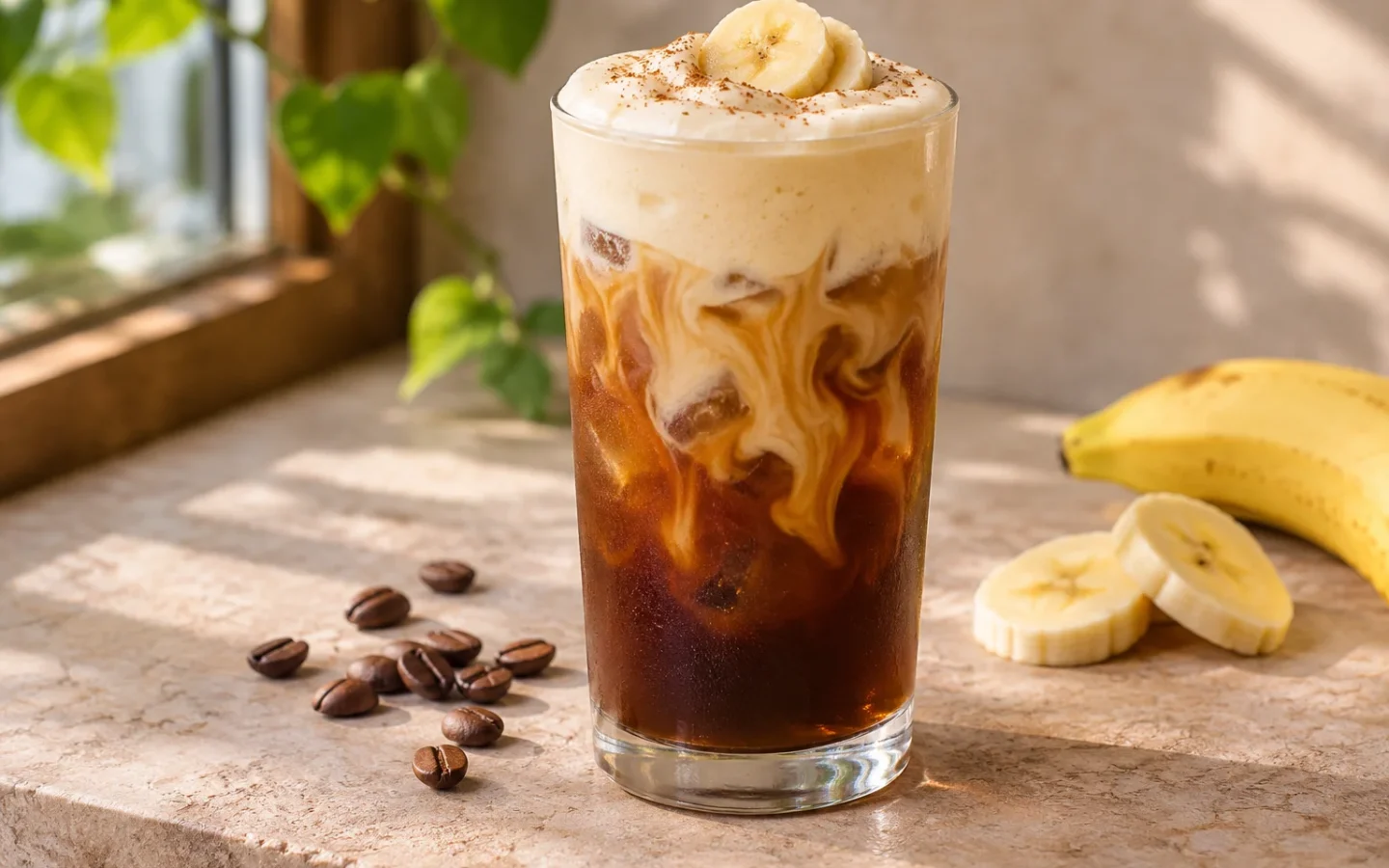
A balanced banana cream cold brew with concentrated coffee, gently sweet banana syrup, and a silky cold foam that tastes like banana bread rather than candy.
Introduction
Banana cream cold brew is the rare viral drink that can work as a serious coffee recipe. The idea is simple: bold, low-acid cold brew is poured over ice and capped with a banana-scented cream that slowly ribbons into the glass. The challenge is balance. Too much banana tastes artificial, too much cream hides the coffee, and a thin foam disappears before the first sip.
This version uses a quick syrup made from ripe banana, brown sugar, water, vanilla, cinnamon, and a small pinch of salt. Straining the syrup removes pulp that would otherwise block the fine bubbles in the foam. A measured spoonful flavors the cream, while another can sweeten the coffee independently. That separation lets each drinker control sweetness without weakening the structure of the topping.
Banana-flavored coffee and matcha reached unusually high search interest in 2026, but the method here is designed for repeat use after the trend passes. It relies on familiar ingredients, gives both ready-made and homemade cold-brew routes, and includes a dairy-free foam that behaves predictably. The final flavor should suggest toasted banana bread, chilled coffee, and soft vanilla—not a melted milkshake.
Time
| Stage | Duration |
|---|---|
| Preparation time | 20 minutes |
| Cooking time | 8 minutes |
| Cold brew steeping time | 240 minutes |
| Total time | 268 minutes |
The active work takes about 28 minutes. Homemade concentrate needs a four-hour rapid steep at minimum, although an eight-to-twelve-hour refrigerator steep gives a rounder result. The banana syrup must cool completely before it touches cream; warm syrup reduces foam volume and can make the topping look greasy. With purchased unsweetened cold-brew concentrate, the drink can be assembled in about five minutes once the syrup is chilled.
Needed equipment
| Tool | Why it helps |
|---|---|
| 1-quart jar or French press | For steeping concentrate; the lid limits refrigerator odors. |
| Fine-mesh strainer plus coffee filter | Removes sediment from coffee and banana solids from syrup. |
| Small saucepan | A light interior makes it easier to see the syrup simmer. |
| Milk frother, French press, or sealed jar | Creates cold foam without heating the cream. |
| Digital scale and measuring spoons | Keeps the coffee-to-water and syrup ratios repeatable. |
| Two 14-to-16-ounce glasses | Leaves enough headroom for ice and foam. |
Tags
Cold Brew, Iced Coffee, Banana Drinks, Coffee Recipes, Viral Drinks.
These tags describe the technique, central ingredients, and serving context. They are navigation aids, not guarantees for medical dietary needs; packaged products must still be checked individually.
Serving Size
This recipe yields 2 tall drinks. Scale ingredients by weight where possible, and remember that pan area, batch size, chilling capacity, and cooking time may need to change when doubling the recipe.
Difficulty Level
Easy. The detailed method identifies the moments that require attention so a first-time cook can understand both the action and the intended result.
Allergen Information
Milk if dairy cream is used; possible oat or nut cross-contact when using alternative milks Ingredient formulas and cross-contact warnings vary by country and manufacturer. For a serious allergy, read every current label, use clean equipment, and avoid substitutions with uncertain production histories.
Dietary Preference
Vegetarian; easy to make vegan and dairy-free; naturally gluten-free when every packaged ingredient is certified as needed
Course
Drink.
Cuisine
Modern café. This label describes the recipe’s culinary frame and inspiration without claiming that a modern adaptation represents every regional or traditional version.
Ingredients
| Ingredient | Amount | Selection and purpose |
|---|---|---|
| Coarsely ground coffee | 85 g / 3 oz | Use a medium-dark roast with chocolate or nut notes; fine grounds create muddy concentrate. |
| Cold filtered water | 680 ml / 2 3/4 cups | For the concentrate; mineral-heavy water can mute aroma. |
| Very ripe banana | 1 small, about 90 g peeled | Brown speckles indicate enough aroma and natural sweetness. |
| Light brown sugar | 50 g / 1/4 cup packed | Adds a subtle caramel note without making a heavy syrup. |
| Water for syrup | 80 ml / 1/3 cup | Enough to extract flavor and allow clean straining. |
| Vanilla extract | 1/2 tsp | Rounds the banana aroma; add after cooking. |
| Ground cinnamon | 1/8 tsp | Optional, but reinforces a banana-bread profile. |
| Fine sea salt | 1 small pinch | Sharpens both coffee and fruit flavors. |
| Heavy cream | 80 ml / 1/3 cup | Cold cream provides the most stable foam. |
| Whole milk | 60 ml / 1/4 cup | Lightens the cream so it pours and mingles. |
| Ice cubes | 2 generous cups | Large hard cubes dilute more slowly. |
| Cold water or milk for serving | 240 ml / 1 cup | Dilutes the concentrate to drinking strength. |
Measuring and substitution strategy
Read the entire table before shopping. The notes explain function as well as quantity, which matters when making substitutions. Replace like with like: preserve fat with fat, acidity with acidity, and structural dry ingredients with tested equivalents. Spoon measures are level US measures. When both mass and volume appear, use mass for the most repeatable result.
Prepare and measure every ingredient before heat begins. This keeps fast steps from stalling and prevents accidental double additions. If an ingredient has a variable intensity—such as chile paste, miso, coffee concentrate, or flavored liqueur—taste it alone and begin at the lower end of the suggested adjustment.
Instructions
-
1. Prepare the coffee concentrate
Combine the coarse coffee and 680 ml cold water in a clean jar. Stir slowly until every dry pocket is wet, cover, and refrigerate for eight to twelve hours. For a same-day version, steep four hours at room temperature. Do not shake the jar: agitation extracts more fine particles and can produce a rough, dusty finish.
-
2. Filter without pressing
Pour the steeped coffee through a fine strainer lined with a rinsed paper coffee filter. Let gravity do the work. Pressing the grounds forces bitter compounds and silt into the liquid. You should have roughly 480 to 520 ml of dark concentrate, enough for several drinks; chill it immediately.
-
3. Cook the banana syrup
Mash the banana with brown sugar and 80 ml water in a small saucepan. Bring it to a gentle simmer over medium-low heat and cook for five to six minutes, stirring and scraping the bottom. The banana should soften completely and the liquid should smell toasted, but the sugar must not caramelize into a dark, sticky mass.
-
4. Strain and season the syrup
Pass the hot mixture through a fine strainer into a heatproof cup. Press lightly enough to collect liquid but stop before thick pulp passes through. Stir in vanilla, cinnamon, and salt. Cool to room temperature, then refrigerate until cold. The finished syrup should pour like maple syrup rather than spoon like jam.
-
5. Build the banana cream base
Whisk 2 tablespoons of cold banana syrup with the cream and whole milk. Taste before adding more syrup. It should seem slightly sweeter than the final drink because cold coffee and ice will dilute the perception of sweetness. Keep the mixture below refrigerator temperature until the moment you froth it.
-
6. Froth to a pourable texture
Use a handheld frother for 20 to 35 seconds, moving it just below the surface to pull in air. Stop when the mixture has increased in volume and falls from a spoon in a thick ribbon. A French press also works: pump the plunger 20 to 30 times. Avoid stiff peaks; this is cold foam, not whipped cream.
-
7. Dilute the cold brew
For each serving, stir 120 ml concentrate with 120 ml cold water or milk. This one-to-one ratio is a starting point, because roast and steep time alter strength. Taste it before adding syrup. If it feels hollow, add coffee; if it is harsh or drying, add water in 30 ml increments.
-
8. Sweeten the coffee layer
Stir 1 to 2 teaspoons of banana syrup into each diluted coffee while the glass is still empty. Keeping the syrup out of the ice pockets produces even sweetness. For a less sweet drink, omit this addition and rely on the flavored foam alone.
-
9. Add ice and float the foam
Fill each glass about two-thirds with large ice cubes and pour in the coffee. Spoon or slowly pour banana cream over the back of a spoon so it forms a distinct pale layer. A few streaks should sink naturally; the contrast is part of the drink, and aggressive stirring would erase it.
-
10. Serve and adjust
Serve immediately with a straw or long spoon. Sip once through the foam and once after gently folding it into the coffee. If the banana dominates, add more diluted cold brew. If the coffee dominates, add one teaspoon of syrup rather than more cream, which preserves the refreshing texture.
Preparation Tips
- Use bananas that are fragrant and freckled but not fermented-smelling. Green banana gives starchiness without enough aroma.
- Rinse paper filters before use so no papery flavor transfers to the concentrate.
- Chill the glass, coffee, syrup, and dairy. Foam depends on cold fat and protein holding tiny air bubbles.
- Make coffee ice cubes from leftover diluted cold brew when you want a slower-melting drink.
- For oat foam, choose a barista-style oat milk and blend it with a spoonful of oat cream; standard oat beverage alone often foams briefly and collapses.
Organization is part of the technique. Clear the work surface, keep ingredients that are ready to eat away from raw eggs or other raw proteins, and set a timer as a reminder rather than as the only doneness test. Appearance, aroma, texture, and temperature provide the final evidence.
Nutritional Information
Values are estimated per serving from the listed ingredients. Brands, absorbed oil, trimming, dilution, optional garnishes, and actual portion size change the result. This table is general information, not medical advice.
| Nutrient | Estimated amount per serving |
|---|---|
| Calories | 235 calories |
| Protein | 3 g |
| Carbohydrates | 30 g |
| Total fat | 12 g |
| Saturated fat | 8 g |
| Sodium | 70 mg |
| Dietary fiber | 1 g |
| Sugars | 24 g |
| Caffeine | Approximately 140 mg |
For a medically prescribed diet, calculate with the exact products you use or consult a qualified clinician or registered dietitian. Sodium, sugar, caffeine, and alcohol are especially sensitive to brand and serving decisions.
Tips and Tricks
- Control intensity in two places: Adjust coffee strength with water and sweetness with syrup. Changing only one component makes troubleshooting much easier.
- Use the foam promptly: Cold foam slowly loses air even when correctly made. Froth only the amount you intend to pour within five minutes.
- Keep banana pulp out of the frother: Pulp adds flavor but interrupts the uniform bubbles that create a glossy, café-style cap.
- Choose a compatible roast: Chocolate, caramel, and nutty coffees support banana. Very floral light roasts can taste disconnected from the creamy topping.
Add-ons
Choose one variation at a time so the core balance remains clear.
- Banana bread spice: Add a trace of grated nutmeg and one drop of almond extract to the syrup; almond extract is powerful, so measure carefully.
- Protein version: Blend an unflavored or vanilla protein shake with a teaspoon of syrup for the foam, but expect a thinner cap and check the label for allergens.
- Mocha variation: Dissolve one teaspoon of cocoa in the coffee layer. Cocoa adds bitterness, so a little extra syrup may be necessary.
- Decaffeinated drink: Use decaffeinated beans and the same steeping ratio. Decaf can extract quickly, so taste at eight hours before extending the steep.
Side dishes
Pair the recipe with contrast rather than more of the same dominant flavor.
- Plain butter croissant: Its crisp, unsweetened layers balance the soft foam without adding another dominant flavor.
- Greek yogurt and berries: Tangy yogurt makes the drink feel like part of breakfast instead of dessert.
- Peanut butter toast: Roasted peanut and banana are natural partners; keep the toast only lightly sweetened.
Improvements
Use the finished result as evidence. Diagnose the specific issue before changing the next batch, and change one major variable at a time.
- Foam collapses immediately: The base may be warm, too low in protein or fat, or overloaded with syrup. Chill everything and reduce syrup before changing equipment.
- Coffee tastes bitter: Use a coarser grind, shorten the steep, and stop squeezing the filter. Dilution fixes strength but cannot fully remove over-extracted bitterness.
- Banana tastes artificial: Reduce vanilla and use a properly ripe banana. Artificial character often comes from excess flavoring rather than from the fruit itself.
- Drink becomes watery: Use larger ice, start with cold ingredients, and serve at once. Coffee ice is useful when the drink will sit for more than ten minutes.
Save and store
Refrigerate filtered cold-brew concentrate in a clean sealed bottle for up to seven days; its aroma is best during the first four. Store banana syrup separately for up to four days and discard it if it develops bubbles, a fermented odor, or visible mold. Do not store assembled drinks because melting ice and collapsed foam ruin the designed balance. The unfrothed dairy mixture can be held for one day, but froth it only at serving time. Freeze extra syrup in teaspoon-size portions for up to one month, then thaw in the refrigerator and whisk before use.
Label stored components with the date and use clean, shallow containers where rapid cooling is needed. When handling history, time, temperature, or odor is uncertain, discard the food rather than relying on reheating to make it safe.
FAQ
Can I use bottled cold brew?
Yes. Choose an unsweetened concentrate and dilute it according to its label before judging the recipe. Ready-to-drink cold brew should not receive the full one-to-one dilution. Taste first, then add syrup and foam.
How can I make banana cream cold brew vegan?
Replace cream and milk with chilled barista oat milk plus oat cream or with a well-shaken canned coconut milk blend. Coconut creates stable foam but adds its own flavor, while oat tastes more neutral.
Can I blend fresh banana directly into the foam?
You can, but the result is closer to a smoothie topping. Fresh pulp weighs down bubbles, oxidizes, and may clog a handheld frother. Strained syrup gives a cleaner texture and longer foam life.
Why is my cold brew cloudy?
Very fine coffee particles, shaking, or pressing the filter are the usual causes. Cloudiness is not automatically unsafe, but it can taste gritty. Filter again through a rinsed paper filter without squeezing.
Does cold brew have more caffeine than iced coffee?
Concentrate can be high in caffeine, but the amount in the glass depends on bean, ratio, steep, and dilution. Anyone limiting caffeine should use decaf, make a smaller serving, or consult the product label.
Can the syrup be made without refined sugar?
Maple syrup can replace brown sugar, although the banana mixture will be thinner and taste distinctly maple-forward. Sugar-free sweeteners vary in sweetness and may not create the same body.
Conclusion
A convincing banana cream cold brew depends on restraint: concentrated coffee that still tastes clean, fruit syrup that captures ripe banana without pulp, and a foam loose enough to mingle gradually. Keep the components separate, taste them individually, and make small adjustments. Once the ratios suit your roast and preferred sweetness, the recipe becomes an easy café-style drink that can be prepared from refrigerator staples in minutes.
References
References support trend, safety, or ingredient context. The recipe proportions, editorial explanations, troubleshooting, and serving guidance are original to Love With Recipes.