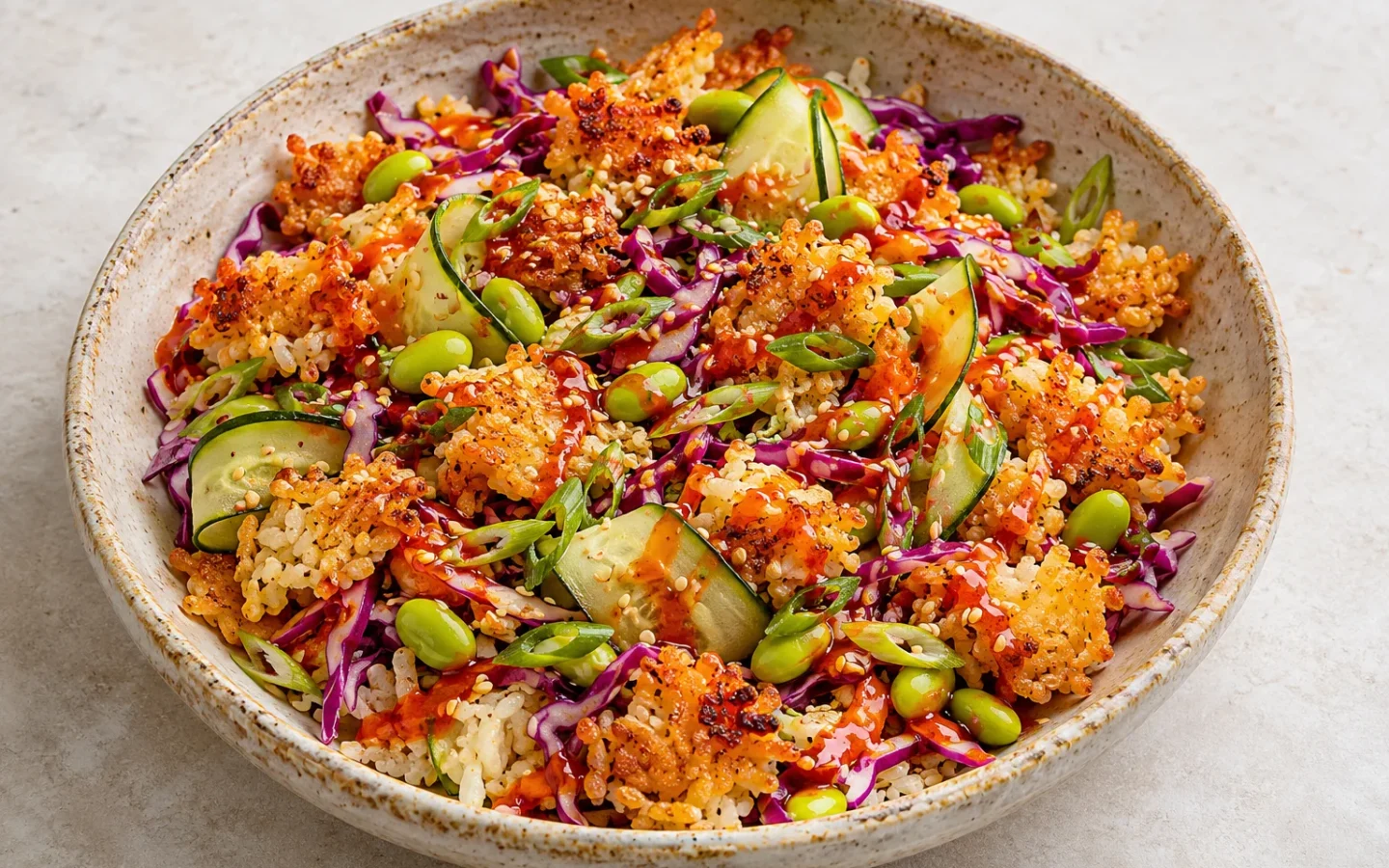
A high-contrast salad of crackly rice clusters, edamame, cabbage, cucumber, scallions, sesame, and a tangy gochujang-lime dressing.
Introduction
Crispy gochujang rice salad is built around contrast. Roasted rice forms rough golden clusters; cabbage and cucumber stay juicy and cold; edamame adds soft, substantial bites; and a glossy chile-lime dressing reaches into the cracks. The salad succeeds only when those textures remain distinct, which means cooling the rice, drying the vegetables, and dressing at the right moment.
Crunch, chew, creaminess, and layered mouthfeel became major food themes in 2026. This recipe turns that broad trend into a useful meal rather than a decorative snack. It also aligns with interest in fiber-rich foods by combining whole-grain brown rice if desired, cabbage, edamame, and vegetables. Nutrition claims remain modest—the appeal begins with flavor and texture—but the bowl is genuinely satisfying.
Gochujang supplies fermented chile depth, sweetness, and salt. Because brands vary, the dressing is balanced in stages with lime, rice vinegar, soy sauce, maple syrup, and sesame oil. The rice itself receives only enough sauce to color and season it before roasting. Keeping the remaining dressing separate prevents the clusters from softening before they reach the table.
Time
| Stage | Duration |
|---|---|
| Preparation time | 25 minutes |
| Cooking time | 30 minutes |
| Total time | 55 minutes |
Allow about 25 minutes for chopping and dressing, plus 25 to 30 minutes to crisp the rice. Previously cooked chilled rice makes this a 55-minute recipe. If starting with fresh rice, add its cooking and cooling time; spreading it on a tray and refrigerating until thoroughly cold is essential. The rice can be crisped a few hours ahead, but the salad should be assembled close to serving.
Needed equipment
| Tool | Why it helps |
|---|---|
| Large rimmed sheet pan | Gives rice enough surface area to dry and crisp rather than steam. |
| Parchment paper | Prevents sticky gochujang-coated clusters from welding to the tray. |
| Large mixing bowl | Provides room to toss vegetables without crushing rice. |
| Small jar with lid | Emulsifies the dressing quickly and makes storage easy. |
| Sharp knife or mandoline | Creates thin cabbage and cucumber pieces; use a hand guard with a mandoline. |
| Salad spinner or clean towels | Removes water that would dilute dressing and soften the rice. |
Tags
Crispy Rice Salad, Gochujang, Edamame, Vegan Recipes, Korean-Inspired.
These tags describe the technique, central ingredients, and serving context. They are navigation aids, not guarantees for medical dietary needs; packaged products must still be checked individually.
Serving Size
This recipe yields 4 main-dish servings. Scale ingredients by weight where possible, and remember that pan area, batch size, chilling capacity, and cooking time may need to change when doubling the recipe.
Difficulty Level
Intermediate. The detailed method identifies the moments that require attention so a first-time cook can understand both the action and the intended result.
Allergen Information
Soy and sesame; possible gluten in gochujang and soy sauce; check labels carefully Ingredient formulas and cross-contact warnings vary by country and manufacturer. For a serious allergy, read every current label, use clean equipment, and avoid substitutions with uncertain production histories.
Dietary Preference
Vegan and dairy-free as written; can be gluten-free with certified gluten-free gochujang and tamari
Course
Salad or main course.
Cuisine
Korean-inspired fusion. This label describes the recipe’s culinary frame and inspiration without claiming that a modern adaptation represents every regional or traditional version.
Ingredients
| Ingredient | Amount | Selection and purpose |
|---|---|---|
| Cooked cold rice | 4 cups / about 700 g | Day-old medium- or long-grain rice; white or brown rice both work. |
| Neutral oil | 3 tbsp | Coats grains for crisping; avocado, canola, or grapeseed oil is suitable. |
| Gochujang | 3 tbsp, divided | Check heat, sweetness, soy, and gluten information on the label. |
| Low-sodium soy sauce or tamari | 2 tbsp | Use tamari certified gluten-free when required. |
| Fresh lime juice | 3 tbsp | Provides direct acidity and fresh aroma. |
| Unseasoned rice vinegar | 2 tbsp | Seasoned vinegar contains extra sugar and salt. |
| Maple syrup | 1 1/2 tbsp | Balances chile and acidity while keeping the recipe vegan. |
| Toasted sesame oil | 2 tsp | A finishing flavor; too much can dominate. |
| Fresh ginger | 2 tsp finely grated | Grate just before mixing for the brightest aroma. |
| Garlic | 1 small clove finely grated | Use a small clove because it remains raw. |
| Shelled edamame | 1 1/2 cups / 230 g | Cook, drain, and cool before assembly. |
| Red cabbage | 3 cups / 210 g thinly sliced | Dry thoroughly after washing. |
| English cucumber | 1 large / about 300 g | Slice into ribbons or thin half-moons. |
| Scallions | 4 | Slice white and green parts on the diagonal. |
| Fresh cilantro or mint | 1 packed cup | Use one or a combination; keep leaves whole or roughly torn. |
| Toasted sesame seeds | 2 tbsp | Add at the end so they stay aromatic. |
Measuring and substitution strategy
Read the entire table before shopping. The notes explain function as well as quantity, which matters when making substitutions. Replace like with like: preserve fat with fat, acidity with acidity, and structural dry ingredients with tested equivalents. Spoon measures are level US measures. When both mass and volume appear, use mass for the most repeatable result.
Prepare and measure every ingredient before heat begins. This keeps fast steps from stalling and prevents accidental double additions. If an ingredient has a variable intensity—such as chile paste, miso, coffee concentrate, or flavored liqueur—taste it alone and begin at the lower end of the suggested adjustment.
Instructions
-
1. Verify the rice is cold and dry
Break up refrigerated rice with clean fingers. It should feel firm, separate, and dry on the surface. Fresh warm rice releases steam and becomes chewy rather than crisp. If it seems damp, spread it uncovered on a tray in the refrigerator for 30 minutes before seasoning.
-
2. Heat the oven and pan
Preheat the oven to 425°F / 220°C with a rack in the upper-middle position. Line a large rimmed sheet pan with parchment. A fully heated oven is important: slow warming gives gochujang time to scorch before the rice has shed enough moisture.
-
3. Season the rice lightly
Whisk 1 tablespoon gochujang with neutral oil and 1 tablespoon soy sauce. Pour it over the rice and fold until most grains are thinly coated. Do not add the full salad dressing; excess sugar and water inhibit crispness. Taste one grain for salt before adding anything else.
-
4. Create clusters, not a solid sheet
Spread rice over the pan in a thin layer, leaving some rough walnut-size clumps. Compressing everything into one slab limits airflow, while separating every grain removes the satisfying clusters. Keep the layer below about half an inch thick and expose some parchment between patches.
-
5. Roast until crackly
Bake for 15 minutes, then turn sections with a thin spatula, moving darker edges toward the center. Continue for 10 to 15 minutes until the rice is dry, golden at the tips, and crisp when cool enough to test. Remove any small pieces that brown early rather than letting them burn.
-
6. Cool the rice uncovered
Slide the parchment and rice onto a cool surface or rack. Leave it uncovered for at least ten minutes. The clusters firm as steam escapes. Placing hot rice in a bowl traps condensation and reverses the crisping work, so resist early assembly.
-
7. Mix the dressing
Shake the remaining 2 tablespoons gochujang, remaining soy sauce, lime juice, vinegar, maple syrup, sesame oil, ginger, and garlic in a jar. Taste it on a cucumber slice, not from a spoon alone; vegetables and rice soften its intensity. Adjust with lime for brightness or water one teaspoon at a time if too strong.
-
8. Prepare the vegetables
Cook edamame according to its package, cool it quickly, and drain well. Slice cabbage and cucumber, then dry both thoroughly. Slice scallions and tear herbs. Cold, dry vegetables keep their crunch and allow the dressing to cling instead of pooling at the bottom.
-
9. Dress the fresh components first
In a large bowl, toss cabbage, cucumber, edamame, scallions, and herbs with about two-thirds of the dressing. Let them stand for three minutes so the cabbage begins to relax. Reserve the remaining dressing for serving rather than soaking the rice.
-
10. Fold in rice at the last moment
Add three-quarters of the crispy rice and toss only twice with broad scooping motions. Transfer to a platter, scatter the reserved clusters and sesame seeds over the top, and serve immediately with dressing on the side. The top layer should remain audibly crisp.
Preparation Tips
- Use rice that was cooled promptly and refrigerated safely. “Day-old” describes texture, not permission to leave cooked rice at room temperature.
- Spread rice in one thin layer. Two trays are better than one crowded tray.
- Taste the gochujang before measuring; brands range from mildly sweet to assertively hot and salty.
- Dry cabbage, cucumber, and edamame. Surface water is the quickest path to a diluted dressing and soft clusters.
- Keep at least one-quarter of the rice out of the initial toss and use it as a crunchy final garnish.
Organization is part of the technique. Clear the work surface, keep ingredients that are ready to eat away from raw eggs or other raw proteins, and set a timer as a reminder rather than as the only doneness test. Appearance, aroma, texture, and temperature provide the final evidence.
Nutritional Information
Values are estimated per serving from the listed ingredients. Brands, absorbed oil, trimming, dilution, optional garnishes, and actual portion size change the result. This table is general information, not medical advice.
| Nutrient | Estimated amount per serving |
|---|---|
| Calories | 465 calories |
| Protein | 15 g |
| Carbohydrates | 71 g |
| Total fat | 15 g |
| Saturated fat | 2 g |
| Sodium | 820 mg |
| Dietary fiber | 9 g |
| Sugars | 11 g |
For a medically prescribed diet, calculate with the exact products you use or consult a qualified clinician or registered dietitian. Sodium, sugar, caffeine, and alcohol are especially sensitive to brand and serving decisions.
Tips and Tricks
- Separate hot and cold work: Crisp rice fully, cool it uncovered, and only then meet the chilled vegetables.
- Dress for contact time: The base vegetables can sit briefly in sauce; the rice cannot. Add clusters immediately before eating.
- Build several sizes of crunch: Small grains season every bite while larger clusters provide the dramatic crackle.
- Taste dressing on the actual food: A concentrated sauce can seem harsh from a spoon but balanced against bland rice, cabbage, and cucumber.
Add-ons
Choose one variation at a time so the core balance remains clear.
- Avocado: Add one diced avocado just before serving for creamy contrast. Coat it with lime to slow browning.
- Baked tofu: Top with crisp baked tofu for more protein, using a low-sodium marinade because the dressing already contains soy sauce.
- Mango: A cup of firm diced mango echoes the sweet-spicy dressing. Reduce maple syrup slightly when the fruit is very ripe.
- Seaweed: Scatter torn roasted nori at the table, not in advance, because steam and dressing make it limp.
Side dishes
Pair the recipe with contrast rather than more of the same dominant flavor.
- Miso soup: A light, warm soup makes the cold salad feel like a complete meal; watch total sodium.
- Simple grilled mushrooms: Their savory flavor supports gochujang without duplicating the salad’s crunch.
- Fresh fruit: Pineapple, orange, or melon cools chile and offers a clean finish.
- Korean-style cucumber pickles: Serve a small portion only, since the salad already contains cucumber and acidity.
Improvements
Use the finished result as evidence. Diagnose the specific issue before changing the next batch, and change one major variable at a time.
- Rice stays chewy: It was likely warm, damp, crowded, or under-oiled. Chill it thoroughly, use two trays, and extend roasting in short intervals.
- Gochujang burns: The coating may be too thick or the tray too close to the top element. Use only the measured amount on rice and rotate earlier.
- Salad becomes soggy: Vegetables carried water or rice was added too soon. Dry every component and keep rice separate until service.
- Dressing is too hot: Add lime, a teaspoon of maple syrup, and a tablespoon of water. More sesame oil can make the sauce heavy without truly reducing heat.
Save and store
Store crispy rice, dressed vegetables, and extra dressing in three separate airtight containers. Refrigerate the vegetables and dressing for up to two days. Re-crisp rice in a 375°F / 190°C oven or air fryer for several minutes, then cool before combining. Cooked rice must be cooled promptly and refrigerated; do not use rice that has sat at room temperature for an uncertain period. The assembled salad loses crunch in storage but remains edible for one day if handled safely. Freezing is not recommended because cucumber and cabbage release water when thawed.
Label stored components with the date and use clean, shallow containers where rapid cooling is needed. When handling history, time, temperature, or odor is uncertain, discard the food rather than relying on reheating to make it safe.
FAQ
Can I make crispy rice in an air fryer?
Yes. Work in small batches at about 390°F / 200°C, line the basket only if the manufacturer permits, and stir every five minutes. Air fryers vary, so remove browned pieces early.
Which rice works best?
Cold jasmine, basmati, medium-grain white rice, and brown rice all work. Sticky short-grain rice makes larger clusters; long-grain rice produces more separate crisp grains. Avoid freshly cooked hot rice.
Is gochujang gluten-free?
Not always. Traditional and commercial formulas may include wheat or barley ingredients. Read the label and choose a certified gluten-free product if required; use certified tamari as well.
Can I reduce the sodium?
Use low-sodium tamari, choose a lower-sodium gochujang, and replace part of the soy sauce with water and lime. Do not simply remove all salt because it balances acidity and bitterness.
How do I keep the rice crispy for a party?
Cool it completely, store it uncovered only until no steam remains, then place it in a dry container. Reheat briefly if needed and fold into the salad at the table.
Can I use frozen rice?
Yes. Frozen cooked rice can be thawed in the refrigerator, broken into grains, and dried on a tray. Ensure it was cooled and frozen promptly when first cooked.
Conclusion
Crispy gochujang rice salad is a study in timing. Dry cold rice becomes golden clusters, cool vegetables stay lively, and the dressing joins them only when the bowl is ready to eat. Respect those separate textures and the recipe delivers more than a viral crunch: it becomes a balanced main dish with heat, acidity, sweetness, freshness, and substance. Keep the components apart for meal prep, then assemble a new crisp bowl whenever you are ready.
References
- Associated Press: Why crunchy, gooey and chewy textures became a food obsession
- National Geographic: The biggest food trends for 2026
- USDA FoodKeeper: Safe food storage guidance
References support trend, safety, or ingredient context. The recipe proportions, editorial explanations, troubleshooting, and serving guidance are original to Love With Recipes.