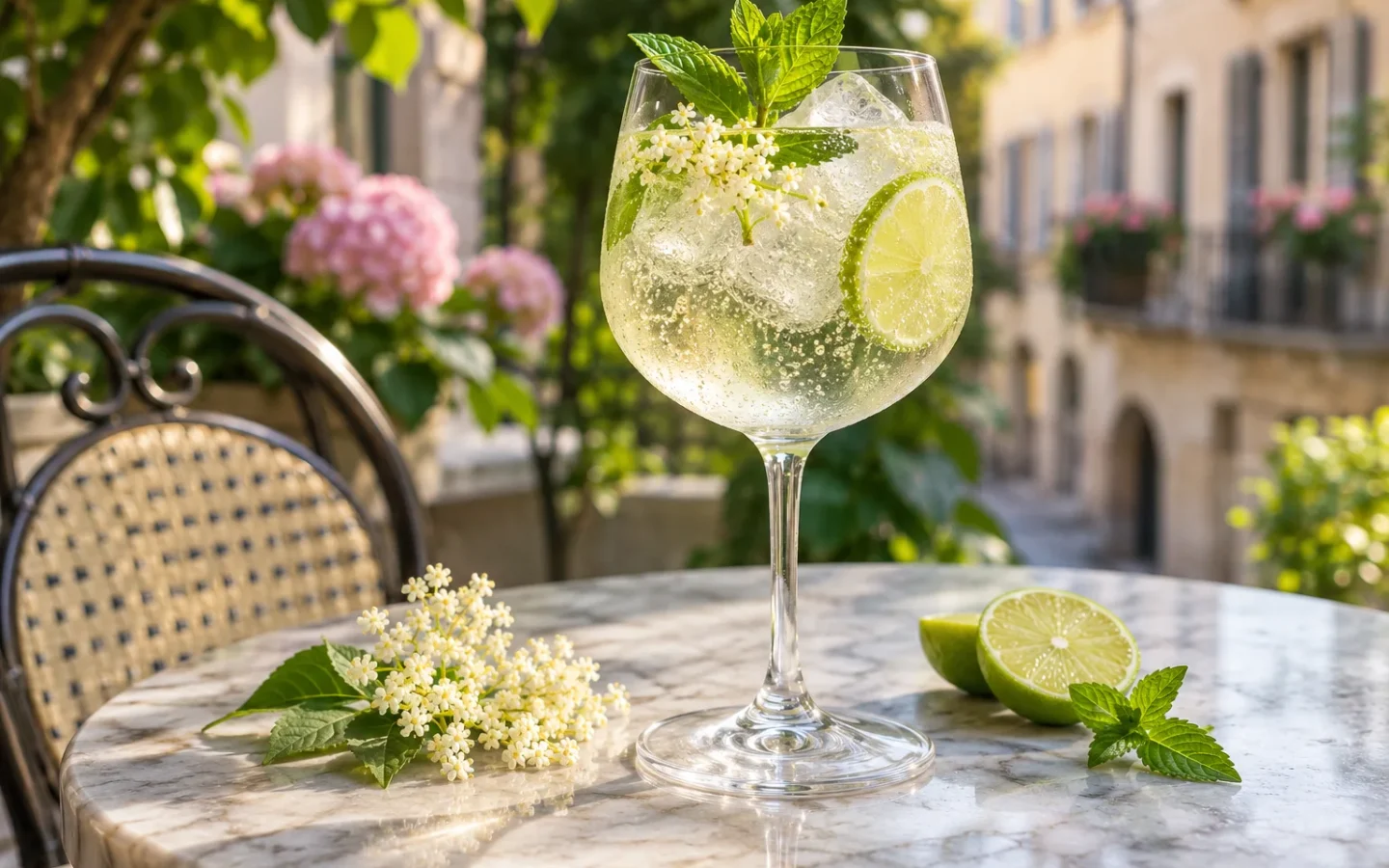
A crisp, aromatic Hugo spritz that balances dry sparkling wine, elderflower, mint, lime, and soda without becoming syrupy.
Introduction
A Hugo spritz recipe should taste bright, floral, and dry enough to invite a second sip. The familiar formula combines Prosecco, elderflower liqueur or syrup, soda water, mint, lime, and ice. Because every ingredient is poured directly into the glass, success depends less on advanced bartending than on temperature, proportion, and the order in which the drink is built.
The elderflower component is fragrant and sweet. It needs sparkling wine for acidity and structure, lime for a sharper aromatic edge, and soda for lift. Overpour the liqueur and the cocktail tastes perfumed; muddle the mint aggressively and it becomes vegetal; stir too much and the bubbles disappear. The method below protects freshness by chilling every element and using only one gentle lift with a bar spoon.
Interest in making the Hugo spritz at home surged during 2026, and the pale-green drink became a visible alternative to the orange Aperol spritz. Trend aside, its appeal is practical: it uses no shaker, scales for a small gathering, and has a credible zero-proof version. This guide also explains the difference between elderflower liqueur and syrup so the finished glass stays balanced whichever bottle is available.
Time
| Stage | Duration |
|---|---|
| Preparation time | 7 minutes |
| Cooking time | 0 minutes |
| Total time | 7 minutes |
A single drink takes about seven minutes when the bottles and glass are already cold. Allow at least two hours to chill Prosecco and soda in the refrigerator; freezer chilling can be uneven and risks a frozen or broken bottle. Build only when guests are ready because ice melts, mint darkens, and carbonation fades. For a party, prepare garnishes and measure the elderflower portion in advance, but open sparkling wine at the last moment.
Needed equipment
| Tool | Why it helps |
|---|---|
| Large stemmed wine glass | A 16-to-20-ounce bowl provides room for ice and preserves the aromatic opening. |
| Jigger or small measuring cup | Accurate elderflower measurement prevents a cloying drink. |
| Long bar spoon | Lifts the dense liqueur through the sparkling ingredients with minimal stirring. |
| Citrus knife and cutting board | For a thin lime wheel or wedge; use a clean board free from onion aromas. |
| Ice scoop or clean tongs | Keeps hands out of service ice. |
Tags
Hugo Spritz, Elderflower Cocktail, Prosecco Drinks, Summer Cocktails, Viral Drinks.
These tags describe the technique, central ingredients, and serving context. They are navigation aids, not guarantees for medical dietary needs; packaged products must still be checked individually.
Serving Size
This recipe yields 1 cocktail. Scale ingredients by weight where possible, and remember that pan area, batch size, chilling capacity, and cooking time may need to change when doubling the recipe.
Difficulty Level
Easy. The detailed method identifies the moments that require attention so a first-time cook can understand both the action and the intended result.
Allergen Information
Sulfites from sparkling wine; check elderflower liqueur and alcohol-free alternatives for additional label-specific allergens Ingredient formulas and cross-contact warnings vary by country and manufacturer. For a serious allergy, read every current label, use clean equipment, and avoid substitutions with uncertain production histories.
Dietary Preference
Vegetarian; generally gluten-free by ingredient but verify every bottle; contains alcohol unless the zero-proof variation is used
Course
Cocktail.
Cuisine
Northern Italian and Alpine. This label describes the recipe’s culinary frame and inspiration without claiming that a modern adaptation represents every regional or traditional version.
Ingredients
| Ingredient | Amount | Selection and purpose |
|---|---|---|
| Dry Prosecco | 90 ml / 3 fl oz | Use a well-chilled brut or extra-dry style; “extra dry” can taste slightly sweeter than brut. |
| Elderflower liqueur | 30 ml / 1 fl oz | Measure rather than free-pour; sweetness varies by brand. |
| Chilled soda water | 45 ml / 1 1/2 fl oz | Highly carbonated plain soda gives the best lift. |
| Fresh mint | 6 to 8 leaves plus a sprig | Choose bright, unbruised leaves. |
| Fresh lime | 1 thin wheel plus 1 wedge | The wedge supplies a controlled squeeze of juice. |
| Large clear ice cubes | Enough to fill the glass | More ice keeps the drink colder and can reduce rapid dilution. |
| Optional elderflower blossom | 1 small unsprayed cluster | Decorative only; omit unless positively identified as edible and pesticide-free. |
Measuring and substitution strategy
Read the entire table before shopping. The notes explain function as well as quantity, which matters when making substitutions. Replace like with like: preserve fat with fat, acidity with acidity, and structural dry ingredients with tested equivalents. Spoon measures are level US measures. When both mass and volume appear, use mass for the most repeatable result.
Prepare and measure every ingredient before heat begins. This keeps fast steps from stalling and prevents accidental double additions. If an ingredient has a variable intensity—such as chile paste, miso, coffee concentrate, or flavored liqueur—taste it alone and begin at the lower end of the suggested adjustment.
Instructions
-
1. Chill the service pieces
Refrigerate the Prosecco, elderflower liqueur, soda, and glass until properly cold. A warm glass steals chill from the drink and accelerates melting. If the glass was frozen, let it stand briefly so extreme temperature contrast does not make it fragile when liquid is added.
-
2. Prepare mint without crushing it
Rinse the mint, dry it carefully, and inspect the leaves. Place six leaves in one palm and clap once with the other hand. This releases surface aroma without grinding chlorophyll into the cocktail. Reserve the neatest sprig for garnish and keep its stem long enough to stand above the rim.
-
3. Fill the glass completely with ice
Add large cubes until they sit near the widest part of the bowl. A sparsely iced spritz warms quickly and becomes watery because a few cubes melt faster. Avoid tiny wet ice from a countertop bin; dry, solid cubes preserve carbonation and clarity better.
-
4. Add elderflower and lime
Measure 30 ml elderflower liqueur over the ice, then squeeze one lime wedge gently and drop it in only if the peel is well washed. The modest amount of juice sharpens the floral notes without turning the cocktail into a lime drink.
-
5. Pour the Prosecco slowly
Tilt the glass slightly and add 90 ml cold Prosecco down the inside wall. This reduces foaming and protects bubbles. Return the glass upright once the wine is in. Never shake sparkling wine in a cocktail shaker; pressure and agitation are both unnecessary here.
-
6. Top with soda water
Add 45 ml soda water in a steady stream. The soda lowers sweetness and alcohol concentration while extending the drink. If using a strongly mineral sparkling water, taste it alone first; a pronounced salty or bitter mineral character can distract from elderflower.
-
7. Give one gentle lift
Slide a bar spoon to the bottom and draw it upward once or twice. The goal is to distribute the denser liqueur, not to whirl the drink. Vigorous stirring knocks out carbonation and chips ice, creating exactly the flat, watery texture a spritz should avoid.
-
8. Finish the garnish
Tuck the awakened mint leaves among the ice, add the reserved sprig near the rim, and place a thin lime wheel against the inside of the glass. Slap the garnish sprig once before serving so the first aroma is mint rather than alcohol.
-
9. Taste before serving
Take a small straw sample. If it is too sweet, add 15 ml soda; if too sharp, add 5 ml elderflower liqueur; if flat, do not stir further—top with a fresh splash of chilled Prosecco. Serve immediately and offer water alongside alcoholic drinks.
Preparation Tips
- Use dry sparkling wine because elderflower liqueur already supplies sugar. A sweet Prosecco can push the drink out of balance.
- Keep mint stems for the garnish but use mostly leaves inside the drink; thick stems can introduce bitterness.
- Wash citrus before slicing because the peel sits in the glass and contacts the drink.
- Open the Prosecco with the bottle at a 45-degree angle, hold the cork, and twist the bottle slowly for a quiet release.
- If using elderflower syrup instead of liqueur, begin with 20 ml syrup and add 10 to 15 ml extra soda to control sweetness.
Organization is part of the technique. Clear the work surface, keep ingredients that are ready to eat away from raw eggs or other raw proteins, and set a timer as a reminder rather than as the only doneness test. Appearance, aroma, texture, and temperature provide the final evidence.
Nutritional Information
Values are estimated per serving from the listed ingredients. Brands, absorbed oil, trimming, dilution, optional garnishes, and actual portion size change the result. This table is general information, not medical advice.
| Nutrient | Estimated amount per serving |
|---|---|
| Calories | 170 calories |
| Protein | 0 g |
| Carbohydrates | 14 g |
| Total fat | 0 g |
| Saturated fat | 0 g |
| Sodium | 10 mg |
| Dietary fiber | 0 g |
| Sugars | 12 g |
| Alcohol | Approximately 14 g |
For a medically prescribed diet, calculate with the exact products you use or consult a qualified clinician or registered dietitian. Sodium, sugar, caffeine, and alcohol are especially sensitive to brand and serving decisions.
Tips and Tricks
- Measure the sweet component: Free-pouring elderflower is the most common reason a Hugo spritz becomes heavy and perfumed.
- Use abundant cold ice: A full glass remains colder than a glass with two cubes, so the drink can actually dilute more slowly.
- Wake mint, do not mash it: A single clap gives aroma; hard muddling tears the leaves and adds dark flecks and bitterness.
- Preserve bubbles: Pour down the side, add soda last, and use a lifting motion instead of circular stirring.
Add-ons
Choose one variation at a time so the core balance remains clear.
- Cucumber accent: Add two paper-thin cucumber ribbons for a cooler garden note. Avoid thick chunks, which occupy volume without adding much aroma.
- Grapefruit variation: Replace the lime squeeze with a teaspoon of pink-grapefruit juice and add a narrow peel strip, avoiding the bitter white pith.
- Drier version: Use 20 ml elderflower liqueur, 105 ml brut Prosecco, and 60 ml soda. The floral character remains but the finish is leaner.
- Zero-proof Hugo: Combine 90 ml dealcoholized dry sparkling wine, 20 ml elderflower syrup, 60 ml soda, mint, and lime. Confirm the label if zero alcohol is medically or personally essential.
Side dishes
Pair the recipe with contrast rather than more of the same dominant flavor.
- Marinated olives: Salty, herbal olives contrast with floral sweetness and require no last-minute cooking.
- Prosciutto and melon: Sweet melon echoes elderflower while cured meat adds savory depth; offer a vegetarian alternative.
- Goat-cheese crostini: Tangy cheese and crisp bread make the spritz feel structured enough for aperitivo hour.
- Roasted almonds: A lightly salted handful is simple, dry, and less likely to overpower the drink than a sweet snack.
Improvements
Use the finished result as evidence. Diagnose the specific issue before changing the next batch, and change one major variable at a time.
- The cocktail is too sweet: Add soda in 15 ml increments and choose a brut Prosecco next time. Do not correct sweetness with a large amount of lime, which changes the intended profile.
- The drink is flat: Warm bottles, prolonged stirring, or an old opened bottle are likely causes. Start colder, pour gently, and seal leftover sparkling wine with a pressure-rated stopper.
- Mint tastes bitter: Use fresh leaves, clap rather than muddle, and remove bruised stems. Mint left overnight in a batch will become dull and vegetal.
- Elderflower overwhelms everything: Reduce the liqueur by 10 ml and replace that volume with soda. Brand sweetness and perfume vary, so the printed ratio is a calibrated starting point.
Save and store
A Hugo spritz should not be stored after assembly. Carbonation escapes, ice dilutes the drink, lime peel releases bitterness, and mint darkens. Refrigerate an opened Prosecco bottle immediately with a proper sparkling-wine stopper and use it within one to two days while it still has lively bubbles. Elderflower liqueur is usually stable in a cool dark cupboard, but follow its label. Cut lime can be refrigerated in a sealed container for up to two days, and washed mint keeps best wrapped in a barely damp towel. Never freeze a sealed carbonated bottle.
Label stored components with the date and use clean, shallow containers where rapid cooling is needed. When handling history, time, temperature, or odor is uncertain, discard the food rather than relying on reheating to make it safe.
FAQ
What is the difference between a Hugo spritz and an Aperol spritz?
A Hugo uses elderflower, mint, lime, sparkling wine, and soda, creating a pale floral profile. Aperol contributes orange, herbs, bitterness, and a deeper color. Both are spritzes, but substituting one liqueur for the other produces a different drink.
Can I use elderflower syrup instead of liqueur?
Yes. Start with 20 ml because syrup can be very sweet, use a dry Prosecco, and add extra soda. The drink will contain less alcohol but is not alcohol-free while sparkling wine remains.
Which Prosecco is best?
A cold brut Prosecco gives the driest balance. Extra dry is also workable, although labeling can be confusing because extra dry often contains more residual sugar than brut. Expensive vintage sparkling wine is unnecessary.
Can I make a pitcher in advance?
Do not fully batch it. Mix measured elderflower and lime shortly before service, then add chilled Prosecco, soda, ice, and mint in each glass. This preserves bubbles and prevents bitter, wilted herbs.
Is a Hugo spritz gluten-free?
Its basic ingredients do not normally contain gluten, but production methods and flavored products differ. Anyone with celiac disease or a serious allergy should verify each bottle and avoid uncertain garnishes.
How strong is this cocktail?
The exact alcohol by volume depends on the Prosecco and liqueur. The recipe is a full alcoholic serving, even though soda and ice make it taste light. Serve responsibly and provide a zero-proof option.
Conclusion
The best Hugo spritz is assembled, not aggressively mixed. Cold ingredients, a measured pour of elderflower, dry Prosecco, fresh mint, restrained lime, and one gentle stir create a drink that stays lively from aroma to finish. Use the printed proportions as a baseline, then adjust for the sweetness of the bottle in front of you. That small act of tasting is what separates a refreshing spritz from a glass that is merely fizzy and floral.
References
References support trend, safety, or ingredient context. The recipe proportions, editorial explanations, troubleshooting, and serving guidance are original to Love With Recipes.